배꼽 빠지다 (baekkop ppajida) — Laughing So Hard Your Belly Button 'Falls Out'
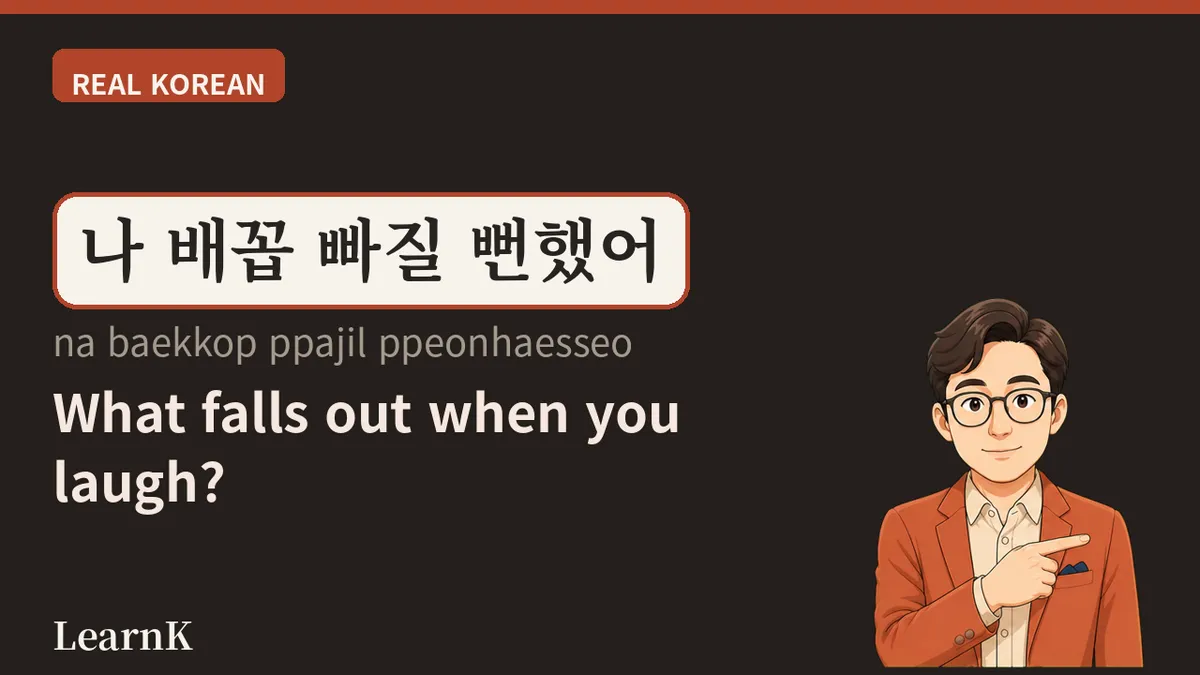
Have you ever seen someone clutch their stomach and fold in half, laughing so hard that no sound comes out — just their shoulders shaking? Tears streaming, breath gone, until they finally gasp, “Stop, I’m dying”? Korean has a wonderfully old-fashioned exaggeration for exactly this moment: you laughed so hard your belly shook until your belly button nearly fell right off your body. Today’s expression is 배꼽 빠지다 (baekkop ppajida) — a phrase that shows up constantly in variety-show subtitles, group chats with friends, and around the table at family gatherings.
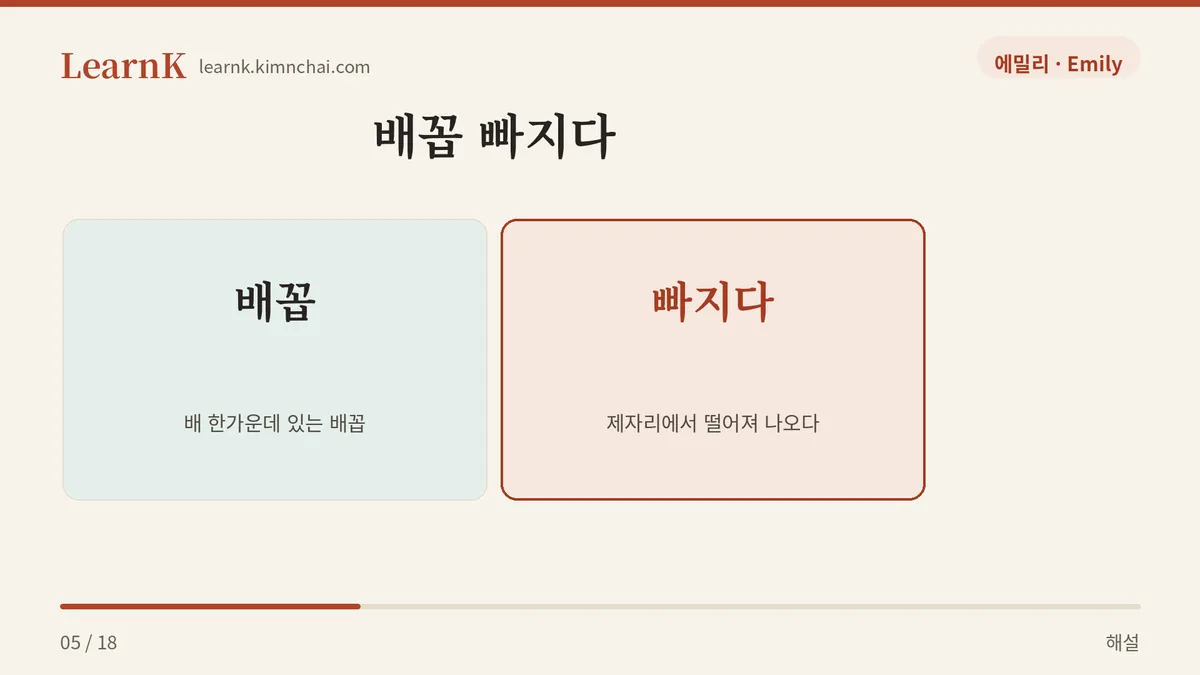
배꼽 빠지다
Read literally, 배꼽 빠지다 (baekkop ppajida) means “belly button falls out.” Obviously no one’s belly button actually comes loose — this is the kind of vivid exaggeration Korean especially loves. The meaning boils down to one thing: to laugh so hard you can’t stop, because something is simply too funny.
The key to this expression is intensity. It’s not just saying something was fun — it conveys the actual physical sensation of laughing until your stomach hurts and you can’t catch your breath. That makes it far more vivid and visceral than a plain “that was fun.”
Here’s the nuance broken down:
- It’s almost always used in an exaggerated form. The most common pattern is 배꼽 빠지는 줄 알았다 (baekkop ppajineun jul aratda) — “I thought my belly button was actually going to fall out,” i.e., “I laughed that hard.”
- It can also modify a noun. Something like 배꼽 빠지는 영화 (baekkop ppajineun yeonghwa) means “a movie so funny it makes your stomach hurt.”
- It’s not mockery. This isn’t a put-down — it’s pure, delighted laughter. The person who caused the laughter is usually laughing right along with everyone else.
- It leans casual/slang. It’s something you’d say with friends, family, or close coworkers — not the kind of phrase that shows up in a report or news article.
See It in a Real Conversation
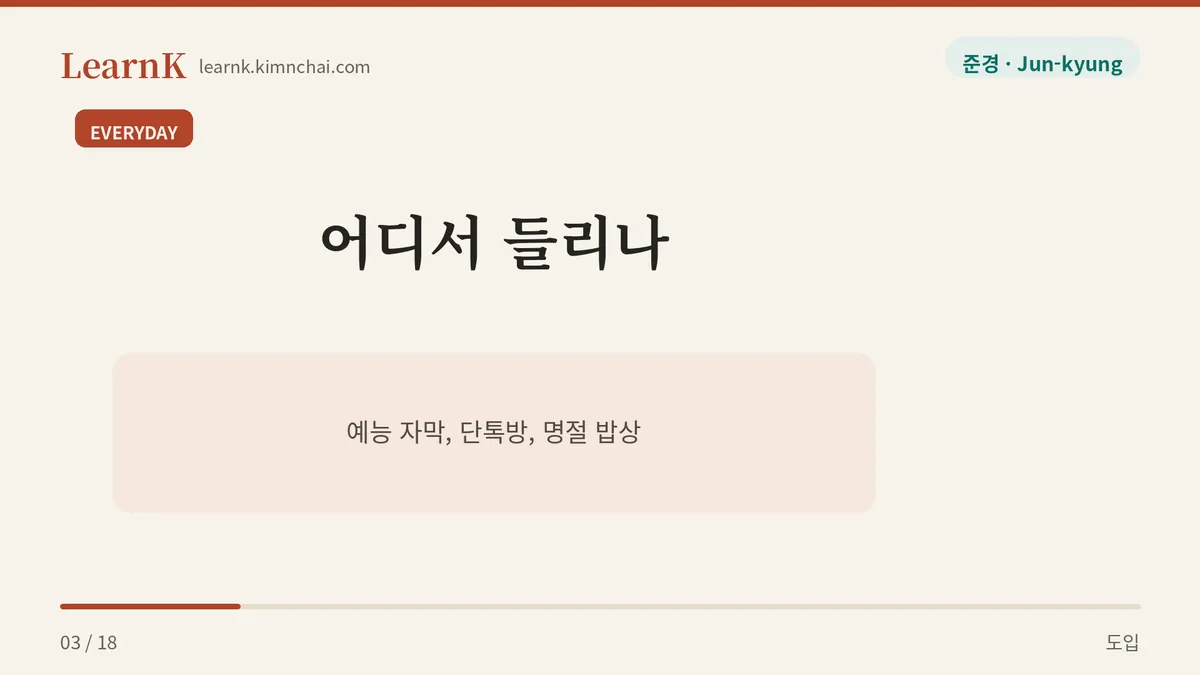
Scene: Moving day. While unpacking boxes, a CD from Jun-kyung’s high school talent show turns up.
Jun-kyung: 야, 그거 그냥 버려. 볼 거 없어. Hey, just throw that away. There’s nothing to see.
Emily: 어? ‘2007 축제 장기자랑’? 이거 지금 바로 튼다. Huh? “2007 Festival Talent Show”? I’m playing this right now.
Jun-kyung: 하지 마… 아, 진짜 하지 마. Don’t… seriously, don’t.
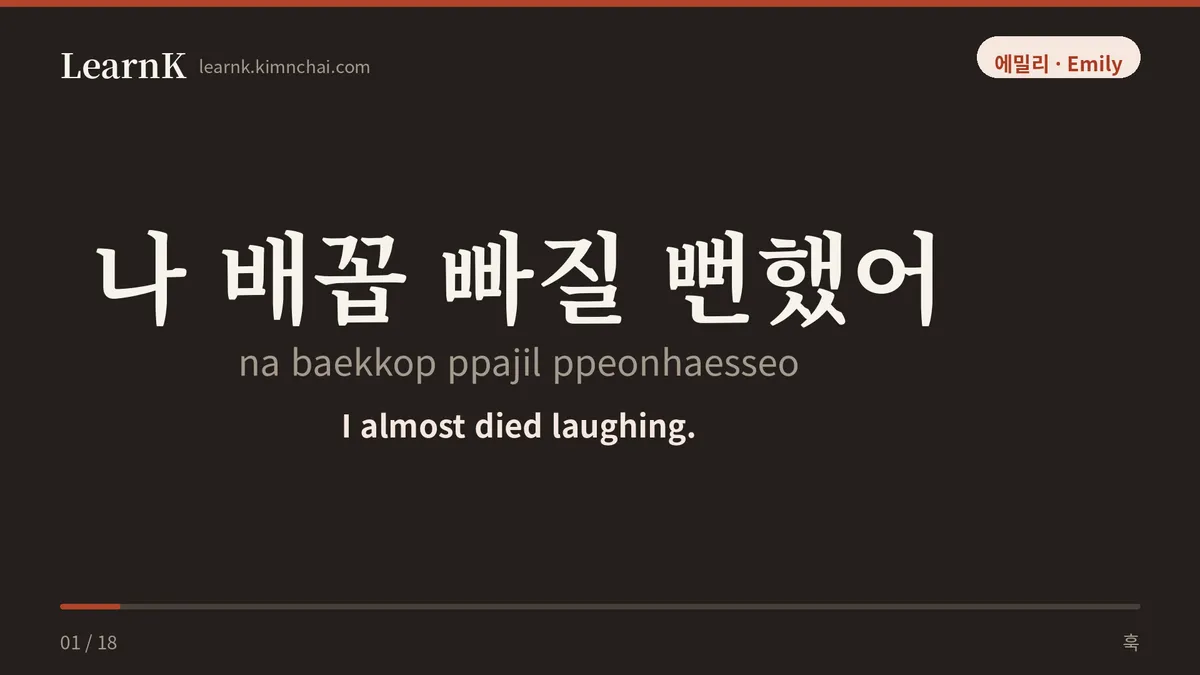
Emily: (재생) 야, 이 머리 뭐야! 나 배꼽 빠질 뻔했어. (plays it) Hey, what’s up with this hair! I almost died laughing.
Jun-kyung: 그때 유행이었거든? 웃지 마. That was the style back then, okay? Stop laughing.
Emily: 못 참겠어. 이거 진짜 배꼽 빠지는 영상이야. 어머님한테 보내도 돼? I can’t hold it in. This video is hilarious. Can I send it to your mom?
Sample Sentences by Situation
1. Bringing up a video you watched yesterday
어제 그 영상 보다가 배꼽 빠지는 줄 알았어. (eoje geu yeongsang boda-ga baekkop ppajineun jul arasseo.) “I almost died laughing watching that video yesterday.”
This is the most common form. Adding -는 줄 알았다 completes the exaggeration — “I really thought it was about to fall out.”
2. Recapping the day after a work dinner or get-together
과장님 성대모사 때문에 다들 배꼽 빠졌잖아요. (gwajangnim seongdaemosa ttaemune dadeul baekkop ppajyeotjanayo.) “Everyone was in stitches because of the manager’s impression.”
This works well when recalling a moment when a whole group laughed together. -잖아요 adds a shared “we all experienced that together” feeling.
3. Recommending something to a friend
이 영화 진짜 배꼽 빠져. 꼭 봐. (i yeonghwa jinjja baekkop ppajyeo. kkok bwa.) “This movie is seriously hilarious. You have to watch it.”
Formal vs. Casual Speech, and Similar Expressions
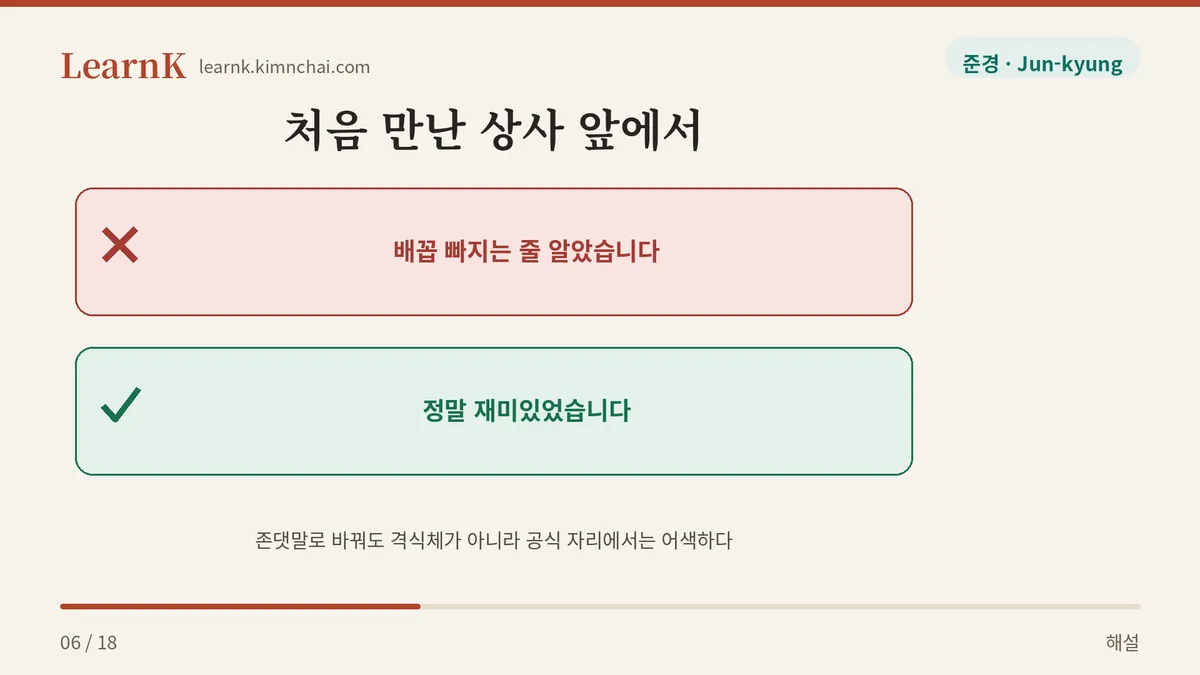
In casual speech it’s 배꼽 빠지는 줄 알았어 (baekkop ppajineun jul arasseo); in polite speech, 배꼽 빠지는 줄 알았어요 (…arasseoyo). Even in its polite form, though, this expression isn’t formal — it’s fine with someone older if the mood between you is relaxed, but around a boss you’ve just met or in an official setting, 정말 재미있었습니다 (jeongmal jaemiisseotseumnida) is the safer choice.
It’s also worth knowing how this compares to similar expressions:
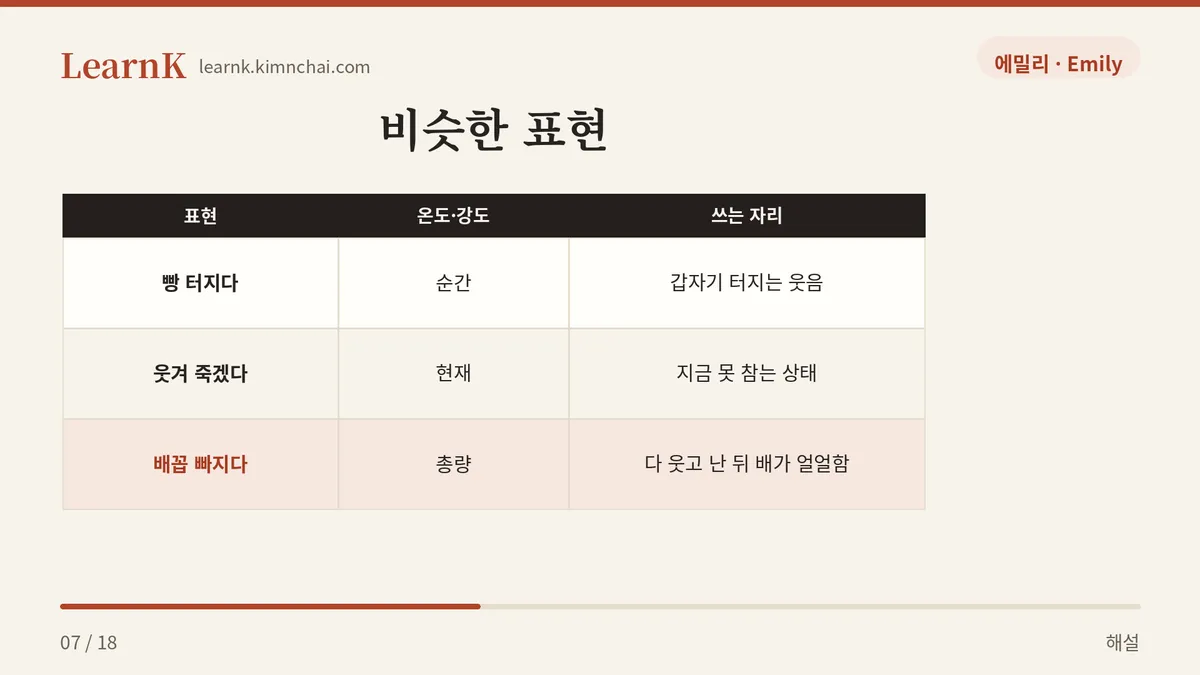
- 빵 터지다 (ppang teojida): laughter that bursts out all at once, like a “pop.” Closer to a short, sudden explosion of laughter.
- 웃겨 죽겠다 (utgyeo jukketda): unable to hold back laughter right now — it has a strong present-tense, in-the-moment feel.
- 포복절도하다 (pobokjeoldohada): a Sino-Korean phrase literally meaning to roll around clutching your stomach. Closer to written language, and a bit stiff.
- 배꼽 빠지다: describes the total volume and aftermath of the laughter — including the ache in your stomach after it’s all over.
Why the Belly Button, of All Things?
Korean has an unusually large number of expressions that measure the size of an emotion through the body. Your liver drops (놀라움, shock), your insides scorch (초조함, anxiety), your nose gets flattened (창피함, embarrassment) — and your belly button falls out (폭소, uproarious laughter). It’s not a medical situation at all, yet the language reaches for a body part anyway, because explaining an emotion through bodily memory simply lands better than explaining it in numbers or degrees.
Korean variety shows use this expression almost like an official term. When a cast member falls backward laughing, this is one of the phrases that regularly shows up in the big subtitle text on screen. In dramas, too, it tends to appear in scenes where the main character finally lets their guard down and bursts out laughing in front of an old friend. That’s why, for Koreans, “배꼽 빠지는 줄 알았어” isn’t just a comment on how funny something was — it’s closer to a signal that being with you feels comfortable. After all, it’s hard to laugh that hard in front of a stranger.
Today’s Quiz
You were watching a short video a friend sent, laughing so hard you could barely breathe. What’s the most natural reply to send back?
- 배꼽이 빠졌습니다. (baekkopi ppajyeotseumnida.)
- 나 배꼽 빠지는 줄 알았어. (na baekkop ppajineun jul arasseo.)
- 배꼽을 빼고 싶어. (baekkopeul ppaego sipeo.)
The answer is #2. This expression sounds most natural paired with -는 줄 알았다; used in a stiff, formal form like #1, it feels awkward. #3 doesn’t even make sense. Next time something makes you laugh that hard, give it a try — 배꼽 빠지는 줄 알았어!
Definitions and example sentences are from the National Institute of Korean Language’s Basic Korean Dictionary (krdict.korean.go.kr); that portion of this post, including our translations, is licensed under CC BY-SA 2.0 KR.