"밥 먹었어? (bap meogeosseo?)" — What Koreans Really Mean When They Ask About You
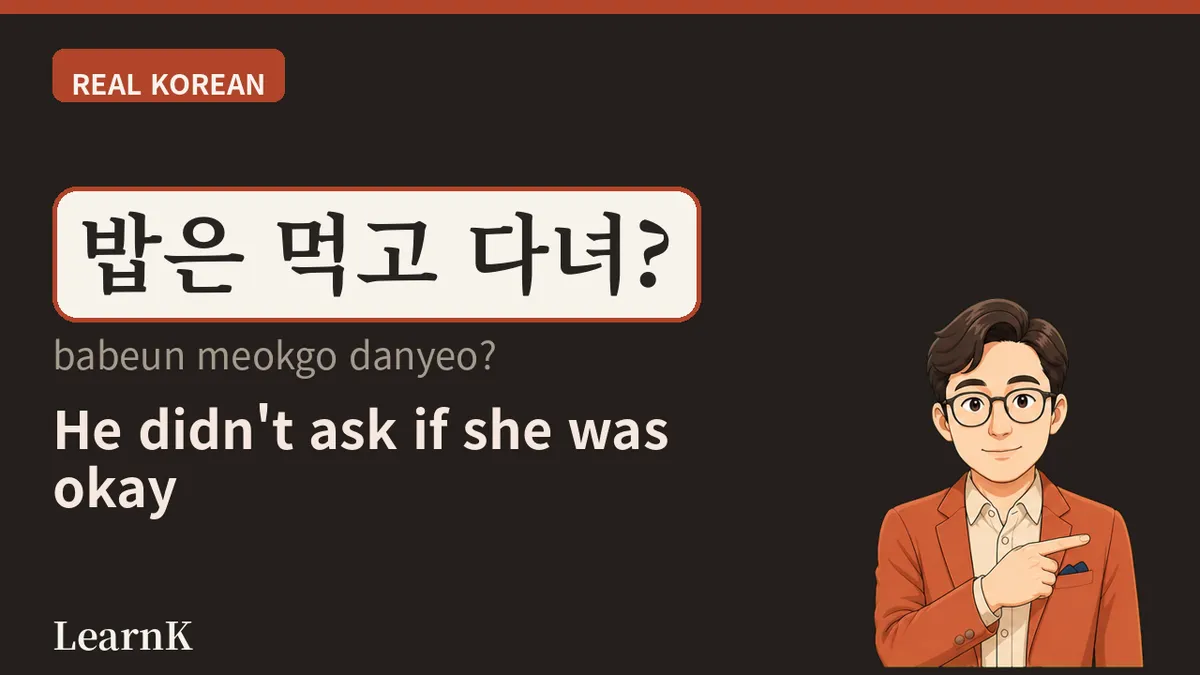
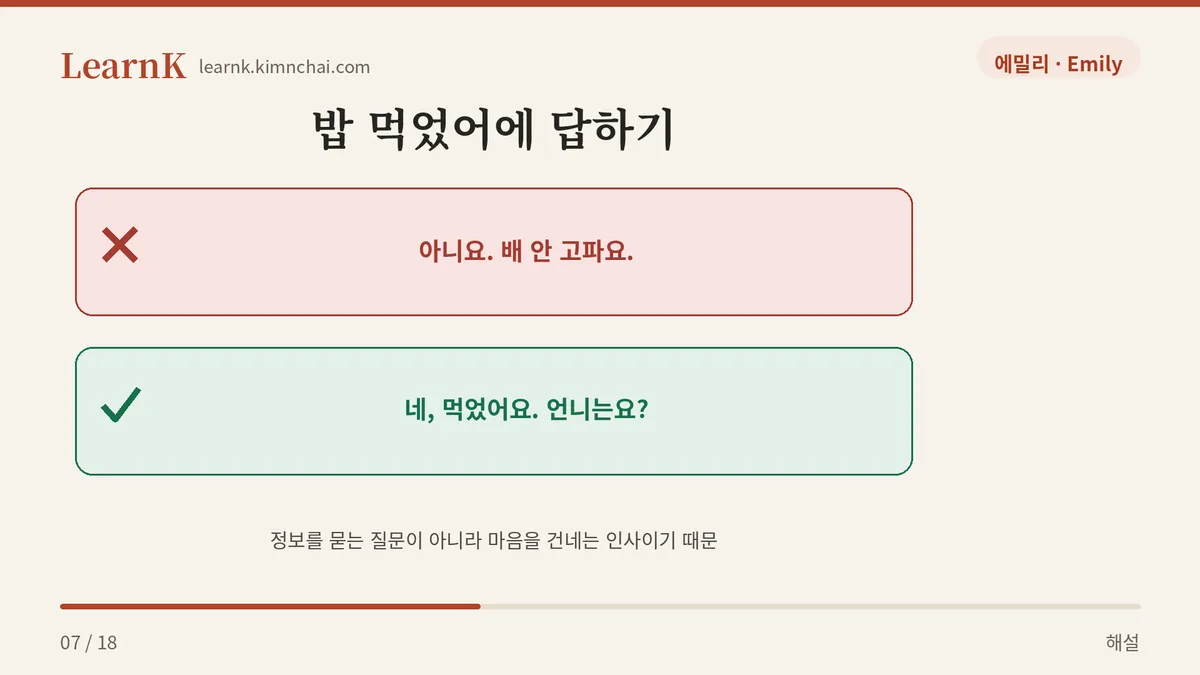
When you watch Korean dramas, you’ll run into a scene that seems a little odd. A friend you haven’t seen in ages, a mom with a worried look on her face, even a main character who has just been through something huge — someone walks up to them and asks, “밥 먹었어? (bap meogeosseo?)” Are they really just curious whether the person is hungry? Most of the time, no. Wrapped up in this one little phrase is a whole bundle of feeling: “How are you?”, “Are you okay?”, “I’m worried about you.” Today, let’s learn together the warmest greeting in Korea — one you could never grasp from a dictionary definition alone.
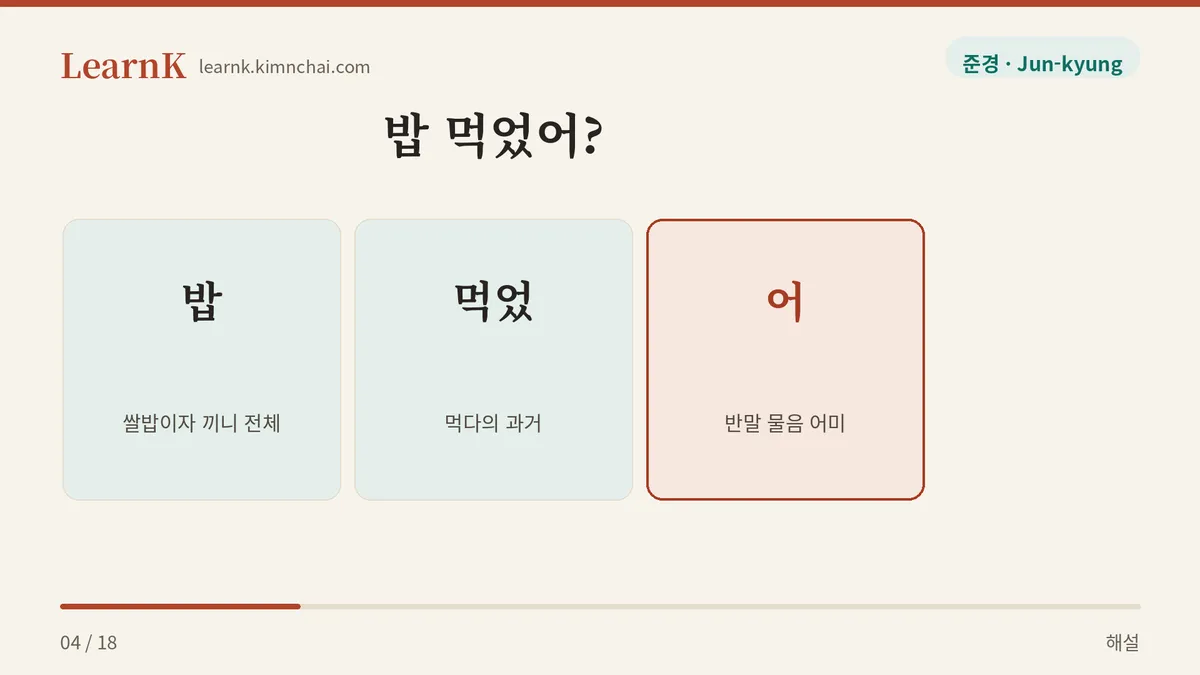
밥 먹었어? (bap meogeosseo?)
Translated word for word, 밥 먹었어? (bap meogeosseo?) means “Did you eat rice?” But its real nuance is much broader than the English “Did you eat?” — depending on the situation, it’s more natural to translate it as “How are you?”, “Are you okay?”, or “I care about you.”
Why “밥 (bap),” of all things? In a culture where, for centuries, keeping the meals coming was itself the very meaning of a life going well, the question “Have you been eating properly?” was the most concrete way to ask whether someone’s whole day had been alright. So this expression is less a question seeking information and more a greeting of 정 (jeong) — a way of handing over your care and affection.
Meaning and nuance at a glance
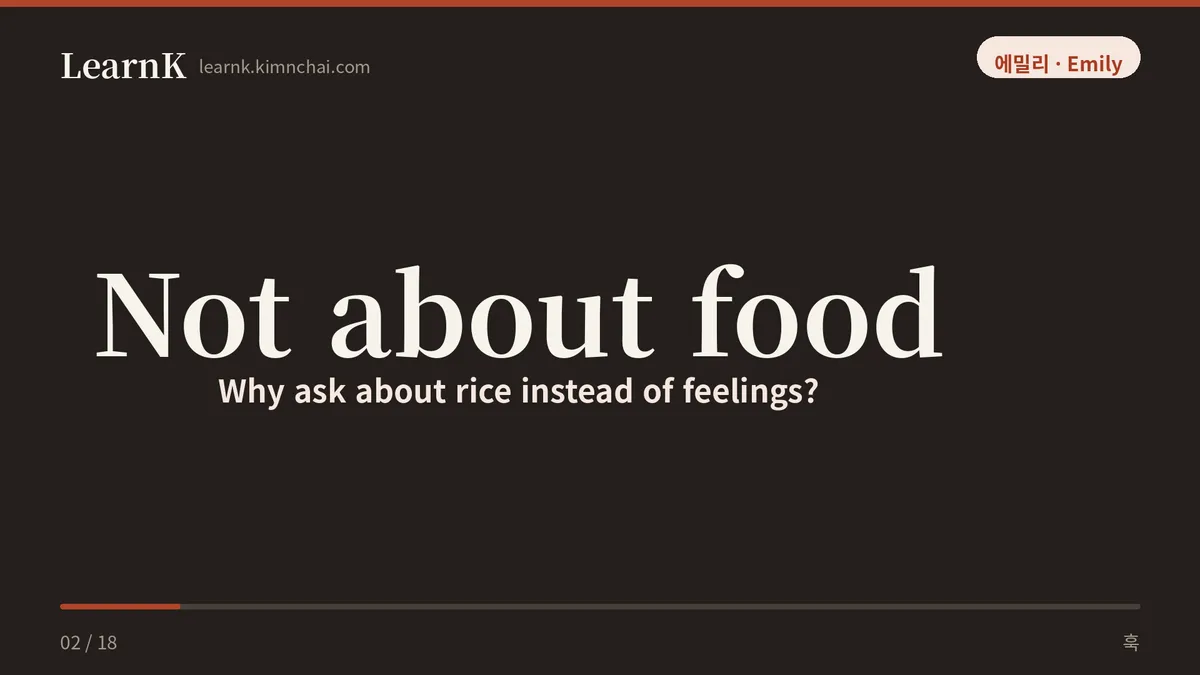
- Surface meaning: a question asking whether you’ve eaten
- Actual function: a greeting that conveys concern, worry, and affection
- Emotional color: warmth, closeness, caring
- Who says it often: parents and grandparents, close friends, romantic partners
Example situations
Situation 1 — A mom to her child who’s come home late
Mom: You’re just getting in now? 밥 먹었어? (bap meogeosseo?) Son: Yeah, I ate at the office.
Here, the mom’s question is both a check on whether he’s eaten and a comfort that says, “Long day, huh?” More than whether he’s actually hungry, she’s making sure her child hasn’t skipped a meal — and through that, making sure he’s okay.
Situation 2 — To a friend going through a hard time
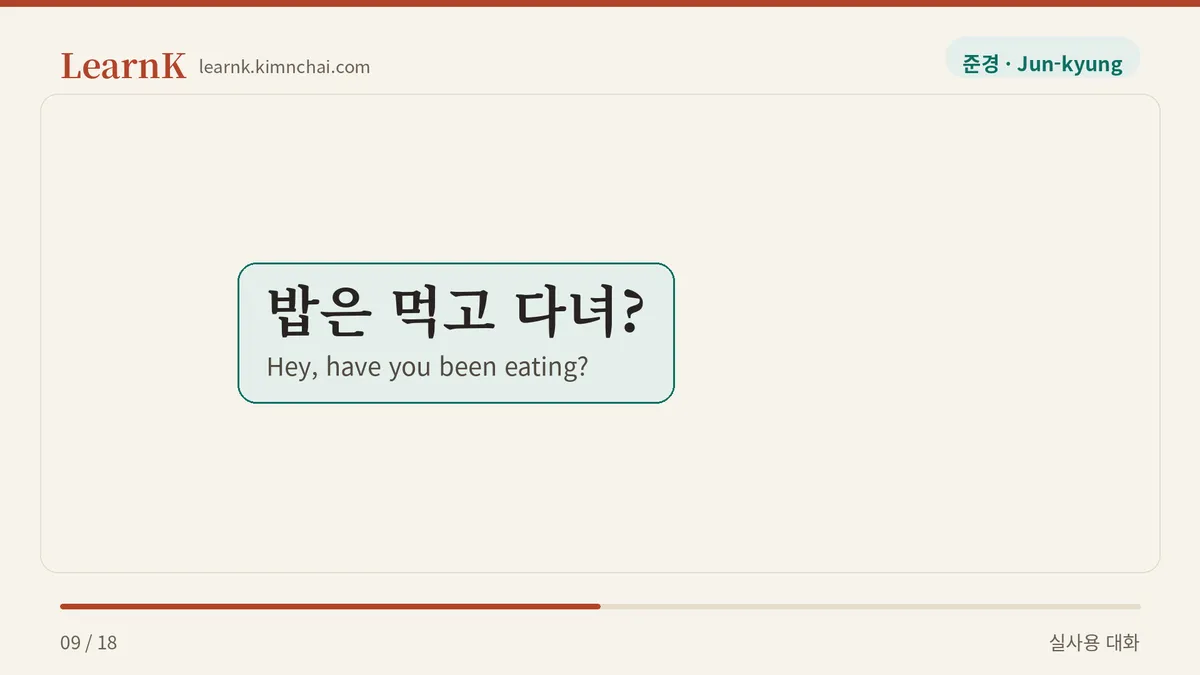
Me: I heard the news. 밥은 먹고 다녀? (babeun meokgo danyeo?)
This is something you’d say to a friend who failed an exam or went through a breakup. When it feels too awkward to ask “Are you okay?” directly, Koreans use food as an excuse to get their feelings across. Here, “밥 (bap)” really means “you yourself.”
Situation 3 — A check-in text between partners
밥 먹었어? (bap meogeosseo?) Send me a pic of what you had~
Partners will trade this question back and forth several times a day. More than the answer itself, it’s a sweet little habit — a signal that they’re looking out for each other’s everyday lives.
Polite vs. casual speech, and similar expressions
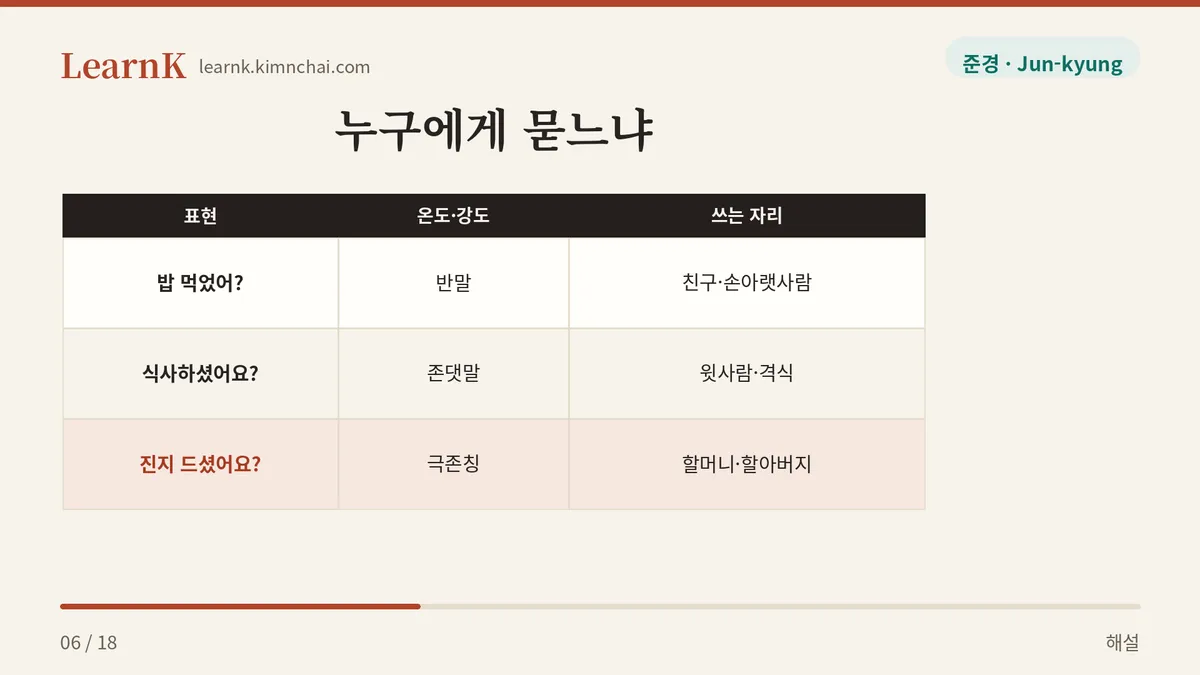
The same feeling comes out in different ways depending on who you’re talking to.
- Casual speech (friends, people younger than you): 밥 먹었어? (bap meogeosseo?)
- Polite speech (elders, formal settings): 식사하셨어요? (siksahasyeosseoyo?) / 진지 드셨어요? (jinji deusyeosseoyo?)
‘식사 (siksa)’ and ‘진지 (jinji)’ are the honorific words for ‘밥 (bap).’ In particular, 진지 드셨어요? (jinji deusyeosseoyo?) is a very polite expression used with your grandmother or grandfather, so be sure to remember it. On the flip side, between very close friends, people sometimes shorten it even more casually, as in 밥 먹었냐? (bap meogeonnya?).
A similar greeting that conveys care is 잘 지냈어? (jal jinaesseo?) (“Have you been doing well?”), but ‘밥 먹었어? (bap meogeosseo?)’ is far more everyday and carries a stronger nuance of looking after someone’s physical well-being.
Cultural background — the heart inside a bowl of rice
For Koreans, ‘밥 (bap)’ is not simply food. “밥 한번 먹자 (bap hanbeon meokja)” is a social promise meaning “let’s meet up again sometime,” and “밥값 한다 (bapgap handa)” means to pull your own weight. Because ‘밥 (bap)’ is woven into every corner of life like this, a single parting line — “밥 잘 챙겨 먹어 (Eat well and take care of yourself)” — can sound like a bigger gesture of affection than any other goodbye.
Picture that drama scene where a parent, without saying a word, sets a warm table for a child who’s been hurt. Even with no dialogue, the heart of “밥 먹었어? (bap meogeosseo?)” comes through just the same. So if a Korean friend throws this question your way, take it as a sign that they’ve genuinely started to care about you.
Closing quiz
When you want to ask after a Korean grandmother, which expression is the most natural?
- 밥 먹었냐? (bap meogeonnya?)
- 진지 드셨어요? (jinji deusyeosseoyo?)
- 밥 먹었어? (bap meogeosseo?)
Have you settled on your answer? The correct answer is number 2. With someone older than you, using the honorific word ‘진지 (jinji)’ and polite speech instead of ‘밥 (bap)’ makes it a courteous greeting. Now, with what you’ve learned today, try warmly asking someone dear to you: 밥 먹었어? (bap meogeosseo?)