Don't Stir the Pot: The Korean Internet Slang '어그로' for Baiting Attention
These days, if you browse the comment sections on Korean YouTube or online communities, you’ll often run into posts that seem designed to make people angry or grab attention — no matter what they’re actually about. You know the type: people who slap on deliberately provocative titles, start fights with obvious lies, and pick quarrels as if to say “look at me.” Koreans sum up this kind of behavior in one phrase: “쟤 또 어그로 끈다” (“There he goes stirring the pot again”). Today, let’s take a deep dive into a slang word you absolutely need to know to understand Korean internet culture: 어그로 (eogeuro).
어그로
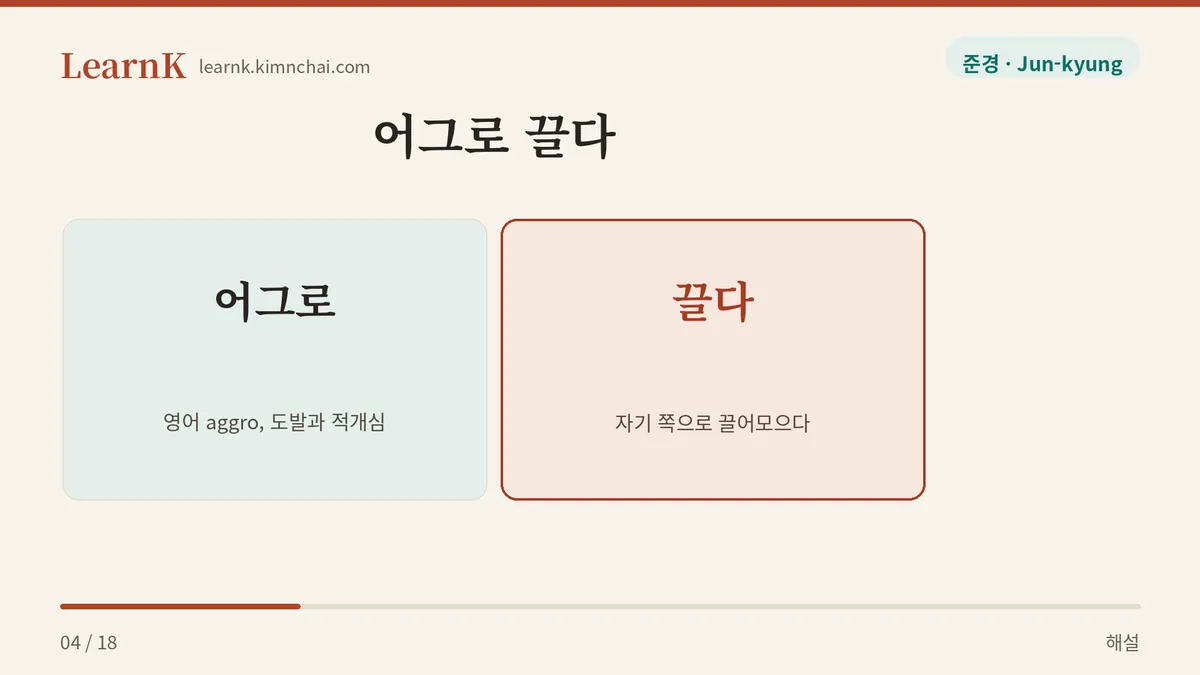
어그로 (eogeuro) comes from the English word ‘aggro’ (short for aggravation — meaning ‘provocation’ or ‘hostility’). It started out in online gaming. When a monster in a game felt hostile toward one particular player and focused all its attacks on that person, people called it “어그로가 끌렸다” (“the aggro got pulled”). From there the meaning broadened, and now it refers to deliberately using provocative words or actions to draw other people’s attention or anger toward yourself.
The key point is ‘intent.’ It’s not about getting attention by accident — it’s about deliberately setting the stage to get noticed. That’s why it’s almost always paired with the verb ‘끌다’ (to pull/draw), as in 어그로 끌다 (eogeuro kkeulda) or 어그로 끈다. The nuance is negative. Telling someone they’re “어그로 끈다” carries the criticism that they’re “making a fuss just to get attention.” A person who does this is sometimes called an 어그로꾼 (eogeurokkun).
A Look at Real Conversation
Setting: Jun-kyung is at home playing a game with his stream running. Beside him, Emily is watching the live chat scroll by.
Jun-kyung: 어? 방금 채팅에 누가 나 게임 못한다고 시비 걸었는데. Huh? Someone in the chat just picked a fight, saying I’m bad at the game.
Emily: 아, 저 사람? 아까부터 계속 어그로 끌고 있더라. 그냥 무시해. Oh, that guy? He’s been trolling for attention this whole time. Just ignore him.
Jun-kyung: 그치? 대답해 주면 더 신나서 날뛸 것 같아서. Right? If I reply, he’ll probably get even more worked up.
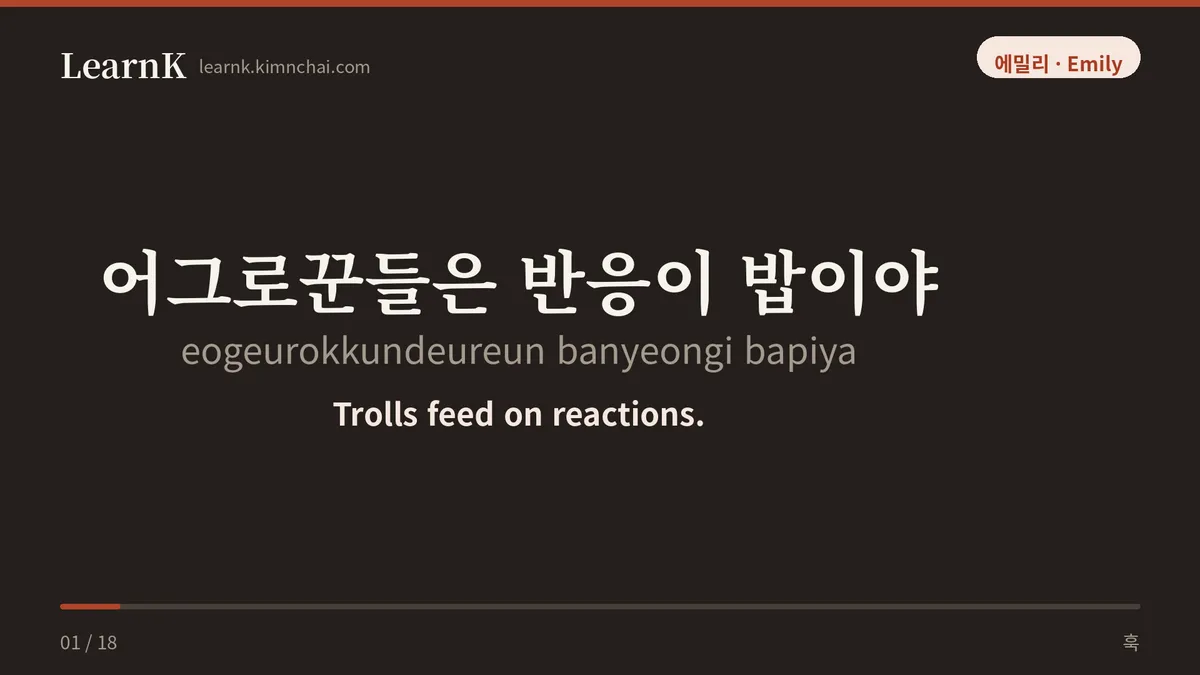
Emily: 당연하지. 어그로꾼들은 반응이 밥이야. 반응 안 해 주는 게 최고의 복수야. Of course. Trolls feed on reactions. Not reacting is the best revenge.
Jun-kyung: 오, 너 한국 인터넷 문화 완전 도사 다 됐네. Wow, you’ve totally become a master of Korean internet culture.
Emily: 15년째 살면 이 정도는 기본이지. After living here 15 years, this much is basic.
Example Sentences by Situation
1. When you see a bait-y title
“이 영상 제목 완전 어그로네. 눌러 보니까 알맹이는 하나도 없잖아.” (This video title is total clickbait. I clicked and there’s zero substance.)
Situation: When you get fooled by a video with an exaggerated title made to farm views, the title itself is called ‘어그로.’
2. To someone who’s being provocative
“너 자꾸 어그로 끌지 마. 진지하게 얘기하는 자리잖아.” (Stop trying to stir things up. This is a serious discussion.)
Situation: This is used to stop someone — gently or firmly — when they deliberately try to provoke anger in the middle of a serious conversation.
3. When you’re pointing out attention-seeking behavior
“저 사람 저렇게 사진 올리는 거, 그냥 어그로 끄는 거야.” (The way that person keeps posting photos like that — it’s just attention-seeking.)
Situation: This is used to coolly assess excessive behavior aimed at getting attention.
Comparing Formal/Informal Speech and Similar Expressions
Since ‘어그로’ is slang, it basically lives in informal, colloquial speech. But you can adjust the level of formality by changing the verb you pair it with.
- Informal: 어그로 끌지 마 (eogeuro kkeulji ma) — “Don’t try to grab attention like that.”
- Formal: 어그로 그만 끄세요 (eogeuro geuman kkeuseyo) — used to politely stop someone online.
It’s also worth knowing some similar expressions.
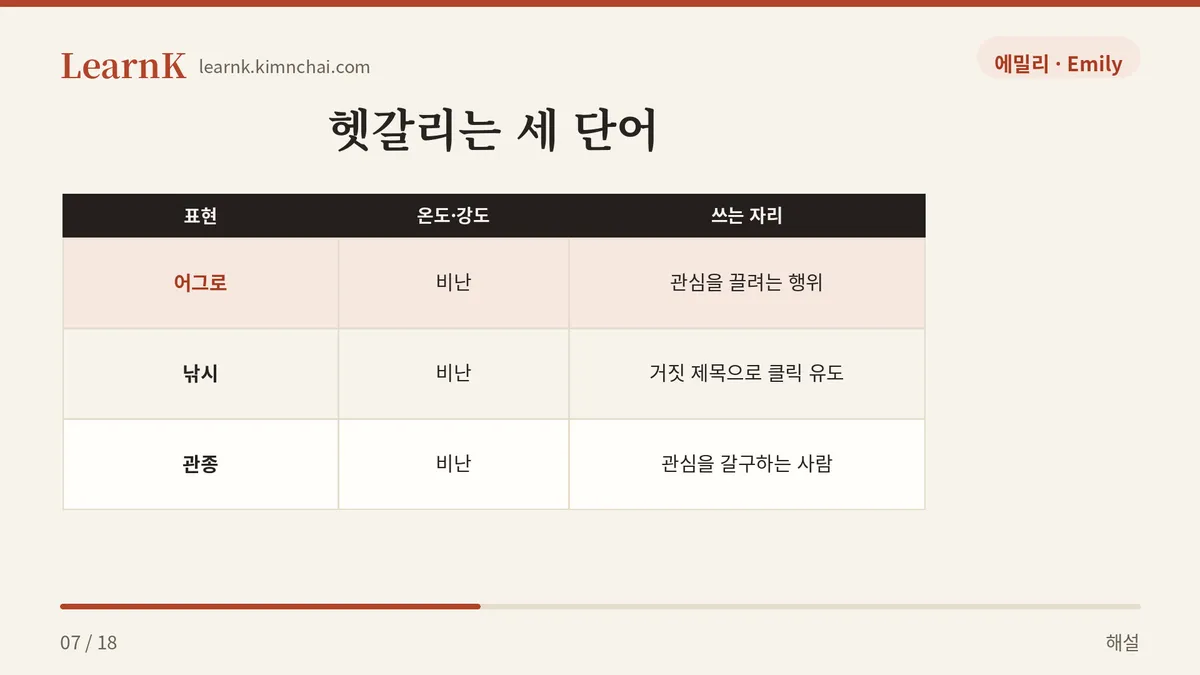
- 낚시 (naksi): The original meaning is ‘fishing.’ It refers to luring clicks with lies or exaggeration. “제목 낚시” (title fishing) is exactly clickbait.
- 관종 (gwanjong): Short for ‘관심종자’ (attention-seeker). A person who craves attention excessively. It overlaps with ‘어그로꾼,’ but ‘관종’ points more to the person themselves, while ‘어그로’ points more to the act.
- 도발 (dobal): A standard, formal word. Think of it as the polished version of ‘어그로.‘
Cultural Background
‘어그로’ is a word that shows just how sensitive Korea’s online culture is to ‘reactions.’ In an age where views, likes, and comments translate directly into influence, some people choose the shortcut of provocation instead of honest content. That’s why there’s an old saying on the Korean internet: “어그로에는 대응하지 말라” (“Don’t respond to aggro”). The moment you react, you hand the attention-hungry 어그로꾼 exactly what they wanted. Once you know this word, you can read Korean YouTube, communities, and game chats one layer deeper — thinking, “Ah, this isn’t sincere right now — it’s just 어그로.”
Closing Quiz
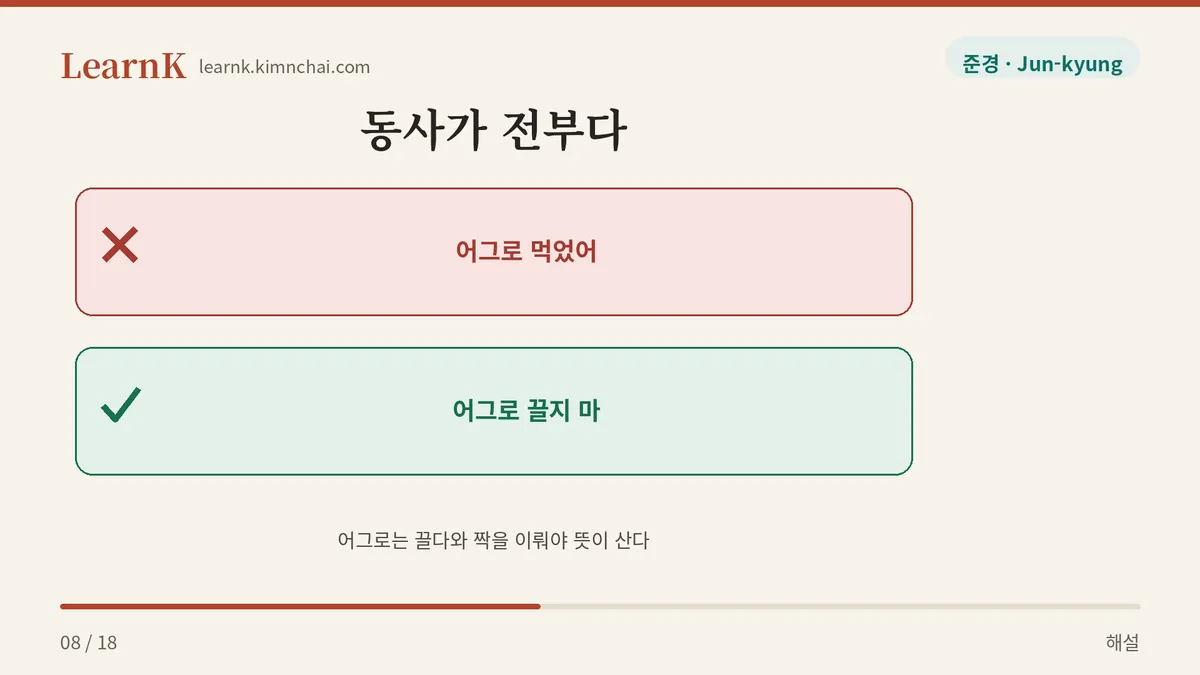
A friend deliberately posts a provocative message on social media to make people angry. What’s the most natural Korean expression for this situation?
- 어그로 끌지 마.
- 어그로 사 줘.
- 어그로 먹었어.
Answer: Number 1 (어그로 끌지 마). ‘어그로’ is used with the verb ‘끌다’ to create the meaning of ‘deliberately drawing in attention or anger.’ Numbers 2 and 3 are awkward expressions that aren’t actually used.