갈아타다 — One Word That Takes You From the Subway All the Way to Switching Your Bias
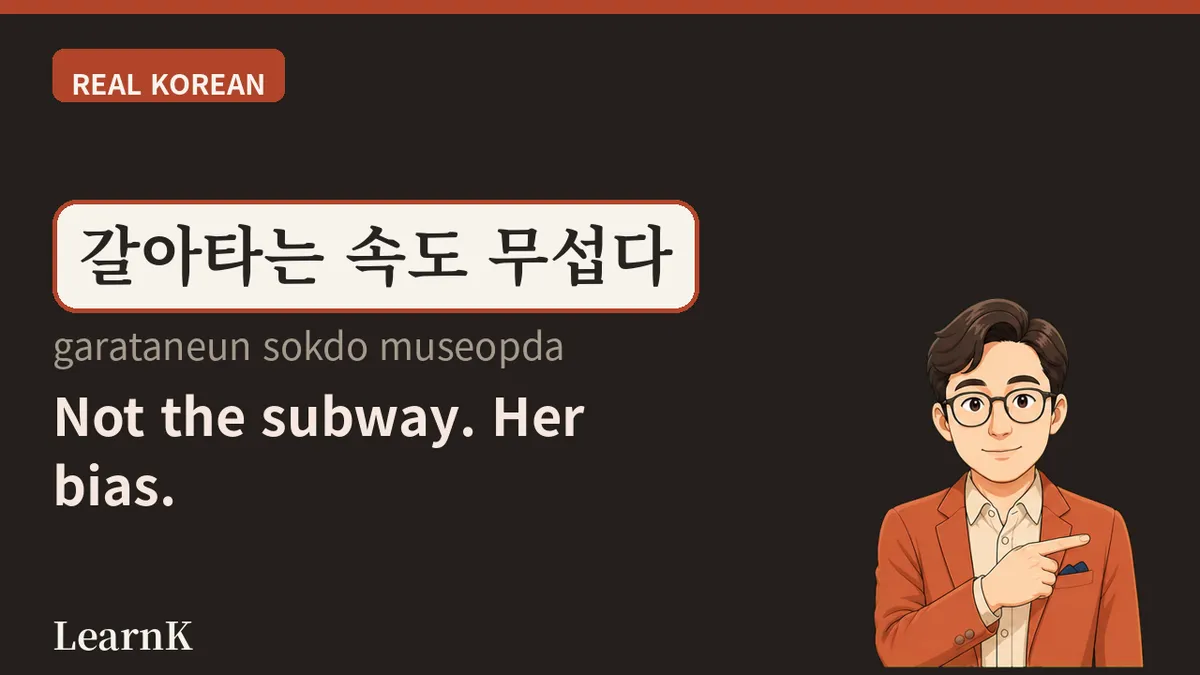
갈아타다
When K-pop fans first hear this word, it can leave you a little puzzled. The dictionary clearly says it means “to change vehicles,” yet fans say “나 갈아탔어” without a bus anywhere in sight. Today, let’s follow how this one word, 갈아타다 (garatada), stretches all the way from a subway transfer station to the K-pop fandom’s practice of “switching your bias.”
Meaning and Nuance
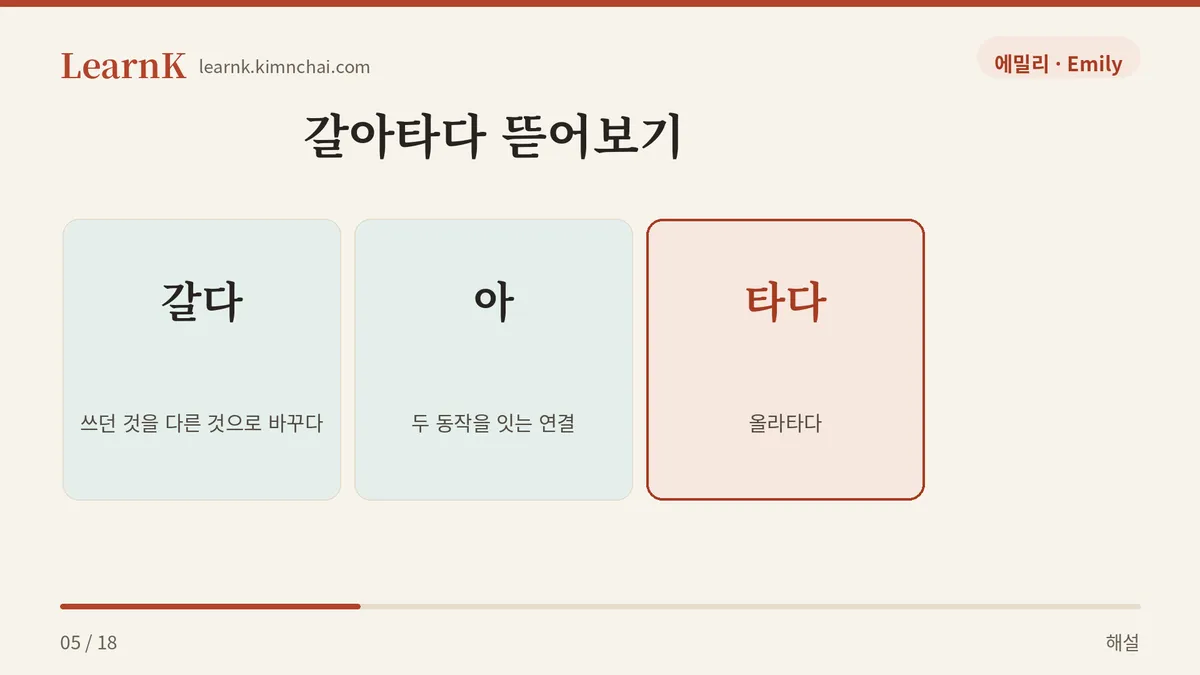
The basic meaning is very concrete. It’s the act of getting off whatever you were riding and switching to something else. Two things are key here — ① abandoning (getting off) what you were originally riding, and ② moving onto something new, that feeling of a “swap.” It’s not just newly boarding something; the nuance of leaving behind what you had and moving on is alive in it.
It’s exactly this “leaving behind and moving on” feeling that makes K-pop fans love this word. When their heart shifts away from the group they were cheering for, or from their 최애 (their most treasured member), toward someone else, they say “나 갈아탔어.” Just as you transfer subway lines, your heart transfers too.
Checking the National Institute of Korean Language Dictionary
First, let’s start with an authoritative source. The National Institute of Korean Language’s Basic Korean Dictionary defines 갈아타다 like this:
갈아타다 (verb): To get off from the vehicle you were riding and get on another. [en] transfer; transship — To get off from a vehicle and get on another. [ja] 乗り換える — 乗っていたものから降りて、別のものに換えて乗る。 [es] transbordar — Bajar de un medio de transporte para subir a otro. [zh] 换乘,倒 — 从坐着的交通工具上下来,改坐别的交通工具。 — National Institute of Korean Language, Basic Korean Dictionary (krdict.korean.go.kr)
Shall we also look at the real usage examples the dictionary provides?
- 지하철을 갈아타다.
- 버스를 갈아타다.
- 기차를 갈아타다.
- 비행기를 갈아타다.
- 국내선으로 갈아타다. — National Institute of Korean Language, Basic Korean Dictionary (krdict.korean.go.kr)
Let me attach a situation to each one. 지하철을 갈아타다 (jihacheoreul garatada) is something any traveler in Seoul deals with every day. It’s that exact moment of transferring — getting off Line 2 and moving onto Line 3. 비행기를 갈아타다 (bihaenggireul garatada) is used when you fly to another country by way of Incheon, and 국내선으로 갈아타다 (gungnaeseoneuro garatada) is for when you get off an international flight and move to the domestic gate. 기차를 갈아타다 (gichareul garatada) describes a journey where the destination is far and you have to change trains once in the middle — like switching from the KTX to a Mugunghwa train. In all of them, the structure of “getting off and then boarding again” stays fully alive.
Seeing It in a Real Conversation
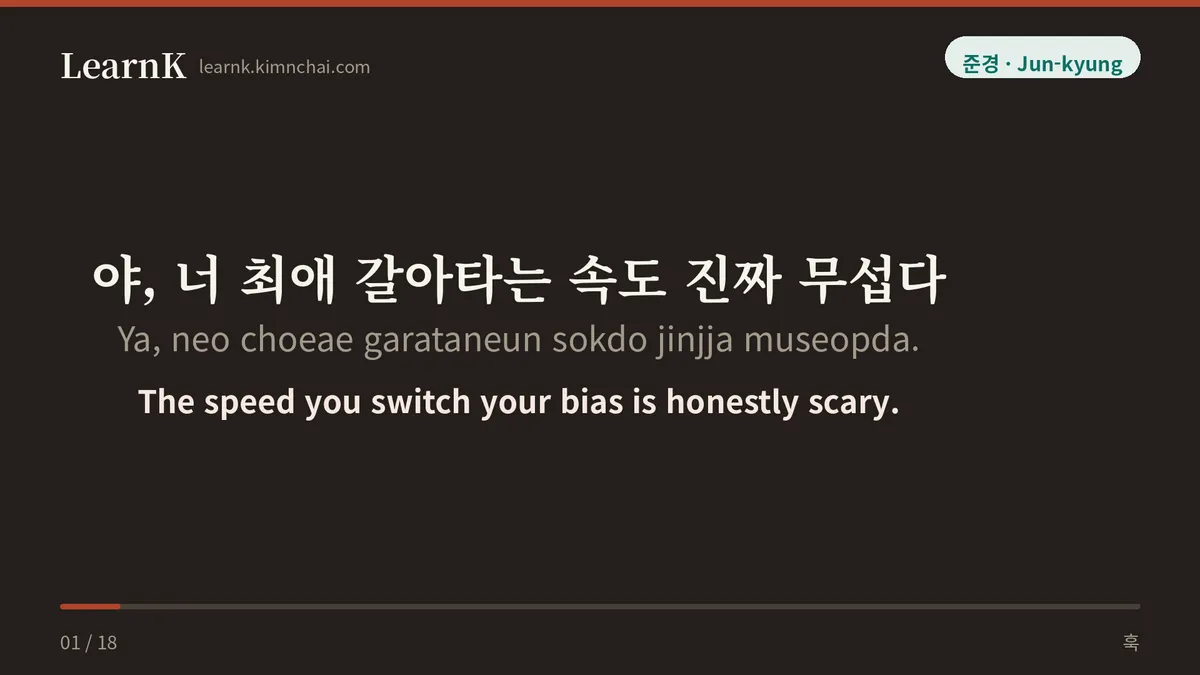
Scene: A weekend afternoon, watching a comeback stage on a music show together. Jun-kyung notices that the group Emily is cheering for has changed.
Jun-kyung: 어? 너 저번엔 다른 그룹 응원봉 흔들지 않았어? Huh? Weren’t you waving a different group’s lightstick last time?
Emily: 아 그거… 나 이 팀으로 갈아탔어. 지난주 라이브 보고 바로 넘어갔잖아. Oh, that… I switched over to this team. I jumped ship right after last week’s live.
Jun-kyung: 벌써? 야, 너 최애 갈아타는 속도 진짜 무섭다. Already? Man, the speed you switch your bias is honestly scary.
Emily: 어쩔 수 없어. 저 라이브 실력을 보고 어떻게 안 갈아타? I can’t help it. How do you not switch after live skills like that?
Jun-kyung: …솔직히 나도 조금 흔들리긴 하네. …Honestly, I’m wavering a little too.
Emily: 거봐. 너도 이번 주 안에 갈아탄다, 내기할래? See? You’ll switch over by the end of this week too. Wanna bet?
Example Sentences by Situation
Situation 1 — At the airport (original meaning). 인천에서 비행기를 갈아타야 해서 세 시간 기다렸어. (Incheoneseo bihaenggireul garataya haeseo se sigan gidaryeosseo.) This is a very common traveler’s complaint that the layover wait on a connecting flight was long.
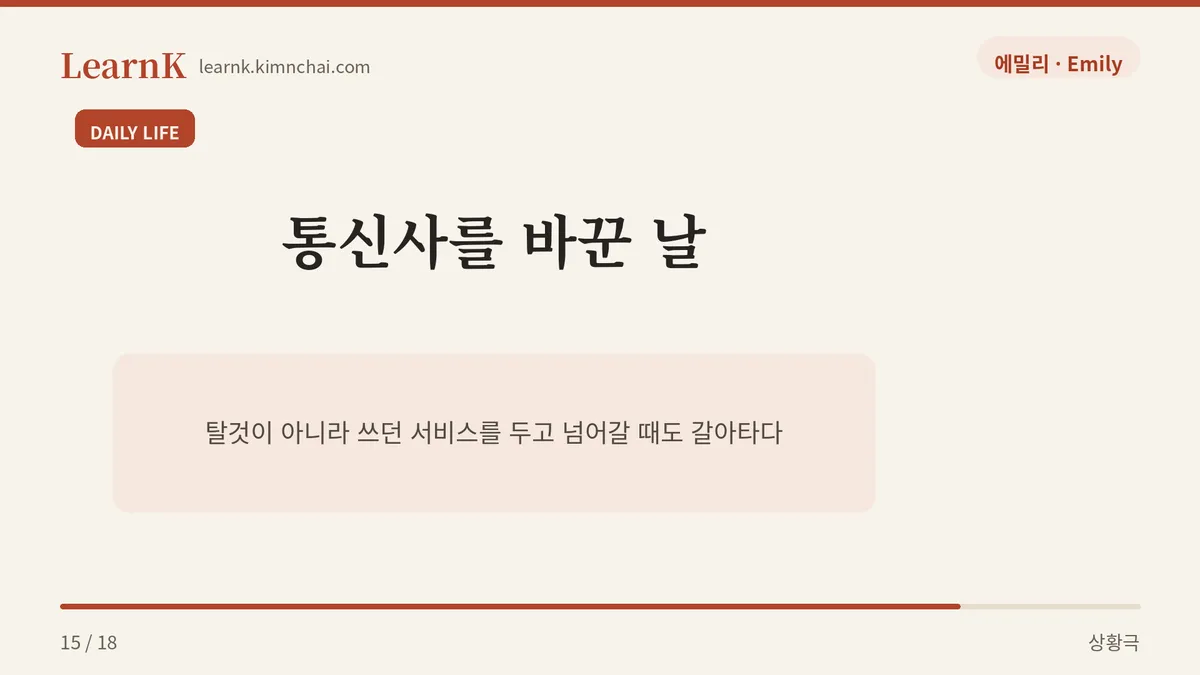
Situation 2 — Changing services (extended meaning). 나 이번에 요금제 싼 통신사로 갈아탔어. (Na ibeone yogumje ssan tongsinsaro garatasseo.) Here it doesn’t mean an actual vehicle but “I changed the service I was using.” When switching mobile carriers, banks, or apps, Koreans really do say it this way all the time.
Situation 3 — Fandom (the K-pop meaning). 원래 발라드만 듣다가 요즘 아이돌 음악으로 갈아탔어. (Wollae balladeuman deutdaga yojeum aideol eumageuro garatasseo.) This is today’s K-pop-style usage, used when your taste or your bias has shifted.
Polite/Casual Speech and Similar Expressions
In casual speech it becomes 갈아탔어 (garatasseo), in polite speech 갈아탔어요 (garatasseoyo), and more formally 갈아탔습니다 (garatasseumnida). With friends, “나 갈아탔어” works naturally, and with an elder, something like “요금제를 갈아탔어요” sounds right.
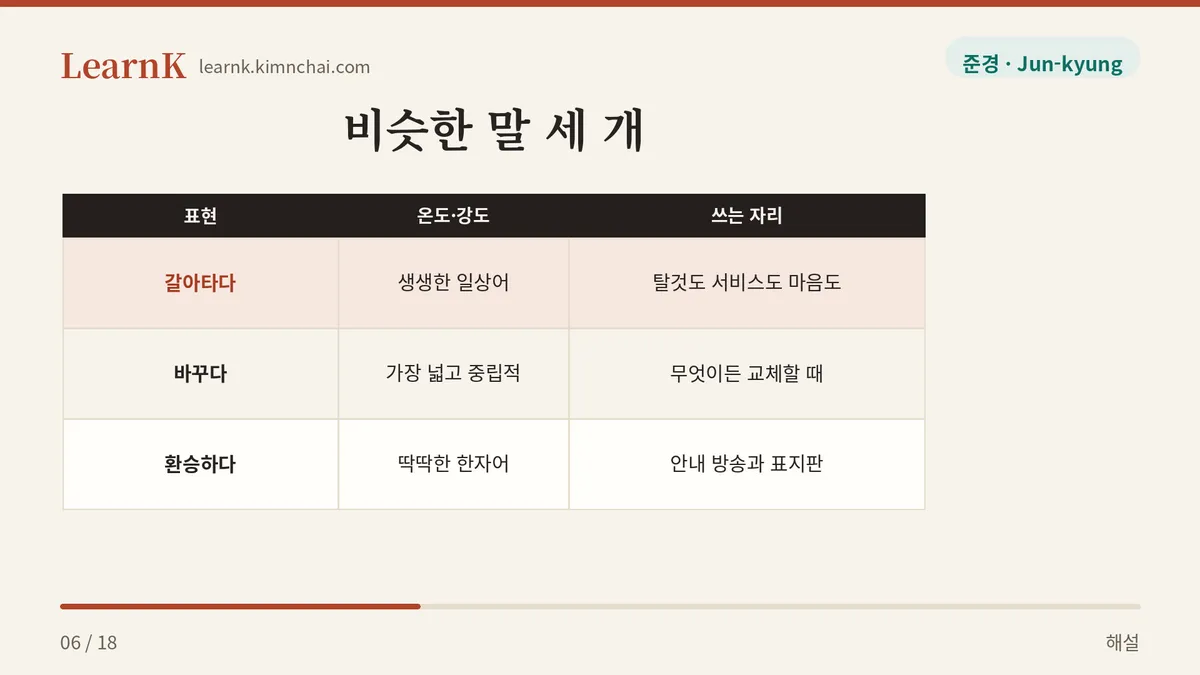
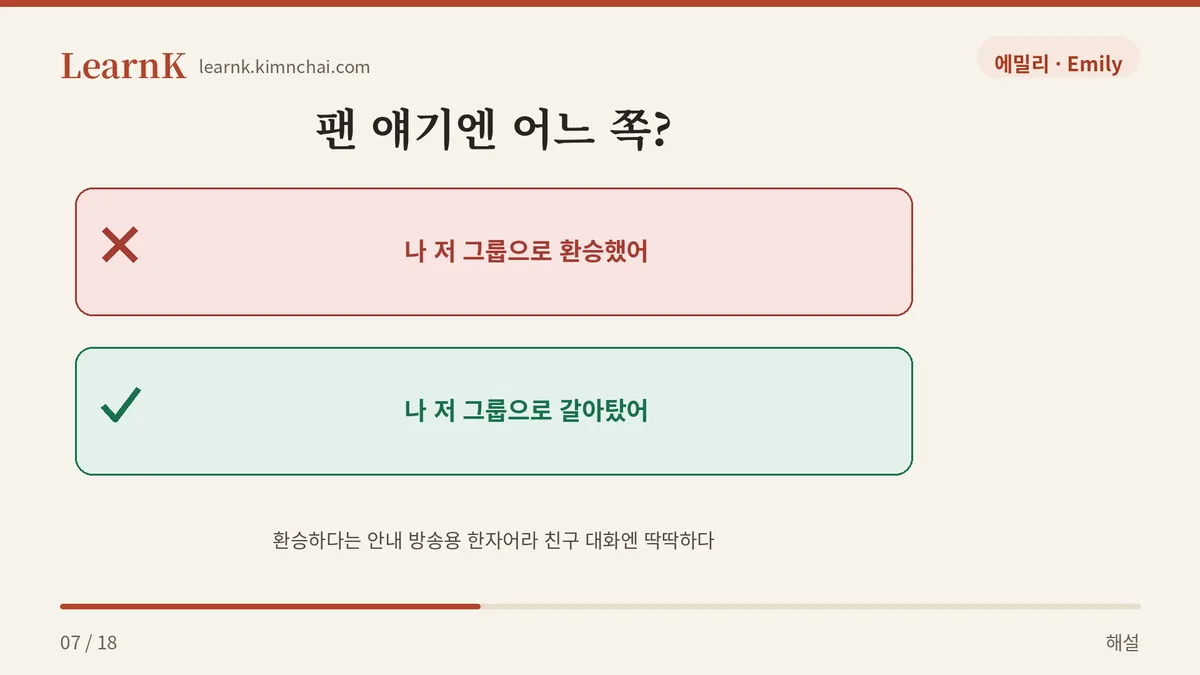
Let me also sort out some similar words. 바꾸다 (bakkuda) just means “to change/replace,” so its range is broad, while 갈아타다 keeps that picture of “getting off and boarding again” alive, making it more vivid. 환승하다 (hwanseunghada) is a stiff Sino-Korean word that shows up in subway and bus announcements, so even though it means the same thing, it suits a sign better than everyday conversation. And if you want to capture the nuance of your heart shifting too, then 갈아타다 is far more flavorful than 바꾸다.
Cultural Background — Why “갈아타다” of All Words?
Korea’s public-transit transfer culture is unusually well developed. With a single transit card, you can transfer from bus to subway however many times and your fare carries over — this “transfer discount” is part of daily life. So “갈아타다” is a sense that’s ingrained in everyone’s body. That familiar action naturally became a metaphor, and so people came to switch carriers, switch tastes, and switch their bias. Even in dramas, the word gets used jokingly for a situation where a character switches their romantic partner. That’s how packed this single word is with the feeling of “leaving behind what you had and moving on, cleanly.”
Closing Quiz
If a friend says, “나 원래 그 그룹 좋아했는데 요즘 다른 그룹으로 갈아탔어,” what has happened to this friend?
① They got on the wrong subway ② Their favorite group changed ③ They bought a concert ticket
The answer is ②! Now you too can confidently 갈아타 (switch over) — whether on the subway or in a fandom, right?
Definitions and example sentences are from the National Institute of Korean Language’s Basic Korean Dictionary (krdict.korean.go.kr); that portion of this post, including our translations, is licensed under CC BY-SA 2.0 KR.