The Art of Korean Consideration and Refusal, Learned Through One Word: "괜찮아요"
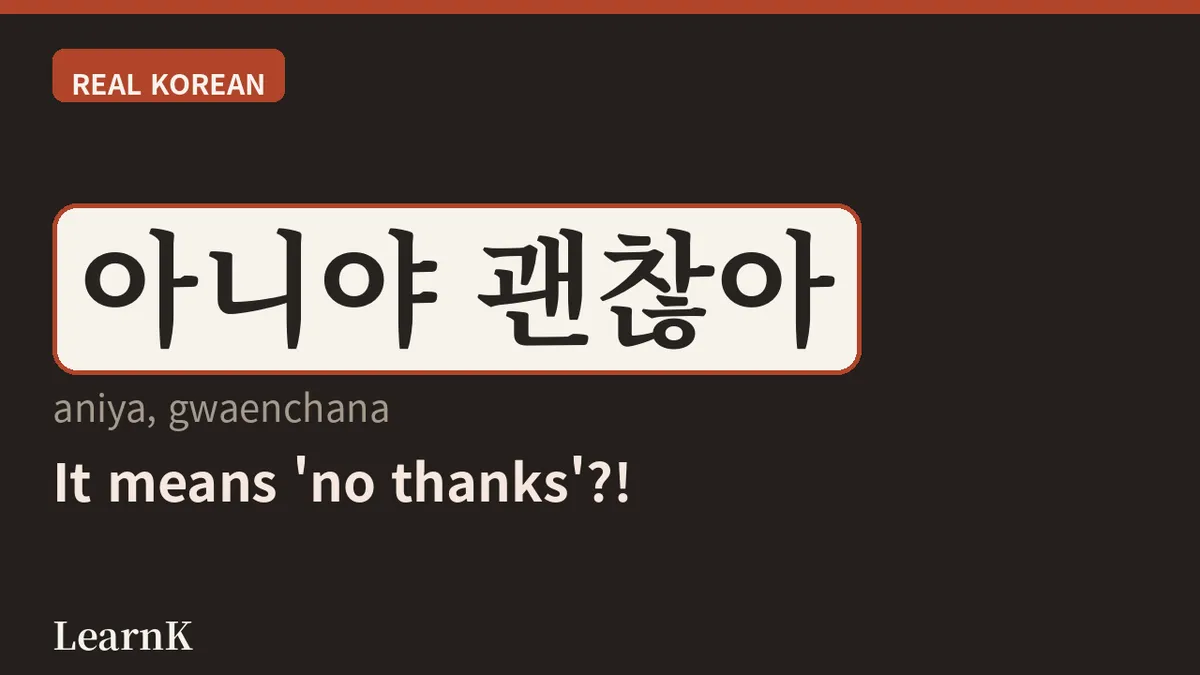
괜찮아요
When you watch Korean dramas, there’s one expression you’ll hear again and again. It shows up when someone accidentally steps on your foot, when you comfort a friend going through a hard time, and even when you politely turn something down — a truly all-purpose phrase. That phrase is 괜찮아요 (gwaenchanhayo). Today, let’s take a deep look at the Korean heart contained in this single phrase, and how its usage shifts subtly depending on the situation.
When do we use it?
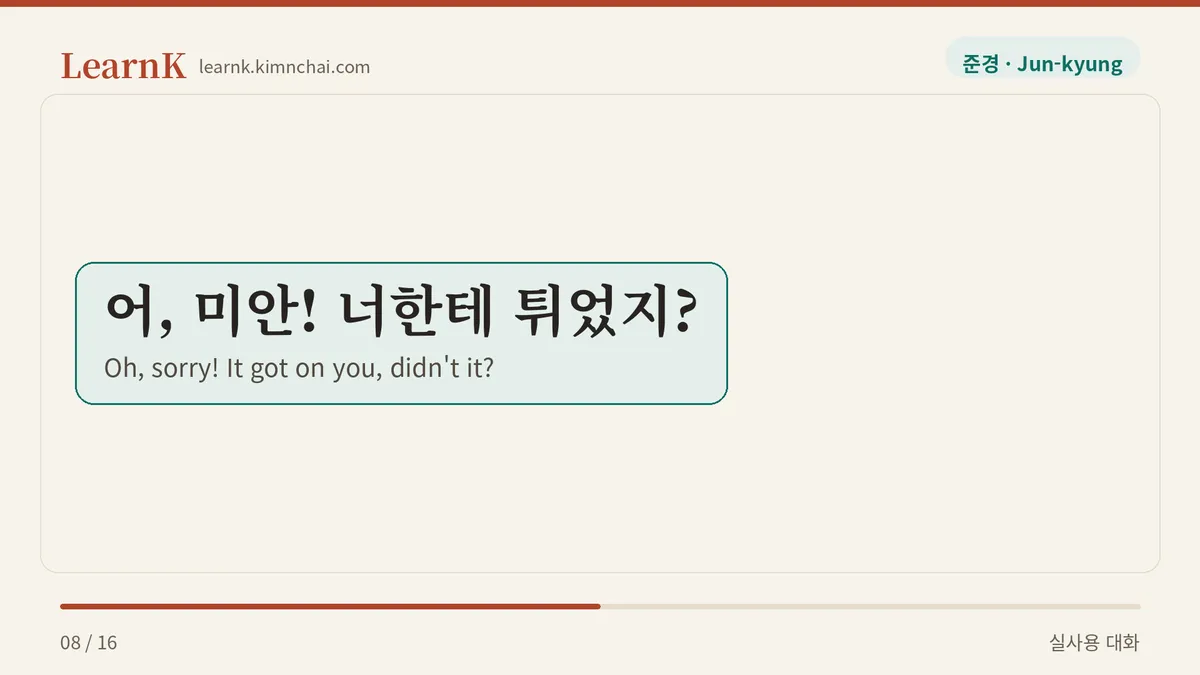
On the subway, someone bumps your shoulder and apologizes with “죄송합니다 (joesonghamnida).” A Korean person will smile and reply 괜찮아요 (gwaenchanhayo) — meaning “It’s nothing, don’t worry about it.” On the other hand, when you pat the shoulder of a friend who’s discouraged after failing an exam, the same 괜찮아요 becomes a warm comfort meaning “Everything will be okay.” The charm of this phrase is how a single expression can carry such different emotional temperatures depending on the situation.
Meaning and nuance
괜찮아요 (gwaenchanhayo) is the base form 괜찮다 (gwaenchanta) with a polite (honorific) ending attached. Its core meaning divides roughly into three:
- No problem · nothing wrong: “몸은 좀 어때요? (momeun jom eottaeyo?)” → “이제 괜찮아요. (ije gwaenchanhayo.)” (One’s health or condition is back to normal.)
- Reassuring comfort: “괜찮아요, 실수할 수도 있죠. (gwaenchanhayo, silsuhal sudo itjyo.)” (Consideration meaning “don’t worry about it.”)
- A gentle refusal: “커피 더 드릴까요? (keopi deo deurilkkayo?)” → “아니에요, 괜찮아요. (anieyo, gwaenchanhayo.)” (A far more polite way of declining than “됐어요 (dwaesseoyo).”)
The third usage in particular is the one learners find most confusing. In Korea, when someone offers you something and you say 괜찮아요, it becomes a soft, indirect refusal meaning “Thanks, but I’ll pass.” When it comes with the right intonation and a hand gesture (a light wave of the hand), the meaning of refusal becomes unmistakable.
Example sentences by situation
Situation 1 — Accepting an apology A server at a restaurant spills a little water.
괜찮아요, 조금밖에 안 묻었어요. (gwaenchanhayo, jogeumbakke an mudeosseoyo.)
“It’s okay, only a little got on me” — a generous response that eases the other person’s guilt.
Situation 2 — Comforting a friend To a colleague who botched a presentation.
괜찮아요, 다음에 더 잘하면 되죠. (gwaenchanhayo, da-eume deo jalhamyeon doejyo.)
A classic example of Korean-style comfort that soothes the person before worrying about the result.
Situation 3 — Politely declining A delivery driver offers to carry a heavy package for you.
아니에요, 괜찮아요. 제가 들 수 있어요. (anieyo, gwaenchanhayo. jega deul su isseoyo.)
A refusal filled with consideration — grateful for the kindness, but not wanting to be a burden.
Comparing polite, casual, and similar expressions
Even with the same meaning, the form changes depending on who you’re speaking to.
- 괜찮습니다 (gwaenchanseumnida) — The most formal version. For work or official settings.
- 괜찮아요 (gwaenchanhayo) — Polite yet soft, everyday honorific speech. The most widely used.
- 괜찮아 (gwaenchana) — Casual speech (banmal) between friends and family. The phrase couples in dramas often exchange.
Similar expressions include 별말씀을요 (byeolmalsseumeuryo) — a humble reply similar to “천만에요 (cheonmaneyo), you’re welcome” — and 문제없어요 (munjeeopseoyo) — a confident “there’s no problem.” But neither captures comfort, refusal, and reassurance all at once the way 괜찮아요 does.
Cultural background
In Korean culture, 괜찮아요 is more than a simple word — it’s a symbol of ‘정 (情, jeong)’ and consideration. When someone feels sorry, you quickly say it’s okay to lift the weight off their heart; for someone struggling, you say it’s okay to stay by their side. In fact, scenes in many dramas and films where the protagonist holds back tears while repeating “괜찮아 (gwaenchana)” are considered iconic moments that represent the Korean emotional spirit of self-consolation. Literally it means “I’m okay,” but woven inside it is a more complicated feeling — the act of “pretending to be okay even when you’re not.”
Closing quiz
A friend says, “내가 아이스크림 사 줄게! (naega aiseukeurim sa julge!, I’ll buy you ice cream!)” but you’re full and want to politely decline. Which of the following is the most natural reply?
- 문제없어요. (munjeeopseoyo.)
- 아니에요, 괜찮아요. (anieyo, gwaenchanhayo.)
- 괜찮습니다, 감사합니다만 지금은 사양하겠습니다. (gwaenchanseumnida, gamsahamnidaman jigeumeun sayanghagetseumnida.)
The answer is number 2, 아니에요, 괜찮아요 (anieyo, gwaenchanhayo). Between friends, a soft and natural refusal fits best. Now that you’ve learned 괜찮아요 today, try using it with confidence in all three situations!