경복궁 (Gyeongbokgung) — Joseon's First Palace, Named for 'Great Blessings'
경복궁
경복궁 (Gyeongbokgung) means “a palace of the Joseon Dynasty in Seoul — the main palace of the Joseon royal house.” On their first morning in Seoul after coming in from Incheon Airport, plenty of travelers ride Subway Line 3 and get off at the station that carries this name. Come up out of the exit and Gwanghwamun Gate is standing right in front of you, tiled roofs layered one behind another beyond it, and further back still, Bugaksan Mountain rising like a folding screen. That courtyard where the king stood facing his ministers in Korean dramas — this is it. So for someone learning Korean, these three syllables aren’t just a place name; they’re something like the first gateway into travel Korean.
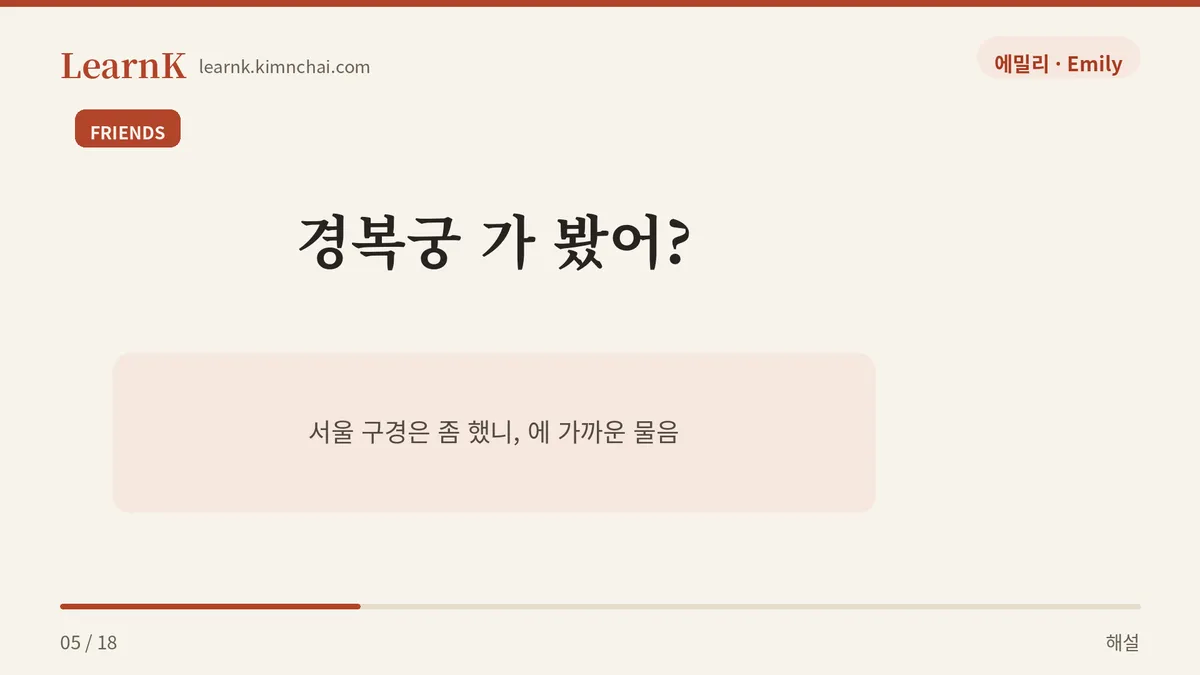
Let’s sort out the nuance first. This is a proper noun with no emotional temperature to it. Because it’s a name that pins down one single thing in the world, there’s no separate honorific or plain version, and you don’t have to adjust it depending on who you’re talking to. That said, among Koreans the word often rolls along carrying the sense of “the default Seoul sightseeing trip.” If someone asks a foreign friend 경복궁 가 봤어? (Gyeongbokgung ga bwasseo?), it usually means something closer to “So, have you gotten to see any of Seoul?” Palace names end with -궁 (-gung, 宮) — 창덕궁 (Changdeokgung), 창경궁 (Changgyeonggung), and 덕수궁 (Deoksugung) are all names made the same way. And when you want to point to the area inside the walls, you add the word 경내 (gyeongnae) and say 경복궁 경내 (Gyeongbokgung gyeongnae), “the palace grounds.”
Checking It in the National Institute of Korean Language Dictionary
경복궁 (Gyeongbokgung) 「noun」 A palace of the Joseon Dynasty located in Seoul. The first of the Joseon-era palaces to be built, it was the main palace of the Joseon Dynasty. — National Institute of Korean Language, Basic Korean Dictionary (krdict.korean.go.kr)
The definition packs in two key points about this word. One is “the first one built,” and the other is “the main palace.” Seoul has several old palaces, but only one was raised first and made the center when the dynasty began.
The same definition appears in the dictionary in several languages.
[English] Gyeongbokgung Palace — The main palace of the Joseon Dynasty, located in Seoul; the first of its kind built during the Joseon era, it was the main palace of the Joseon Dynasty. [Japanese] キョンボックン【景福宮】 — ソウルにある朝鮮(チョソン)時代の宮殿。朝鮮(チョソン)時代の宮殿の中で最も早く建てられたもので朝鮮(チョソン)王朝の正宮である。 [Spanish] Gyeongbokgung, palacio real de la dinastía Joseon — Palacio real de la dinastía Joseon, situado en Seúl. Es el principal de los palacios de la dinastía Joseon y fue el primero en ser construido entre los palacios edificados durante la misma época. [Chinese] 景福宫 — 朝鲜王朝时期最早建造的一座宫殿,位于首尔,为朝鲜王朝的正宫。 — National Institute of Korean Language, Basic Korean Dictionary (krdict.korean.go.kr)
A Portuguese definition isn’t listed in the dictionary. So the line below isn’t a dictionary quote — it’s our own translation. Gyeongbokgung — Palácio da dinastia Joseon situado em Seul; foi o primeiro palácio construído na era Joseon e o palácio principal da dinastia.
Now let’s look at the actual usage examples listed in the dictionary.
경복궁은 조선 시대의 왕들이 거하던 곳이다. (Gyeongbokgung-eun Joseon sidae-ui wangdeul-i geohadeon gosida.) Gyeongbokgung is the place where the kings of the Joseon Dynasty resided. — National Institute of Korean Language, Basic Korean Dictionary (krdict.korean.go.kr)
This is the most basic explanatory sentence. 거하다 (geohada) is a slightly formal word for 살다 (salda) or 머물다 (meomulda), so you’ll run into it often in historical explanations and on information signs.
조선 왕실의 기풍을 느낄 수 있는 경복궁은 외국인 관광객들이 많이 찾는 관광 명소이다. (Joseon wangsil-ui gipung-eul neukkil su inneun Gyeongbokgung-eun oegugin gwangwanggaekdeul-i mani channeun gwangwang myeongsoida.) Gyeongbokgung, where you can feel the spirit of the Joseon royal court, is a tourist attraction visited by many foreign travelers. — National Institute of Korean Language, Basic Korean Dictionary (krdict.korean.go.kr)
This is the tone of a travel brochure or a news sentence. 기풍 (gipung) means the atmosphere and bearing that a group gives off. In one sentence it shows you where this place stands as a tourist destination.
나는 동아리 친구들과 경복궁 답사를 갔다 왔다. (Naneun dongari chingudeul-gwa Gyeongbokgung dapsareul gatda watda.) I went on a field visit to Gyeongbokgung with friends from my club. — National Institute of Korean Language, Basic Korean Dictionary (krdict.korean.go.kr)
This is an everyday sentence a university student might write. 답사 (dapsa) isn’t just going somewhere for fun — it’s a visit made to investigate and examine. History clubs and architecture students use it a lot.
경복궁에 견학을 온 학생들은 예전에 왕비가 쓰던 곳인 내전을 둘러보았다. (Gyeongbokgung-e gyeonhageul on haksaengdeul-eun yejeone wangbiga sseudeon gosin naejeoneul dulleoboatda.) The students who came to Gyeongbokgung on a study visit looked around the inner quarters, the area the queen once used. — National Institute of Korean Language, Basic Korean Dictionary (krdict.korean.go.kr)
This is a scene of a school group visit. 견학 (gyeonhak) means going and seeing something in order to learn. In spring and fall you really can watch lines of kids in yellow caps filing through.
나는 가족과 함께 경복궁 안에 위치한 국립 민속 박물관을 다녀왔다. (Naneun gajokgwa hamkke Gyeongbokgung ane wichihan Gungnip Minsok Bangmulgwan-eul danyeowatda.) I went with my family to the National Folk Museum, located inside Gyeongbokgung. — National Institute of Korean Language, Basic Korean Dictionary (krdict.korean.go.kr)
This sentence tells you there’s a museum inside the walls too. It’s also the reason you should set aside a whole day.
A Real Conversation
Scene: Saturday morning, at the crosswalk by the Gwanghwamun intersection. Emily’s parents are flying in from Canada next week.
Jun-kyung: 부모님 오시면 어디부터 모실 거야? 나 같으면 그냥 경복궁. Where are you taking your parents first when they get here? If it were me, I’d just go with Gyeongbokgung.
Emily: 나도 거기 생각했어. 근데 열한 시쯤 가면 수문장 교대식 놓치잖아. I was thinking the same place. But if we go around eleven, we’d miss the changing of the guard.
Jun-kyung: 어, 너 그런 것도 알아? 나 서울 살면서 그거 한 번도 못 봤는데. Wait, you know about that too? I’ve lived in Seoul my whole life and never once seen it.
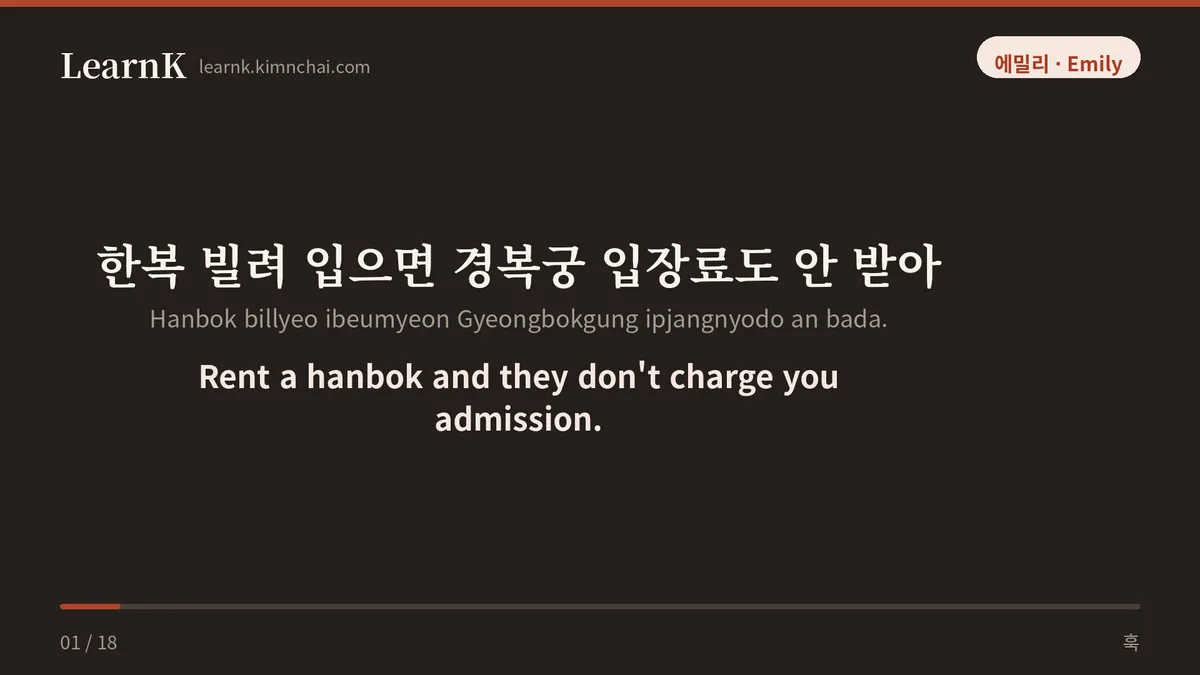
Emily: 15년째 살면 알게 돼. 한복 빌려 입으면 경복궁 입장료도 안 받아. You pick it up after fifteen years. And if you rent a hanbok, they don’t even charge you admission to Gyeongbokgung.
Jun-kyung: 야, 그럼 나도 껴도 돼? 나 도포 한번 입어 보고 싶었어. Hey, can I tag along then? I’ve always wanted to try on a dopo.
Emily: 오지 마. 우리 아빠가 너 사진만 찍어 줄걸. Don’t come. My dad will end up taking pictures of nobody but you.
This Sounds Off
Since this is a proper noun that doesn’t change with the setting or the listener, there’s no way to be rude with it. Instead, here are two misunderstandings learners often trip over.
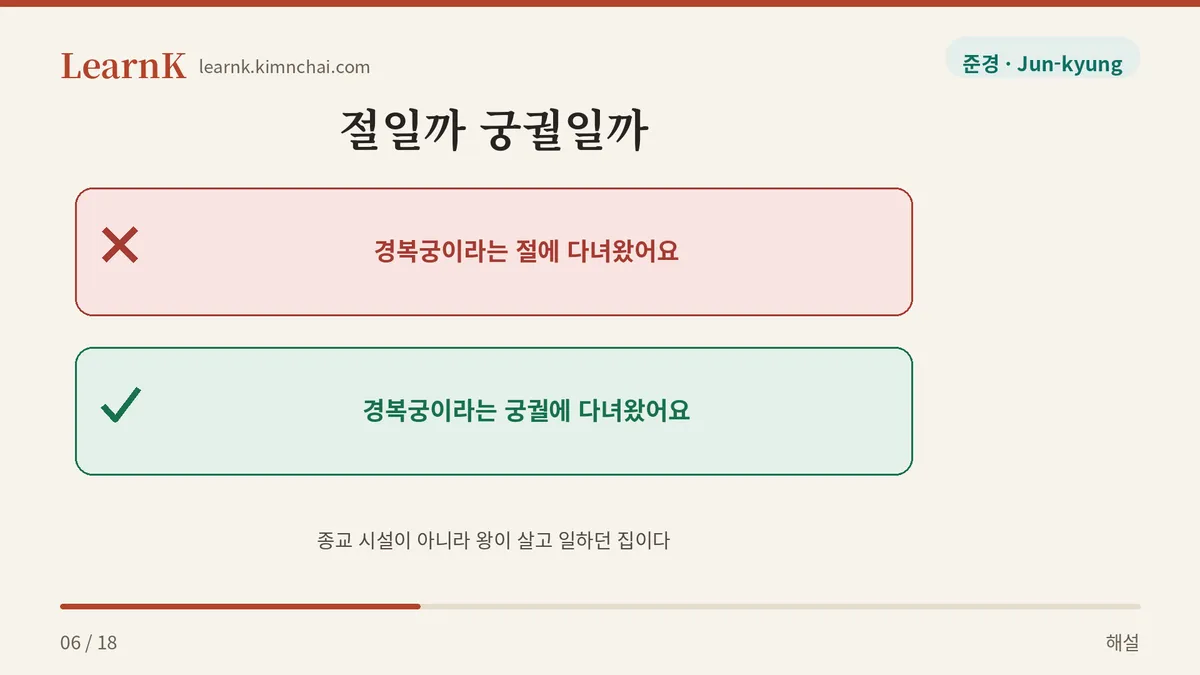
✗ 어제 경복궁이라는 절에 다녀왔어요. (Eoje Gyeongbokgung-iraneun jeore danyeowasseoyo.) ✓ 어제 경복궁이라는 궁궐에 다녀왔어요. (Eoje Gyeongbokgung-iraneun gunggwore danyeowasseoyo.) → The tiled roofs and painted eaves look similar, so it’s easy to confuse this with a temple, but it isn’t a religious site — it’s the house where the king lived and worked. Temple names end with -사 (-sa, 寺).
✗ 서울에 있는 옛 궁궐은 다 경복궁이죠? (Seoure inneun yet gunggwol-eun da Gyeongbokgung-ijyo?) ✓ 서울에 있는 옛 궁궐 중 하나가 경복궁이에요. (Seoure inneun yet gunggwol jung hanaga Gyeongbokgung-ieyo.) → This isn’t a common noun for a type of building; it’s a one-of-a-kind name. 창덕궁 (Changdeokgung), 창경궁 (Changgyeonggung), 덕수궁 (Deoksugung), and 경희궁 (Gyeonghuigung) are separate places, and to refer to them all together you use 고궁 (gogung) or 궁궐 (gunggwol).
Example Sentences by Situation
1) Asking for directions at your hotel’s front desk
여기서 경복궁까지 걸어서 얼마나 걸려요? (Yeogiseo Gyeongbokgung-kkaji georeoseo eolmana geollyeoyo?)
How long does it take to walk from here to Gyeongbokgung?
You’re asking a staff member you’ve never met, so the 해요체 (haeyo-che) polite style fits. -까지 (-kkaji) is a particle that marks the end point, so you can attach it straight onto the name of your destination.
2) Making weekend plans with a friend (casual speech)
날씨도 좋은데 주말에 경복궁이나 한 바퀴 돌까? (Nalssido joeunde jumare Gyeongbokgung-ina han bakwi dolkka?)
The weather’s nice — want to take a loop around Gyeongbokgung this weekend?
-이나 (-ina) gives the feel of a light suggestion: “I haven’t settled on anything, but how about this?” 한 바퀴 돌다 (han bakwi dolda) means to make one big circuit of a large place, and it suits palaces, parks, and markets well.
3) Sending a photo and explaining it
이 사진 경복궁 경내에서 찍은 거야. 뒤에 보이는 산이 북악산이고. (I sajin Gyeongbokgung gyeongnae-eseo jjigeun geoya. Dwie boineun sani Bugaksan-igo.)
I took this photo inside the Gyeongbokgung grounds. And that mountain in the back is Bugaksan.
This puts 경내 (gyeongnae), which showed up in the dictionary examples, to actual use. One word makes clear that you mean inside the walls, not the plaza outside them.
Polite vs. Casual, and Similar Expressions
Since it’s a proper noun, the word itself doesn’t change. Politeness is built at the end of the sentence, not in the word. To an older person you’d say 경복궁에 가 보셨어요? (Gyeongbokgung-e ga bosyeosseoyo?), and to a friend 경복궁 가 봤어? (Gyeongbokgung ga bwasseo?) — you only swap out the predicate.
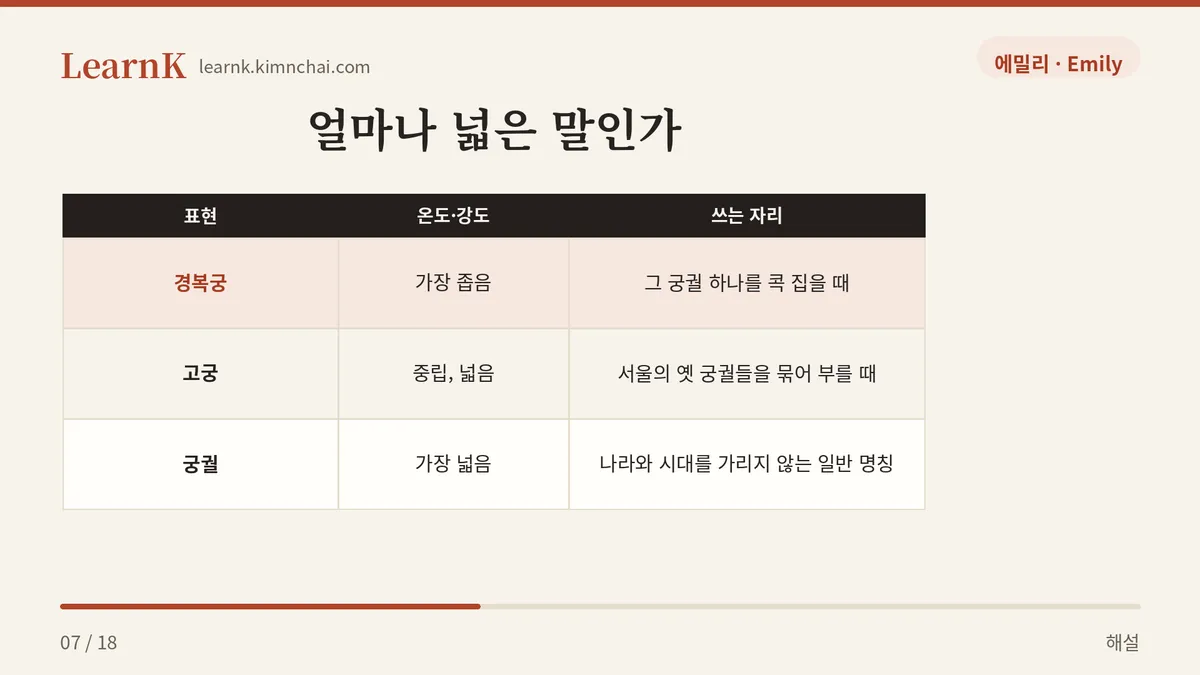
Here’s how the easily confused neighboring words compare.
| Expression | Tone / Scope | Where you use it |
|---|---|---|
| 경복궁 (Gyeongbokgung) | Neutral, narrowest and most specific | When you mean that one particular palace |
| 고궁 (gogung) | Neutral, broad | When grouping together Seoul’s old palaces |
| 궁궐 (gunggwol) | Neutral, broadest | A general term regardless of country or era |
| 왕궁 (wanggung) | Slightly literary | In explanatory or translated writing, for “a palace where a king lives” |
The verbs for visiting also split by setting.
| Expression | Tone / Intensity | Where you use it |
|---|---|---|
| 구경하다 (gugyeonghada) | Light and easygoing | Everyday conversation with friends and family |
| 관람하다 (gwallamhada) | Formal | Announcements, signage, official writing |
| 답사하다 (dapsahada) | Clear purpose | When going to research or study something |
| 견학하다 (gyeonhakhada) | Going to learn | Student group visits |
Cultural Background — The “Great Blessing” in the Name
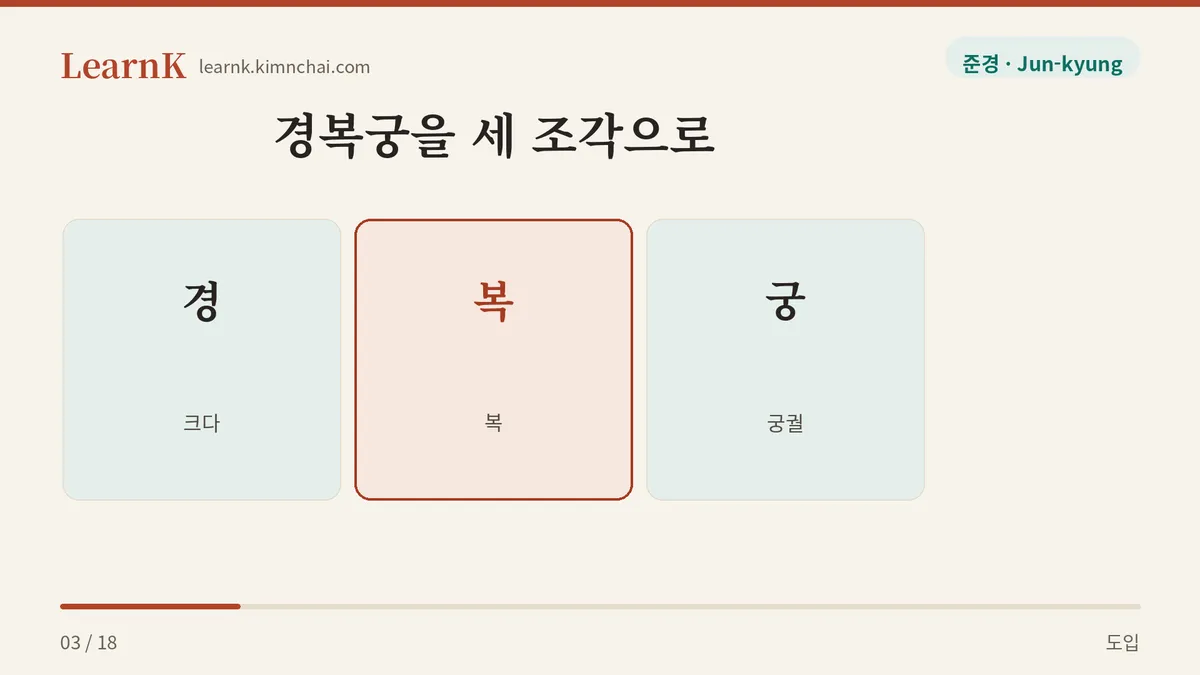
This name wasn’t chosen at random. After Joseon was founded and the new palace was completed, Jeong Do-jeon is said to have taken the two characters 경복 (景福, gyeongbok) from a line in the Classic of Poetry (詩經) and made them the name. 경 (景) means “great,” and 복 (福) means “blessing,” so together they mean “great blessings.” The wish that the new dynasty would enjoy great fortune for a long time became the name of a building. If you’re studying hanja, just knowing these two characters makes the name suddenly readable.
Things didn’t go the way the wish intended. It burned down during the Japanese invasions of 1592 and sat as an empty lot for a long time, and it wasn’t until the reign of King Gojong in the late 19th century that it was rebuilt, under the direction of the Heungseon Daewongun. During the Japanese colonial period, a large share of the buildings were torn down. What we see today is the result of slowly reclaiming it over a long stretch of time since then. That’s why, for Koreans, this name carries more weight than a tourist site.
If you enjoy historical dramas, the space is probably already familiar to your eyes. The courtyard where the king stood facing his ministers to discuss affairs of state, the inner buildings where the queen lived, the pavilion that looks like it’s floating on a pond — there’s real pleasure in seeing in person what you’ve watched on screen. And as the dictionary examples tell you, the National Folk Museum is inside the walls too, so it’s best to give yourself a generous day.
One more note on the present-day scene: in front of the main gate, a changing-of-the-guard ceremony with soldiers in old military dress is held once in the morning and once in the afternoon. And if you come wearing hanbok, you don’t pay admission. So on weekends, lines of colorful hanbok walk along the palace walls. Those two things are exactly what Emily knew in the conversation above — the kind of information you naturally pick up after about fifteen years.
Today’s Quiz
Which of the following is not a correct description of 경복궁 (Gyeongbokgung)?
① It was the main palace of the Joseon Dynasty. ② It was the first of the Joseon-era palaces to be built. ③ It’s a term for all of the old palaces in Seoul taken together.
The answer is ③. This word is a proper noun pointing to one single thing. If you want to refer to several palaces at once, use 고궁 (gogung) or 궁궐 (gunggwol). ① and ② are contained word for word in the National Institute of Korean Language’s definition.
Definitions and example sentences are from the National Institute of Korean Language’s Basic Korean Dictionary (krdict.korean.go.kr); that portion of this post, including our translations, is licensed under CC BY-SA 2.0 KR.