찐 (jjin) — Today's One-Syllable Shortcut for '진짜'
When you listen in on conversations between Korean people these days, you’ll very often hear a short “찐” tacked onto the front of a phrase. “찐친,” “찐맛집,” “찐텐”… You get a vague sense of what it means, but exactly what “temperature” is this word used at? Today, let’s dig deep into that one syllable young Koreans put on their lips several times a day — 찐 (jjin).
찐
찐 (jjin) is a newly coined word that dramatically shortens 진짜 (jinjja, ‘really/genuine’) down to a single syllable. It wasn’t originally a Korean word at all, but as it spread through the internet and broadcasting, it has become an everyday word that people of all ages understand.
Its core meaning is “not fake — the real deal among real deals.” It’s one notch stronger than plain ‘진짜 (jinjja).’ If ‘진짜’ speaks to whether something is a fact, ‘찐 (jjin)’ adds a layer of awe and acknowledgment on top of that. It’s a word the speaker blurts out with admiration, having confirmed with their own two eyes that something is real all the way through — not just impressive on the surface.
There are two main uses.
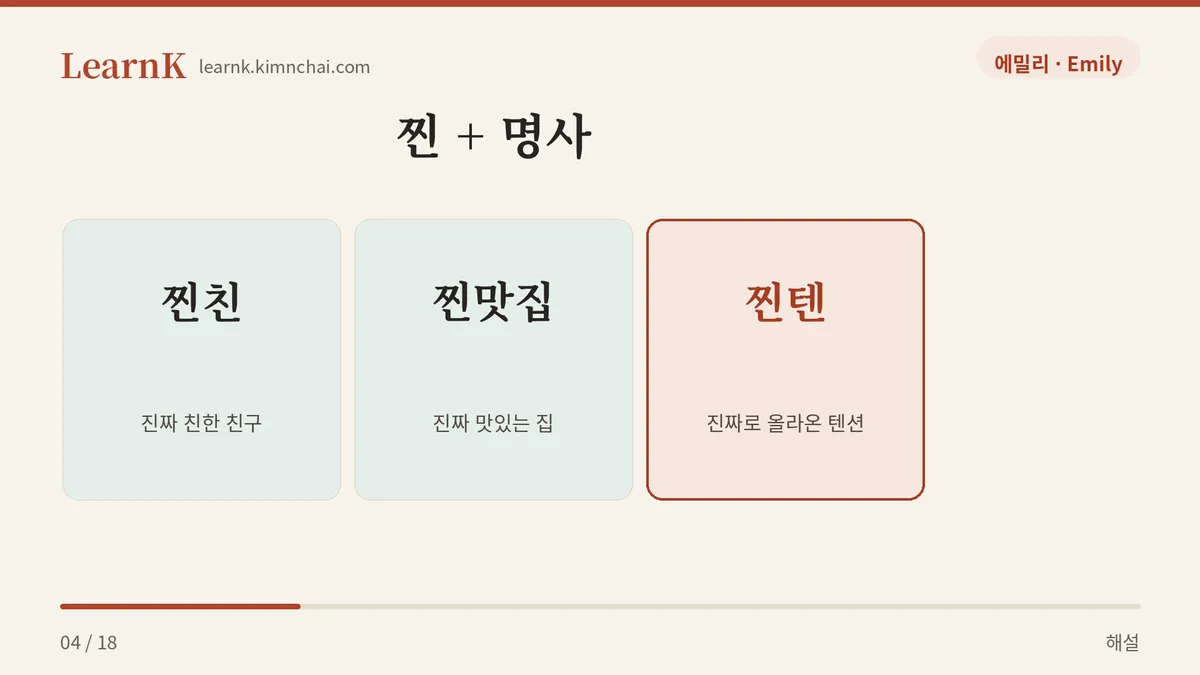
- As a prefix attached to another noun: 찐친 (jjinchin, a truly close friend), 찐맛집 (jjinmatjip, a genuinely delicious eatery), 찐사랑 (jjinsarang, true love).
- On its own as a predicate: “이거 찐이야 (igeo jjiniya, ‘this is the real thing’).” You use it to certify something as “the genuine article” in a single word.
Seeing It in a Real Conversation
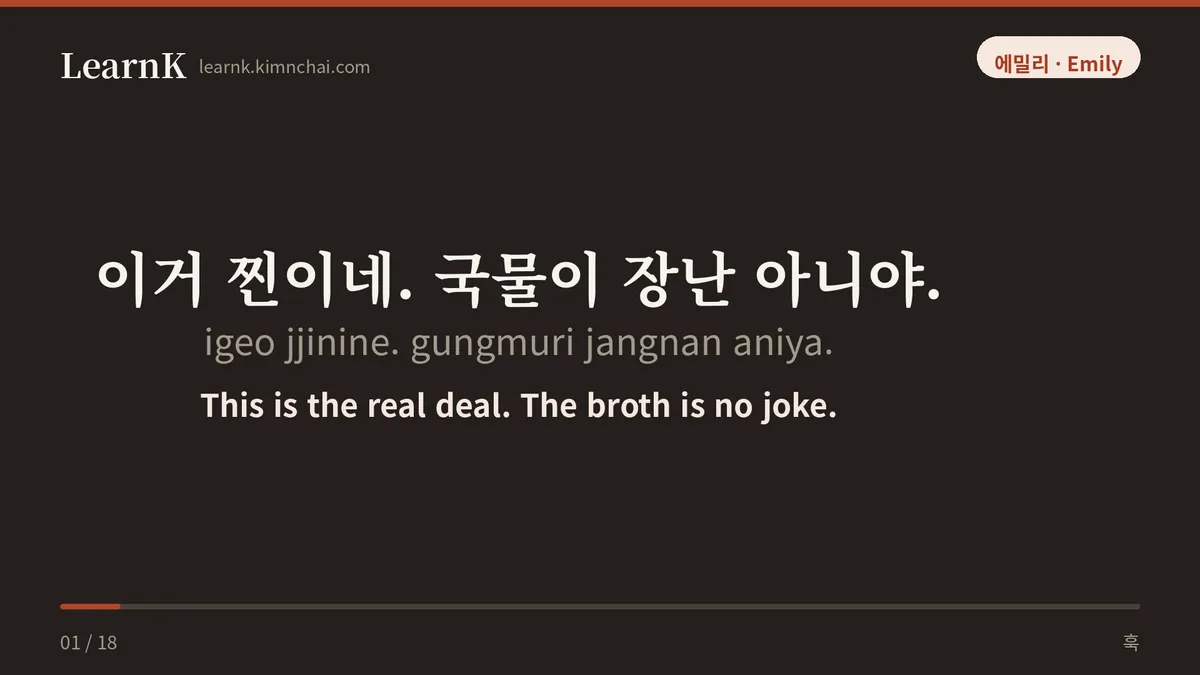
Scene: Jun-kyung has brought Emily to a shabby noodle shop tucked down an alley. There isn’t even a sign out front, so Emily is only half-convinced.
Jun-kyung: 여기야. 겉은 이래도 맛은 내가 보장해. This is it. It looks rough, but I guarantee the taste.
Emily: 진짜? 간판도 없는데… 믿어도 돼? Really? There isn’t even a sign… can I trust you?
Jun-kyung: 일단 한 젓가락 먹어 봐. 말은 그다음에. Just try one bite first. Talk after that.
Emily: (한 입 먹고) …어? 뭐야 이거. 이거 찐이네. 국물이 장난 아니야. (takes a bite) …Huh? What is this. This is the real deal. The broth is no joke.
Jun-kyung: 거봐. 내가 그랬잖아. 여기 우리 동네 찐맛집이야. See? I told you. This is the real-deal spot in our neighborhood.
Emily: 인정. 나 오늘부터 여기 찐단골 될 듯. Agreed. Starting today I’m gonna be a true regular here.
Can you see how ‘찐 (jjin)’ transforms within a single conversation? It works alone as a predicate (찐이네), and it also attaches to nouns to instantly whip up new words like ‘찐맛집·찐단골 (jjinmatjip·jjindangol).’ This building-block power is exactly what has spread ‘찐’ this far and wide.
Example Sentences by Situation
1. When introducing an old friendship
쟤가 내 찐친이야. (jjyaega nae jjinchiniya.) — That person is my truly close friend.
This isn’t just someone you happen to know — it’s a phrase that specifically points out a ‘진짜 (jinjja)’ friend, the one who rushes to you first when times are hard. It’s used in almost the same slot as ‘베프 (bepeu, best friend).’
2. When you’re genuinely hyped
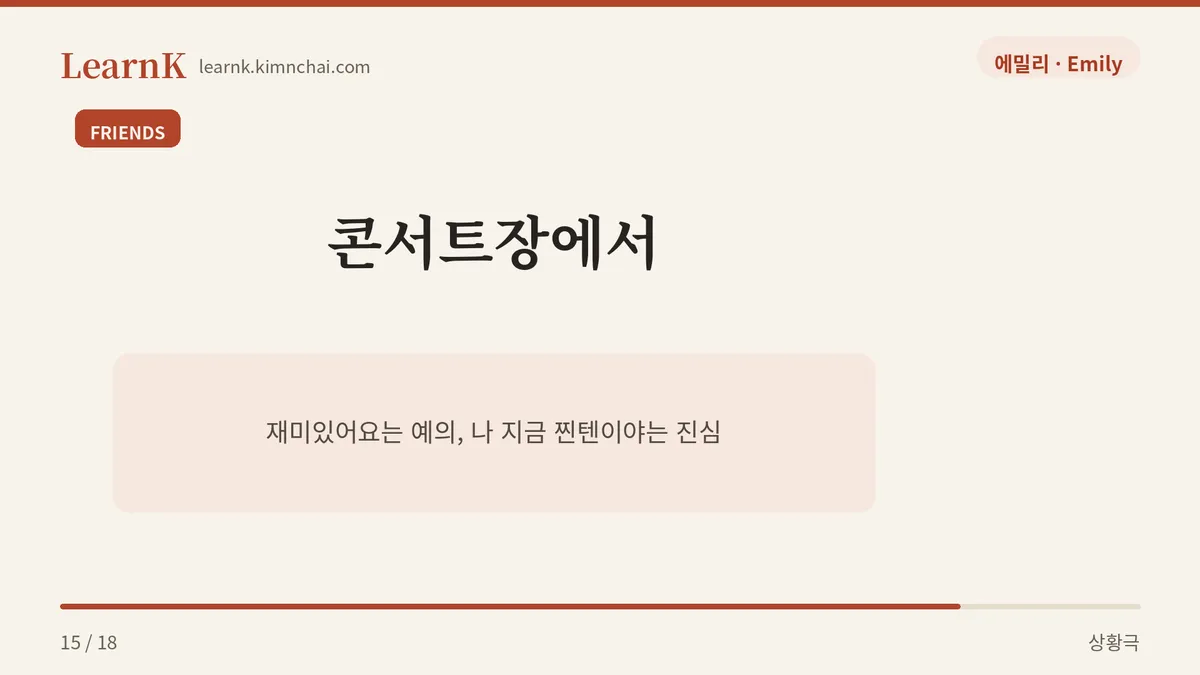
나 지금 찐텐이야. (na jigeum jjinteniya.) — Right now my energy (tension/mood) is genuinely through the roof.
A blend of ‘찐 (jjin)’ and the English ‘tension (텐션),’ it means you’re not forcing yourself to match the vibe — you’re truly fired up. It’s the perfect expression at a concert for a singer you love.
3. When you certify something in a single word
이 드라마 결말 찐이다. (i deurama gyeolmal jjinida.) — This drama’s ending is truly amazing.
It carries the feeling of stamping a seal of approval — “this one’s the real thing” — while marveling at its emotional impact or its craftsmanship.
Comparing Formal/Casual Speech and Similar Expressions
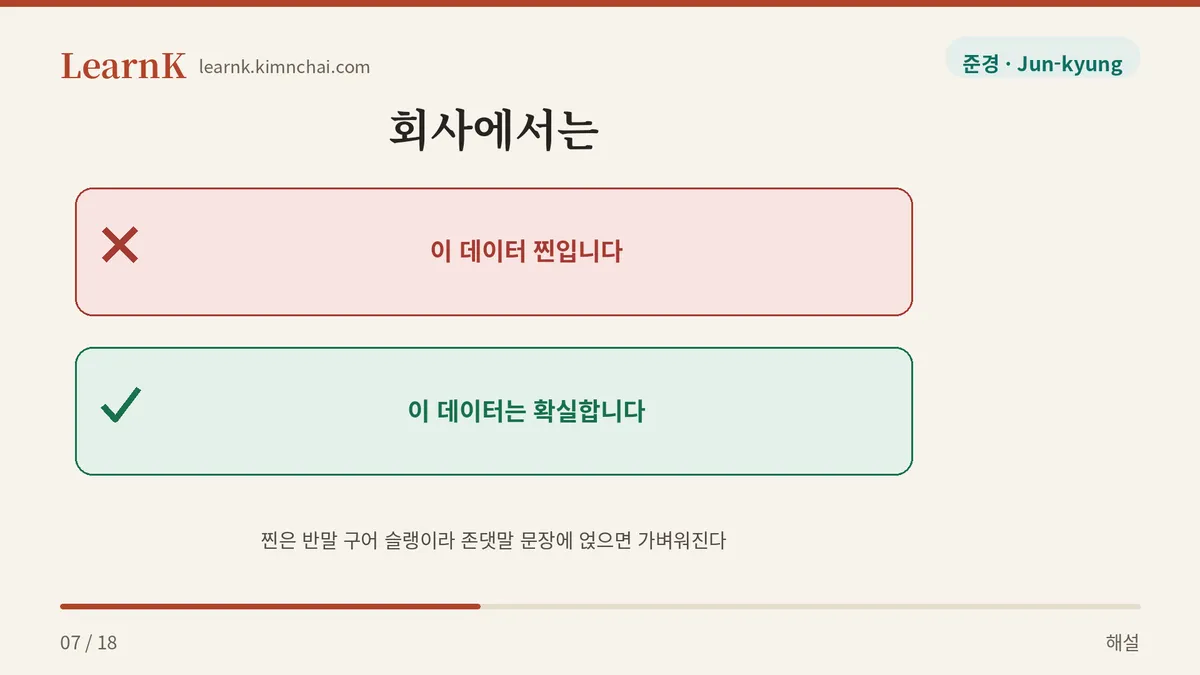
‘찐 (jjin)’ is by nature casual, colloquial slang, so it’s almost never used in formal settings or polite sentences. Handing your boss a report and saying “이 데이터 찐입니다 (i deiteo jjinimnida)” would sound awkward and flippant. In that case you should switch to a proper expression like “이 데이터는 확실합니다 (i deiteoneun hwaksilhamnida, ‘this data is solid/reliable’).”
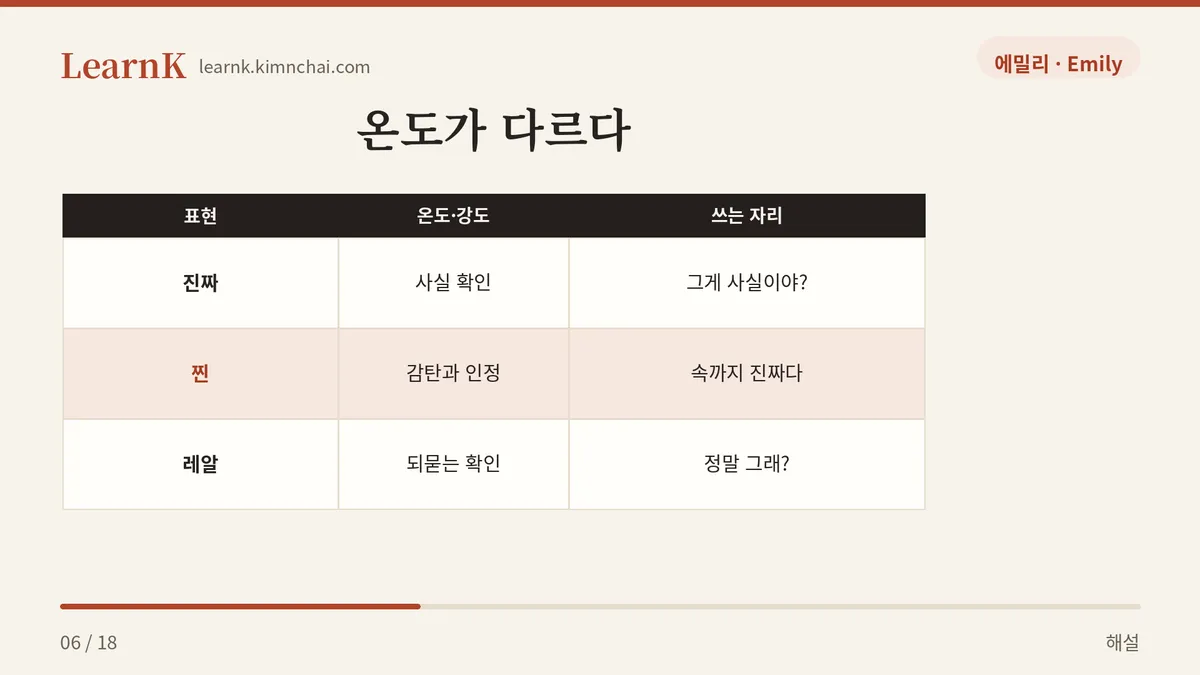
Similar words among peers include 레알 (real, from the English ‘real’) and 실화 (silhwa, literally ‘is this a true story?’ as a re-asking). There’s a subtle difference: if ‘레알 (real)’ leans toward fact-checking, ‘찐 (jjin)’ is closer to acknowledging quality and sincerity.
Cultural Background — Why One Syllable Won
Korean slang has a strong tendency to chop words down in big chunks, as in ‘진짜 → 찐 (jinjja → jjin).’ In an age of rapid-fire smartphone chatting and captions slapped onto short videos, short, punchy words are the ones that survive. Add the forceful pronunciation of the tense consonant ‘ㅉ (jj),’ and ‘찐’ lands with real emotion every time you say it. That’s why this one syllable, which used to roll around only in variety-show captions and comment sections, now pops out in front of noodle shops and when introducing a friend, too.
Closing Quiz
A friend takes you to a newly opened café, and after one sip of coffee, you say this in admiration. What single syllable fills the blank?
“여기 완전 ___맛집이다! 나 앞으로 자주 올래.” (“This place is a total ___-delicious spot! I’m gonna come here often from now on.”)
(Answer: 찐 — jjin. ‘찐맛집 (jjinmatjip)’ means ‘a genuinely delicious eatery.’)
Today’s ‘찐 (jjin)’ is now yours. Next time you come across something you truly love, don’t hesitate — certify it in a single syllable: “이거 찐이다! (igeo jjinida!)”