킹받다 (kingbatda): When You're Not Just Annoyed — You're 'King'-Level Annoyed
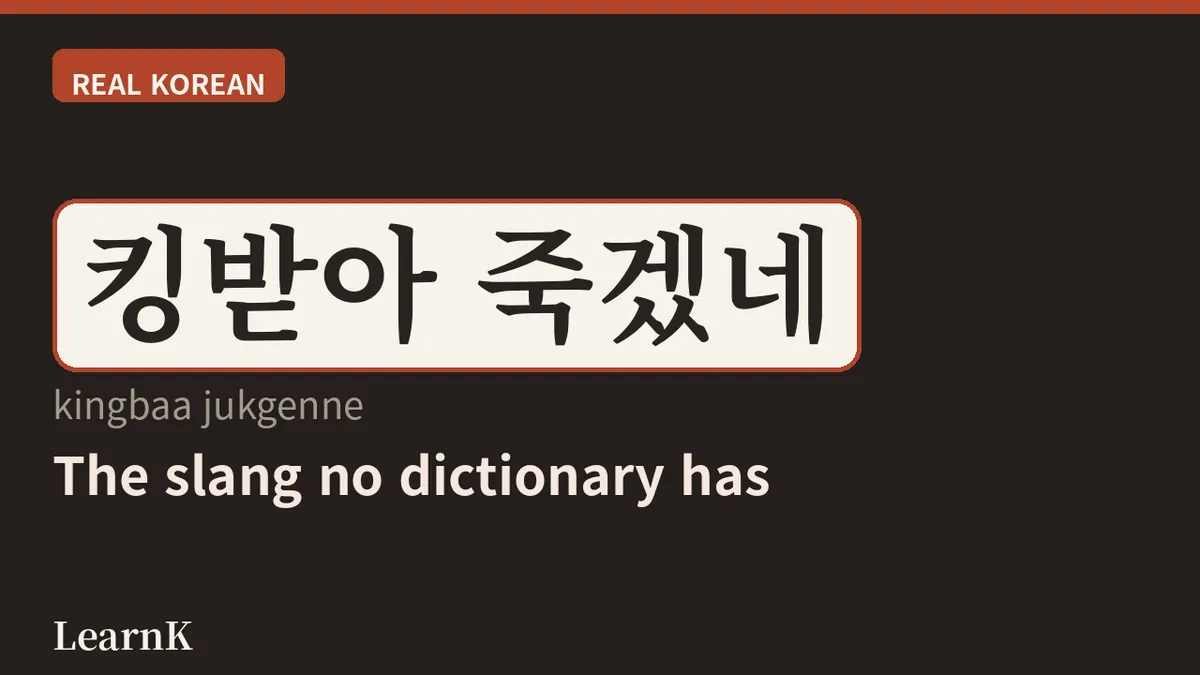
킹받다
If you spend time browsing Korean online communities, YouTube comments, or game chats, you’ll often run into this word: 킹받다 (kingbatda). Learners seeing it for the first time can easily get confused, because no matter how hard they search the dictionary, they won’t find it. And that’s totally understandable — this word isn’t official standard Korean. It was born on the internet in the early 2020s, and now it’s slang that pretty much every Korean knows.
Today, let’s take apart this fun expression, 킹받다 (kingbatda).
When Do You Use It?
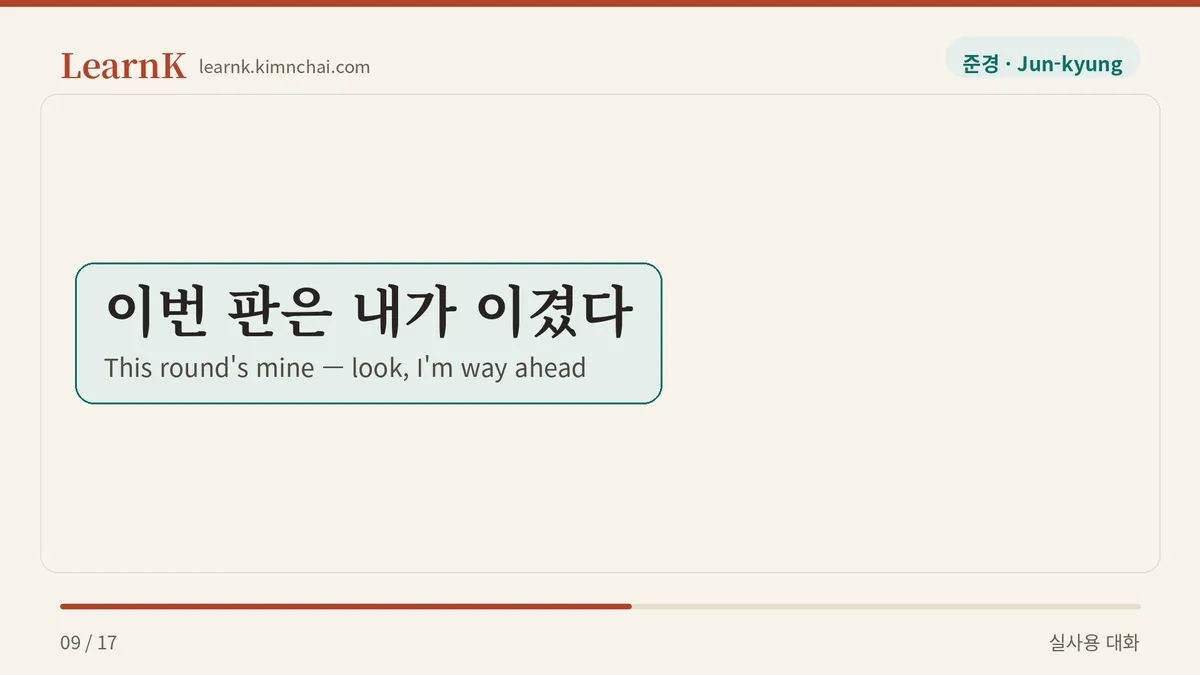
Imagine your friend loses a game at the very last second in the most ridiculous way, so they’re frustrated — and then their opponent starts teasing them. You’re mad, but it’s also kind of funny, and plain old “I’m angry” just doesn’t capture that subtle feeling. The word that comes out in that moment is exactly 킹받다 (kingbatda).
Meaning and Nuance
This word is made up of two pieces.
- 킹 (king): Taken straight from the English word “king,” used as an intensifier meaning “the best” or “the ultimate.”
- 열받다 (yeolbatda): An everyday expression meaning “to get angry” or “to get annoyed.”
In other words, it’s a play on words that swaps out the front part of 열받다 for ‘킹’ to create the meaning “to be as annoyed as a king (王) — annoyed to the max.” To sum it up:
킹받다 (kingbatda) = to be extremely, maximally annoyed / to be ridiculously irritated
There’s one important nuance. 킹받다 often expresses not true rage but rather a half-playful irritation mixed with disbelief. So instead of serious situations, it fits best with moments that are funny yet a little infuriating.
Example Sentences by Situation
Situation 1 — To an annoying friend
또 나만 설거지야? 진짜 킹받네. (tto naman seolgeojiya? jinjja kingbatne.)
You’re annoyed at always being the one stuck with the unpleasant chores, but rather than getting seriously angry, it feels more like grumbling. ‘킹받네 (kingbatne)’ is the exclamatory form of ‘킹받다,’ and it’s the form used most often in real conversation.
Situation 2 — While gaming
다 이겨놓고 마지막에 져서 킹받아 죽겠어. (da igyeonoko majimage jyeoseo kingbaa jukkesseo.)
This exaggerates the frustration of ridiculously blowing a game you had all but won. ‘킹받아 죽겠어’ is an emphasized way of saying ‘너무 킹받는다’ (I’m so annoyed I could die).
Situation 3 — As an exclamation, like a meme
와, 이 표정 완전 킹받는다. (wa, i pyojeong wanjeon kingbanneunda.)
This is when you react to someone’s annoying expression or behavior with “that’s ridiculous and irritating.” Here, the nuance is more teasing than genuinely angry.
Casual vs. Polite Speech, and Comparing Similar Expressions
Since 킹받다 was born as an internet buzzword, it’s basically used in casual speech, among friends. It’s safest not to use it with people older than you or in formal settings.
- Casual: 킹받아 (kingbaa) / 킹받네 (kingbatne)
- If you force it into polite speech: 킹받아요 (kingbaayo) — but this only sounds natural as a playful tone among close friends.
Comparing it with similar words, the intensity and feel are different.
- 짜증나다 (jjajeungnada): Standard Korean. A neutral “I’m annoyed” you can use anywhere.
- 열받다 (yeolbatda): Colloquial. A casual version of “I’m angry.”
- 킹받다 (kingbatda): More emphatic than the two above, a very recent buzzword mixed with humor and disbelief.
Cultural Background
킹받다 is a classic example of an ‘internet neologism’ that spread through online game streams, communities, and comedy YouTube content. The way it attaches the English word “king” to a Korean verb for emphasis nicely shows the wordplay of Korea’s younger generation in this era. Similar coinages became trendy, like ‘킹리적 갓심’ (a play on 합리적 의심, “reasonable doubt”), where ‘킹’ and ‘갓 (god)’ are tacked on as intensifiers.
When a character in a drama or variety show goes through something absurd, this expression now sometimes shows up directly in the dialogue or subtitles. That’s how thoroughly it has settled into everyday language for younger people. If you enjoy Korean pop culture (Hallyu), it’s a word you’re bound to run into — so knowing it will really broaden your understanding.
Closing Quiz
The day before an exam, your friend says, “I didn’t study at all,” and then the next day they come in first place. In this annoying, unbelievable situation, what’s the most natural reaction?
- 축하해요, 정말 대단하십니다. (Congratulations, you’re truly amazing.)
- 아 진짜 킹받네! (a jinjja kingbatne!) (Ugh, this is so infuriating!)
- 죄송합니다, 제가 잘못했습니다. (I’m sorry, it was my fault.)
The answer is number 2. A playful irritation mixed with annoyance and disbelief — that’s exactly the moment when 킹받다 shines!