The Meaning and Use of 럭키비키 (leokibiki) — Learning Today's Korean Positive Slang Through '원영적 사고 (Wonyeong-style Thinking)'
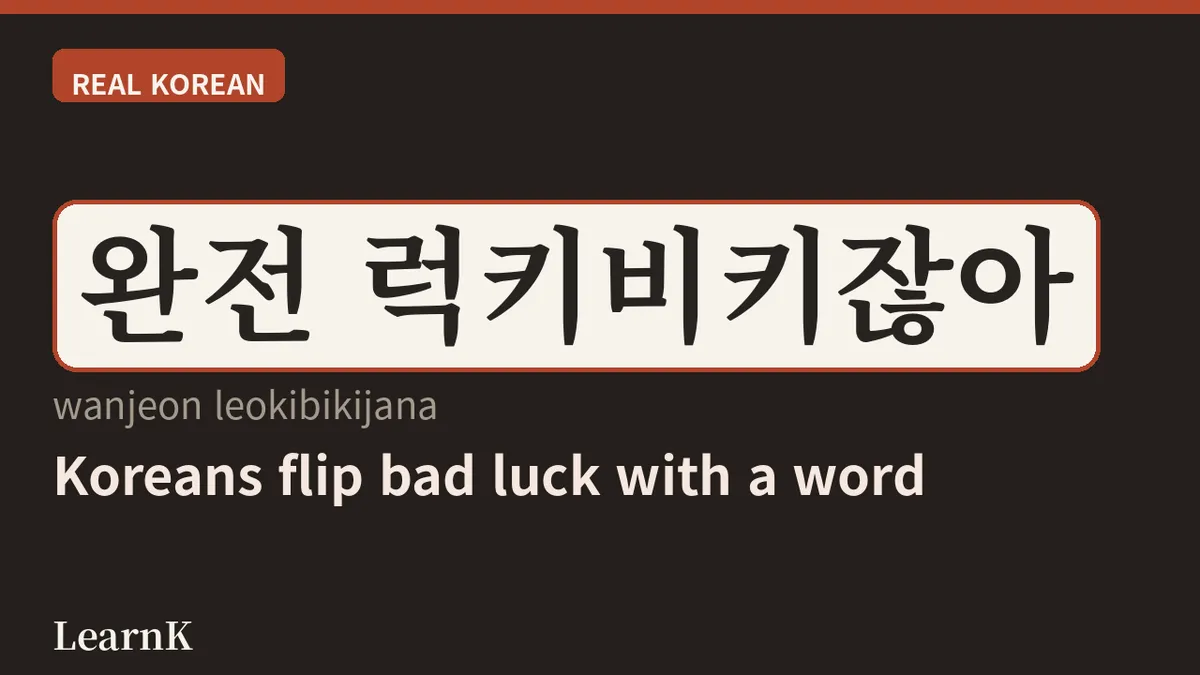
럭키비키
You missed the bus. The next one comes in 20 minutes. Normally that would be annoying, right? But some people say this instead: “Thanks to that, now I’ve got time for a cup of coffee at a café. Totally 럭키비키 (leokibiki)!” Today, let’s take a deep look at this new coined word that has taken over Korean social media and YouTube comment sections lately: 럭키비키 (leokibiki).
What is 럭키비키?
럭키비키 (leokibiki) is a blend of the English word lucky and the personal name Vicky. Jang Won-young, a member of the girl group IVE, goes by the English name ‘Vicky,’ and the expression comes from the way she interprets any situation in an extremely positive light.
Unpacking the meaning, it’s close to “I’m really lucky” or “This is going to work out well for me in the end.” The key is that it isn’t just “I’m lucky” — it carries an attitude of flipping even things that look bad into your own good fortune. That’s why this entire way of thinking is also called 원영적 사고 (wonyeongjeok saggo, Won-young-style thinking).
For example, say the person ahead of you at the bakery bought the last loaf of bread. In 원영적 사고, you’d say: “Actually, this is better. It happened so that I can get some freshly baked bread. As expected — 럭키비키!”
Example Sentences by Situation
Situation 1 — Facing an exam
오늘 아침에 우연히 펼친 페이지가 시험에 그대로 나왔어. 완전 럭키비키잖아! (oneul achime uyeonhi pyeolchin peijiga siheome geudaero nawasseo. wanjeon leokibikijana!) “The page I happened to flip open this morning showed up on the exam exactly as it was. This is totally 럭키비키!”
This is when a part you glanced at absentmindedly while studying appears on the test. The nuance is delight — chalking it up to ‘luck’ rather than to your preparation.
Situation 2 — Flipping something bad into something good
우산을 안 가져왔는데 비가 그쳤어. 이거 완전 럭키비키 아니야? (usaneul an gajyeowanneunde biga geuchyeosseo. igeo wanjeon leokibiki aniya?) “I didn’t bring an umbrella, but the rain stopped. Isn’t this totally 럭키비키?”
This is when a situation that could have been a problem luckily works itself out. Adding ‘아니야? (aniya?)’ to invite the other person’s agreement sounds natural here.
Situation 3 — Comforting yourself
면접에서 떨어졌지만, 덕분에 더 좋은 회사를 찾았으니까 결국 럭키비키였네. (myeonjeobeseo tteoreojyeotjiman, deokbune deo joeun hoesareul chajasseunikka gyeolguk leokibikiyeonne.) “I got rejected from the interview, but thanks to that I found a better company, so in the end it was 럭키비키.”
Reinterpreting even a failure, as time passes, as ‘good fortune that came to me’ — this is the most 원영적 사고 way of using it.
Formal vs. Casual Speech, and Similar Expressions
럭키비키 (leokibiki) is basically a casual, trendy word used among friends. So it’s best not to use it in formal settings or with people older than you. If you really want to say it softly in polite speech, you’d express it like this:
- Casual: 완전 럭키비키야! (wanjeon leokibikiya!)
- Polite (softer): 이거 정말 운이 좋네요. (igeo jeongmal uni jonneyo.) — “This is really lucky.”
It’s also good to learn some similar Korean expressions alongside it.
- 개이득 (gaeideuk) — slang meaning “a total win.” Used when you get an unexpectedly big gain.
- 오히려 좋아 (ohiryeo joa) — “Actually, this is (even) better.” A meme for flipping a bad situation into a positive one, used like a partner to 럭키비키.
- 운수 대통 (unsu daetong) — a slightly old-fashioned expression meaning “a great streak of luck opening up.”
What sets 럭키비키 (leokibiki) apart from these is that, beyond a simple exclamation, it also points to ‘a mindset of reinterpreting everything in a positive way.‘
Cultural Background — Why Did This Word Catch On?
Since around 2024, ‘원영적 사고’ has become both a meme and a kind of self-improvement grammar among young Koreans. In a society full of competition and anxiety, this trend captures the impulse to interpret uncontrollable events in a bright light, even if you have to force it. It’s a kind of little spell you cast on yourself at the end of a hard day, telling yourself, “Still, today was 럭키비키.”
Characters who overcome hardship with positivity have long been loved in Korean dramas, too. For instance, the protagonist of Strong Woman Do Bong-soon (JTBC, 2017) breaks through crises head-on with her extraordinary strength and cheerful attitude. You could say 럭키비키 emerged out of this lineage of ‘positive characters.‘
Today’s Quiz
A friend says, “I missed the bus and took the next one, but on that bus I ran into an old friend by chance!” How could you naturally chime in using 럭키비키 (leokibiki)?
(Sample answer: “와, 그거 완전 럭키비키다! 버스 놓친 게 오히려 좋았네!” — “Wow, that’s totally 럭키비키! Missing the bus actually turned out for the better!”)
I hope your day, too, turns out to be 럭키비키!