"무슨 뜻이에요?" — The First Thing to Say When You Hit a Word You Don't Know
Have you ever run into a word you’d never seen before while watching a Korean drama, singing along to K-pop lyrics, or texting back and forth with a Korean friend? For moments like that, there’s a magic phrase you can use to ask the other person directly — before you even open a dictionary. That’s today’s expression: 무슨 뜻이에요? (museun tteusieyo?). Once you know this one sentence, you can keep learning naturally without stopping the conversation, even when an unfamiliar word pops up.
무슨 뜻이에요?
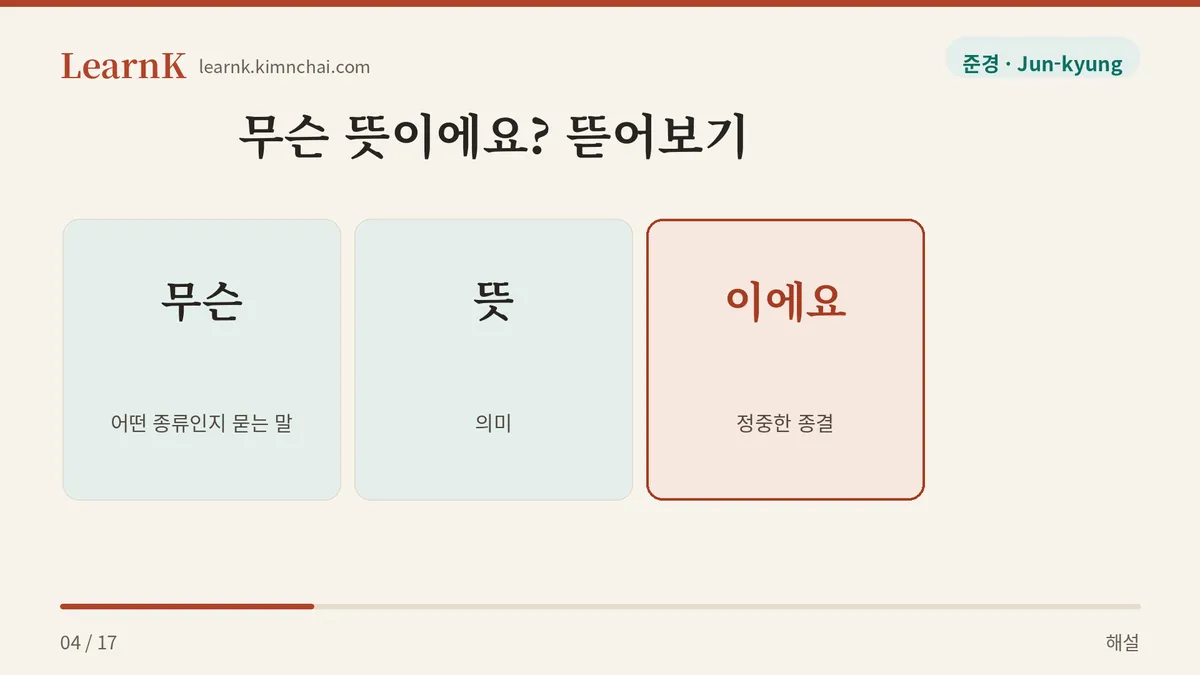
무슨 뜻이에요? (museun tteusieyo?) is a very practical question that corresponds to the English “What does it mean?” It’s easy to understand once you break the sentence down piece by piece.
- 무슨 (museun): meaning “of what” or “which/what kind of,” it’s used to ask about the type or content of the noun that follows.
- 뜻 (tteut): a noun that refers to “meaning.”
- 이에요 (ieyo): the polite ending form of “~이다 (to be),” which creates a soft, respectful tone.
So, translated literally, it’s “What meaning is it?”, and in natural English it becomes the question “What does that mean?” When you want to point to a specific word or expression, just add the target in front, like 이거 무슨 뜻이에요? (igeo museun tteusieyo?) — “What does this mean?”
Meaning and Nuance
The charm of this expression is that it’s polite yet completely low-pressure. It doesn’t blame or embarrass the other person; it simply conveys the feeling of “I want to learn.” That’s why, for Korean learners, it’s one of the best survival phrases to master first — whether in the classroom or out on the street. Unfamiliar words, new slang, dialect, even the meaning of an emoticon — you can ask about all of it with just “무슨 뜻이에요?”
Example Sentences by Situation
Situation 1 — Looking at the menu in a café
You spot a drink name on the menu that you’ve never seen before. Try asking the staff like this:
저기요, ‘아아’ 가 무슨 뜻이에요?
jeogiyo, ‘a-a’ ga museun tteusieyo?
(Excuse me, what does ‘아아’ mean?)
(By the way, ‘아아’ is short for ‘아이스 아메리카노 (iced americano)’!)
Situation 2 — Watching a drama together
You’re watching a drama with a Korean friend, and a character uses an unfamiliar buzzword.
방금 그 말, 무슨 뜻이에요?
banggeum geu mal, museun tteusieyo?
(What does that thing you just said mean?)
“방금 그 말 (banggeum geu mal)” means “that thing (someone) just said,” and it’s handy for pointing to an expression you heard just a moment ago.
Situation 3 — When you get a text message
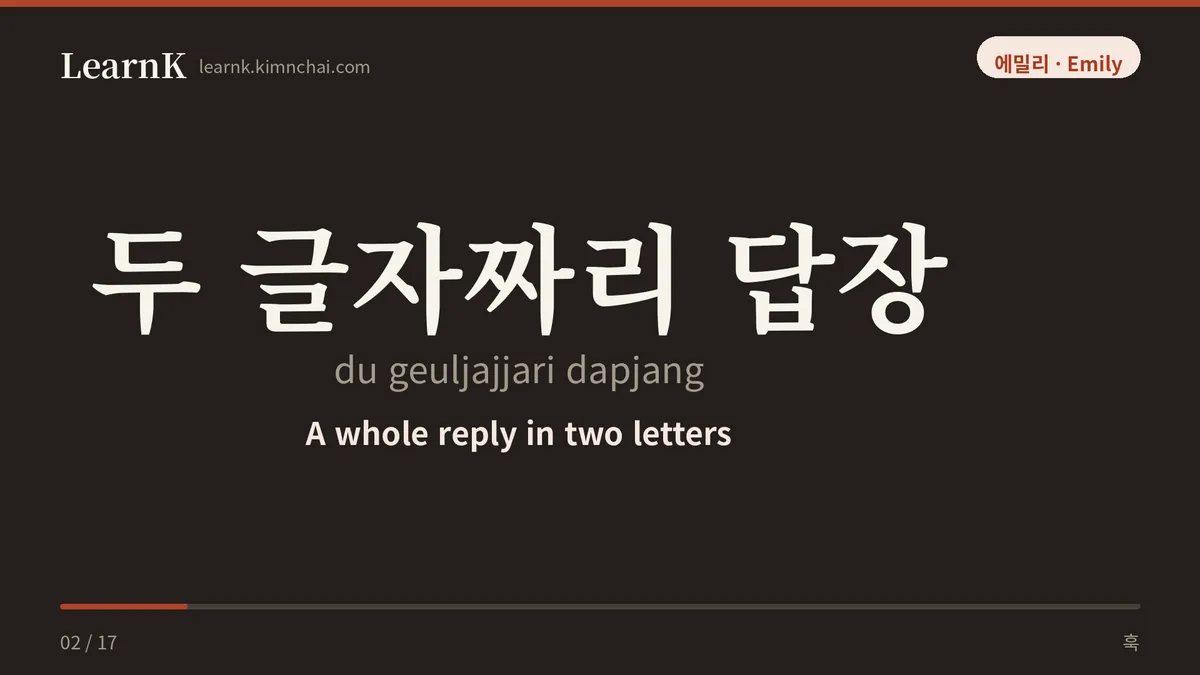
A friend sends you a text with the mysterious letters ‘ㅇㅈ’ in it.
ㅇㅈ이 무슨 뜻이에요?
i-eung-ji-eut-i museun tteusieyo?
(What does ‘ㅇㅈ’ mean?)
(‘ㅇㅈ’ is a consonant-based abbreviation of “인정 (injeong)” — that is, “true, I agree.”)
Comparing Polite and Casual Forms, and Similar Expressions
You can change your tone depending on your relationship with the other person.
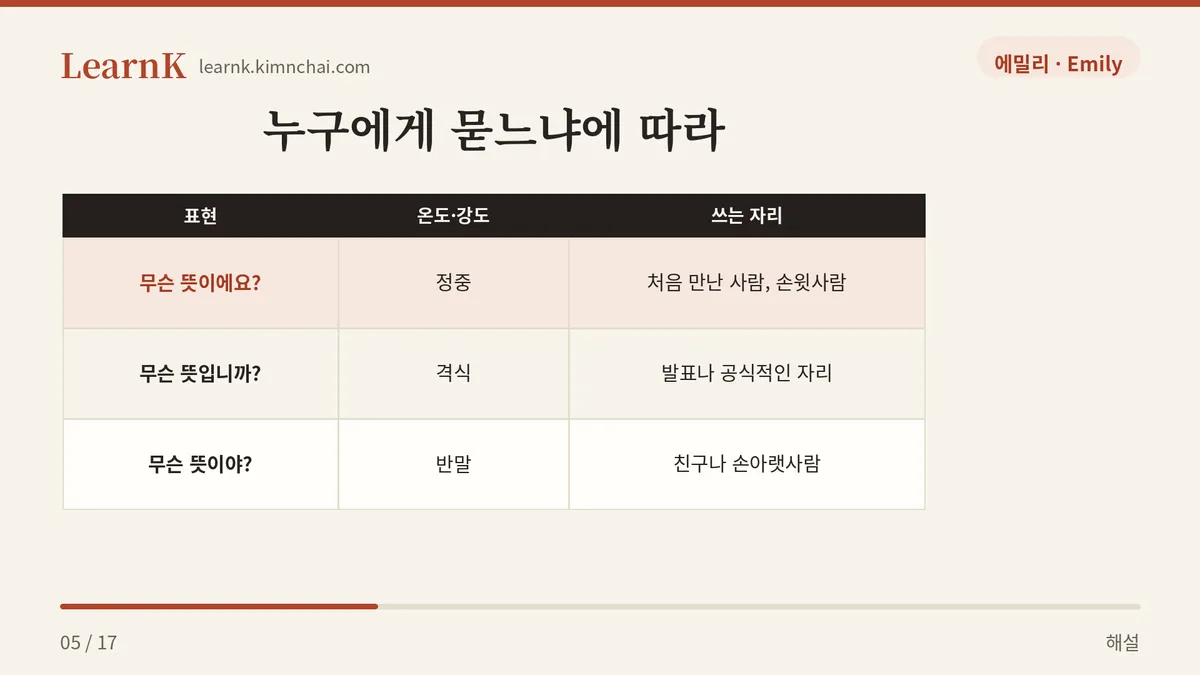
- Polite (formal-ish): 무슨 뜻이에요? (museun tteusieyo?) — for someone you’ve just met, or someone older.
- More formal: 무슨 뜻입니까? (museun tteusimnikka?) — for a presentation or an official setting.
- Casual (close relationships): 무슨 뜻이야? (museun tteusiya?) — for friends or people younger than you.
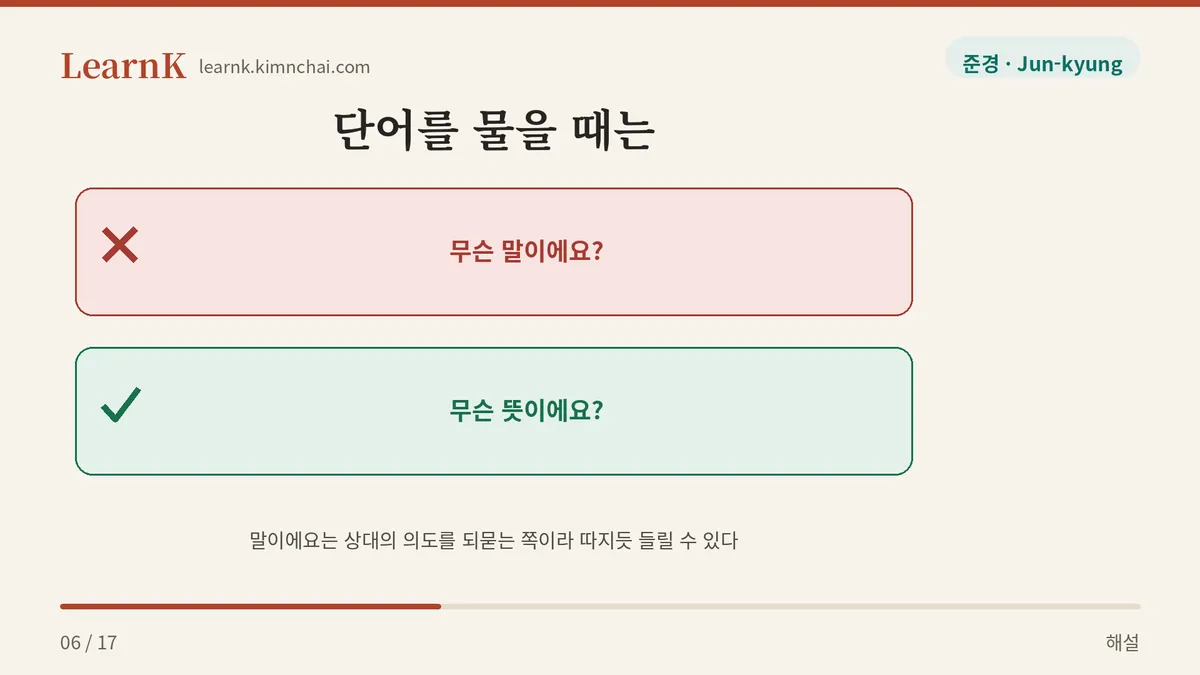
There’s also a similar expression with a slightly different feel. 무슨 말이에요? (museun marieyo?) — like “무슨 말씀이세요? (What do you mean?)” — is used to ask back about the other person’s ‘intention’ or ‘whole statement,’ while 무슨 뜻이에요? is more precise when asking about the meaning of a specific ‘word or expression.‘
Cultural Background
In Korean, consonant-based abbreviations, new slang, and loanwords are constantly being coined. As a result, even Koreans of different generations will ask each other, “그거 무슨 뜻이야? (What does that mean?)” Dramas often feature scenes where an older adult hears a young person’s buzzword, looks puzzled, and asks what it means. In this way, “무슨 뜻이에요?” is an expression that works like a bridge connecting generations and cultures. The attitude of asking without being ashamed of what you don’t know is, in fact, the secret to improving your language skills the fastest.
Closing Quiz
When a close friend uses an unfamiliar word, how would you say “무슨 뜻이에요?” in the casual form?
See the answer
Answer: 무슨 뜻이야? (museun tteusiya?) — just change the polite ending ‘이에요’ to the casual ‘이야.’
Next time you run into a Korean word you don’t know, don’t hesitate — be sure to use today’s expression, 무슨 뜻이에요? (museun tteusieyo?)!