역주행 (yeokjuhaeng) — When a 7-Year-Old Song Climbs Back to Number One

역주행 (yeokjuhaeng)
역주행 (yeokjuhaeng) originally means a car driving backward, against the direction traffic is supposed to flow. From there the meaning spread, and in K-pop talk it now means a song or work that came out long ago and sank without a trace, then belatedly catches fire and climbs back up the charts against the current. Spend a single day inside a Korean fan community and you’ll bump into this word several times.
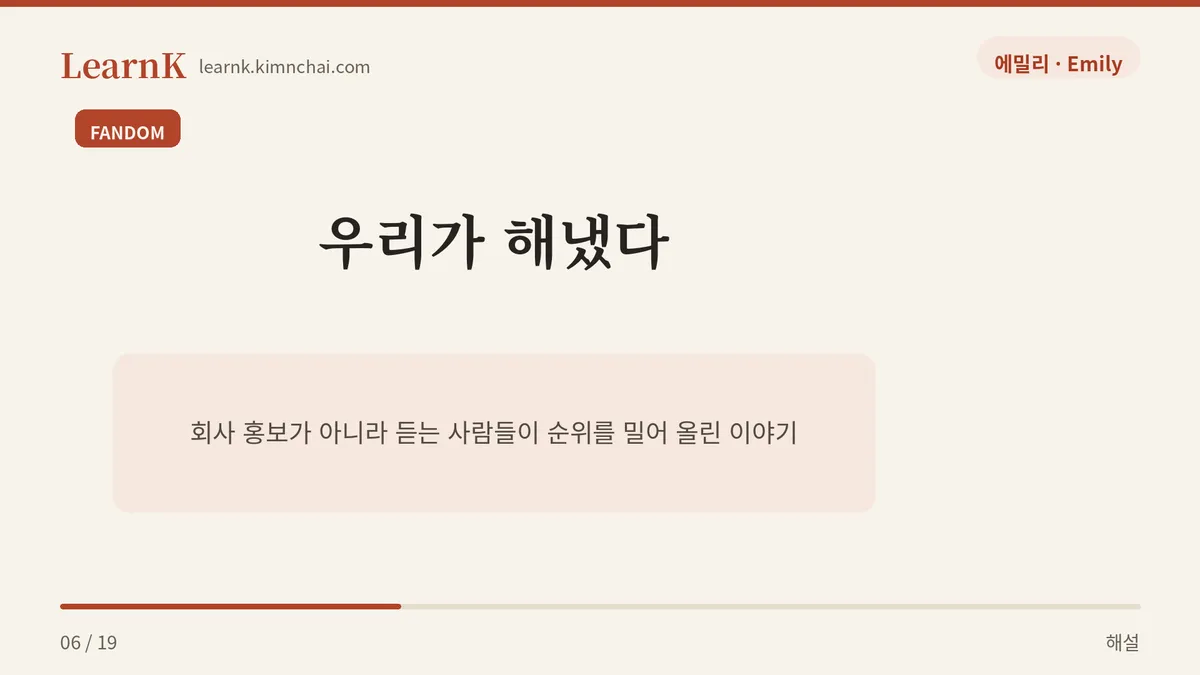
Picture the scene. A song comes out. Nothing happens. It doesn’t even crack the top 100, and the group moves on to the next album or quietly stops promoting. Two years pass. Five years. Sometimes seven. Then one day somebody clips a short piece of an old stage performance and uploads it. Comments pile up. It gets used as background music in short-form videos. And one morning, there it is — that old song, sitting high on the music charts. Korean fans have exactly one word for this: 역주행 (yeokjuhaeng).
The heart of the word isn’t “it got popular late” — it’s “it’s going the wrong way.” Charts are supposed to go down over time. New songs keep arriving, and old songs get pushed lower. That’s the normal direction of travel. But some songs push back against that flow and climb. Like a single car driving the wrong way up the road. That’s why it’s 역주행 (yeokjuhaeng).
So to use this word properly, three conditions have to be met: ① the song has to be old, ② it has to have flopped or been forgotten at first, and ③ it has to be climbing right now. Drop any one of the three and it will sound off to a Korean ear.
What about the emotional temperature? 역주행 (yeokjuhaeng) isn’t a neutral, observational term — it carries feeling. Satisfaction, cheering, a little lump in the throat. It’s the story of something written off getting turned around. That’s why fans use the word with pride.
It’s worth knowing the common forms too. You’ll see 역주행하다 (yeokjuhaenghada, to go yeokjuhaeng / to be climbing back), 역주행곡 (yeokjuhaenggok, a song that went yeokjuhaeng), 차트 역주행 (chateu yeokjuhaeng, a chart yeokjuhaeng), and 역주행 신화 (yeokjuhaeng sinhwa, a legendary case of yeokjuhaeng). These days it’s used well beyond music — for dramas, films, variety shows, even a snack that wasn’t selling. That said, when 역주행 (yeokjuhaeng) shows up in the news, it still usually means the original thing: a traffic accident caused by a car driving the wrong way. The same word travels between two very different worlds.
Seeing It in Real Conversation
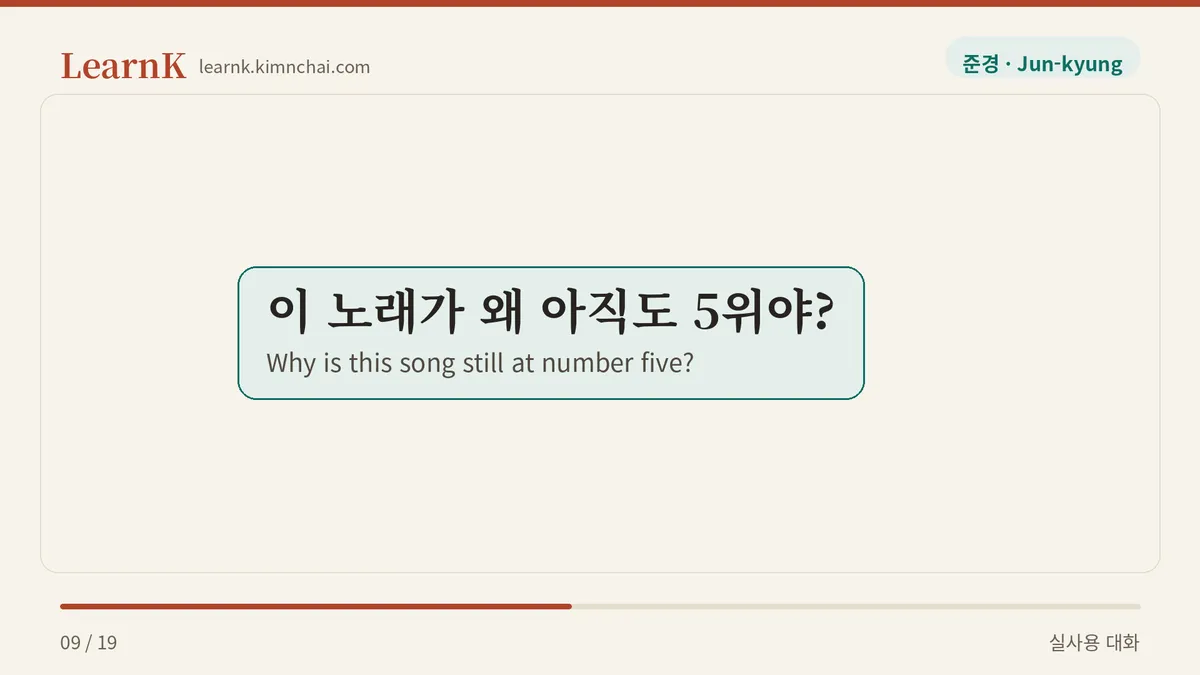
Setting: Friday night at a noraebang. They’re flipping through the popular-song rankings on the remote.
Jun-kyung: 어? 이 노래가 왜 아직도 5위야? 나 고등학교 때 나온 곡인데. Huh? Why is this song still at number five? It came out when I was in high school.
Emily: 그거 작년에 역주행했잖아. 숏폼에서 터져서. That one went yeokjuhaeng last year, remember? It blew up on short-form video.
Jun-kyung: 아, 그래서 우리 조카가 부르더라. 난 리메이크인 줄 알았네. Ah, that’s why my niece was singing it. I thought it was a remake.
Emily: 원곡 그대로야. 처음 나왔을 땐 100위도 못 들었대. It’s the original. Apparently it didn’t even crack the top 100 when it first came out.
Jun-kyung: 와, 7년 만에 5위. 이런 게 진짜 역주행이지. Wow, top five after seven years. Now that’s a real yeokjuhaeng.
Emily: 야, 너도 아직 안 늦었어. 너도 한번 역주행해 봐. Hey, it’s not too late for you either. Go have your own comeback.
Jun-kyung: 뭘 해. 난 아직 출발도 안 했어. Comeback? I haven’t even started driving yet.
This Is Where It Sounds Off
✗ (when a rookie group’s debut single hits number one on day one) 와, 데뷔하자마자 역주행이네! (Wow, they went yeokjuhaeng right out of the gate!) ✓ (same situation) 와, 데뷔하자마자 1위네! 대박이다. (Wow, number one right out of the gate! That’s amazing.) → 역주행 (yeokjuhaeng) always assumes the thing sank once. Something that did well from the start is just a hit — not a yeokjuhaeng. Use it here and a Korean speaker will pause for a beat.
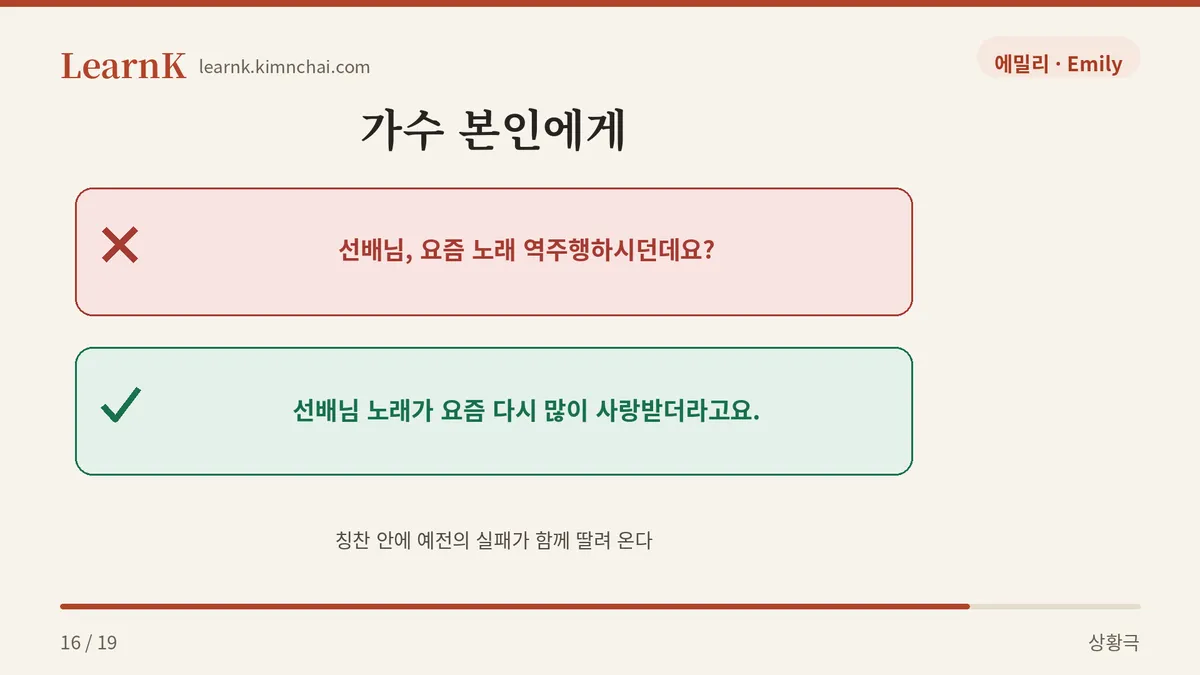
✗ (greeting a senior singer in person) 선배님, 요즘 노래 역주행하시던데요? (Sunbae-nim, I hear your song is going yeokjuhaeng these days?) ✓ (to the same senior singer) 선배님 노래가 요즘 다시 많이 사랑받더라고요. (Your song is getting a lot of love again these days.) → The grammar is fine, but the temperature is wrong. This word drags “it didn’t work out back then” along with it, so saying it to the artist’s face means folding a failure into your compliment. Fans getting excited among themselves? Totally fine. To the person themselves, “it’s getting loved again” is the safer route.
Example Sentences by Situation
1. Watching the live charts with a friend
이 노래 7년 전 곡인데 지금 3위야. 완전 역주행이네. i norae chil-nyeon jeon goginde jigeum sam-wiya. wanjeon yeokjuhaengine. (This song is from seven years ago and it’s number three right now. Total yeokjuhaeng.)
This is the most common place the word shows up — expressing surprise. Sticking 완전 (wanjeon, completely) in front cranks up the amazement.
2. Posting in a fan community
우리 애들 역주행 각인데요? 오늘 밤 다 같이 스밍 돌립시다. uri aedeul yeokjuhaeng gagindeyo? oneul bam da gachi seuming dollipsida. (I think our group is about to go yeokjuhaeng. Let’s all stream tonight.)
각이다 (gagida) is recent slang for “it’s shaping up to happen,” and 스밍 (seuming) is short for streaming. This is exactly how a fandom talks when it’s trying to push the rankings up.
3. At work, when a product that was just sitting in the warehouse suddenly starts selling
작년에 단종하려던 그 제품이 지금 역주행 중이래요. jangnyeone danjonghwaryeodeon geu jepumi jigeum yeokjuhaeng jungiraeyo. (They say the product we were about to discontinue last year is going yeokjuhaeng right now.)
This is the word stretched beyond music. Objects, products, dramas — any of them can be the subject.
Polite vs. Casual, and Similar Expressions
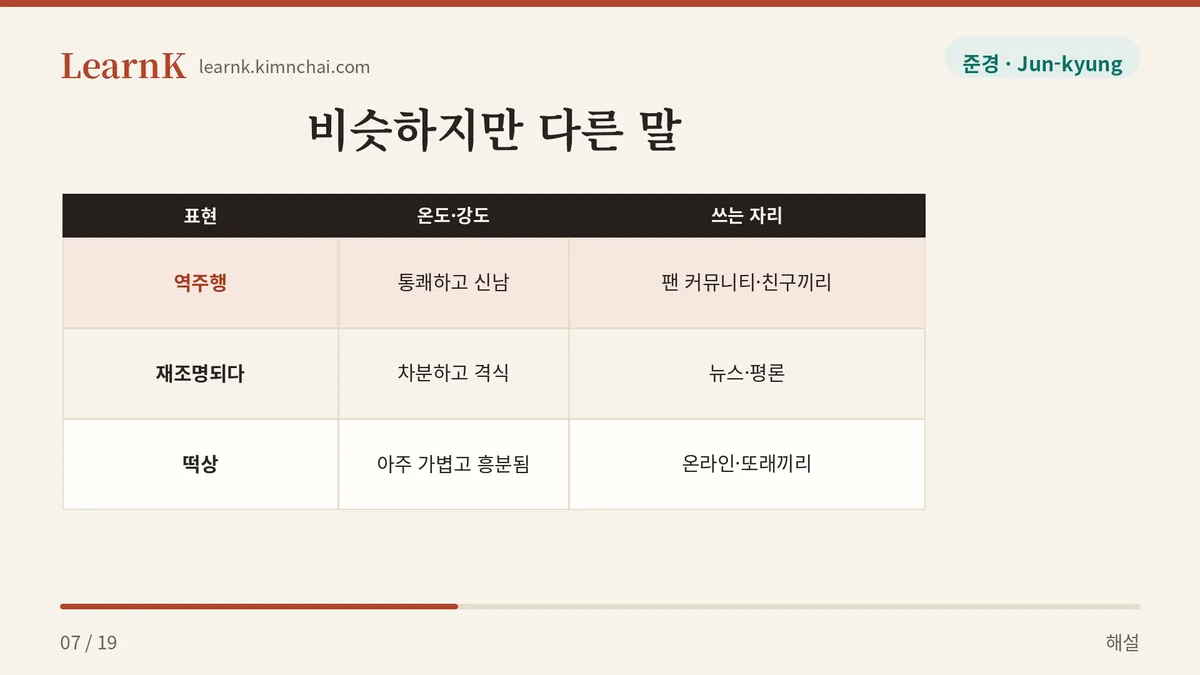
Casually, it’s 역주행했어 (yeokjuhaenghaesseo, it went yeokjuhaeng) or 역주행 중이야 (yeokjuhaeng jungiya, it’s going yeokjuhaeng). Politely, 역주행했어요 (yeokjuhaenghaesseoyo), and in formal settings 역주행하고 있습니다 (yeokjuhaenghago itseumnida). You can raise the subject honorifically with 역주행하셨네요 (yeokjuhaenghasyeonneyo) and it’s grammatically fine — but for the reason above, it’s better avoided in front of the person themselves.
| Expression | Tone & intensity | Where it’s used |
|---|---|---|
| 역주행 (yeokjuhaeng) | Triumphant and excited, full of cheering | Fan communities, social media, among friends. Careful in front of the artist |
| 재조명되다 (jaejomyeongdoeda) | Calm and formal | News, criticism, article headlines |
| 뒤늦게 뜨다 (dwineutge tteuda) | Plain, conversational | Talking with peers. Doesn’t have to involve charts at all |
| 떡상 (tteoksang) | Very casual and hyped | Online, among peers. Also used for stocks and view counts. Not for someone older or senior |
재조명 (jaejomyeong) literally means “to shine the light on it again,” so the weight falls on a shift in how something is evaluated, while 역주행 (yeokjuhaeng) points at the upward movement of the numbers themselves. 떡상 (tteoksang) only says the direction is up — it doesn’t care whether the thing failed before.
Cultural Background — From a Car Driving Backward to a Chart Climbing Backward
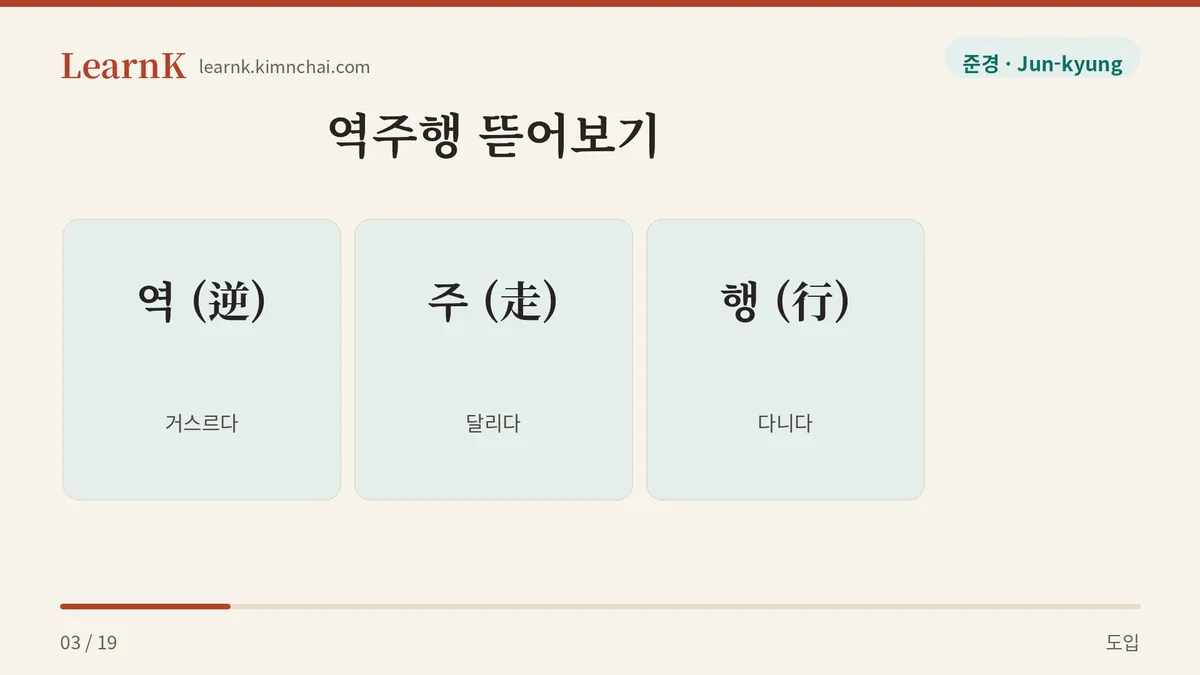
In hanja it’s 逆 (거스를 역, to go against) + 走行 (달릴 주, to run / 다닐 행, to travel). It began as a road-traffic term for the dangerous act of driving against the designated direction. That image carried over to the charts wholesale: one song climbing upward on a road where everything else is being pushed down. A single word paints the whole scene.
There’s a reason this word took root so firmly in Korea specifically. Korean music sites have updated their rankings hourly for years, and fans have watched their artist’s position rise and fall several times a day with their own eyes. The chart wasn’t a frozen table but a moving screen — so a word for direction was needed.
There are plenty of real cases. EXID’s “위아래” got little attention when it was released in 2014, but a fancam of a stage performance shot by one fan spread online, and months later the song had climbed to the very top of the charts. Brave Girls’ “롤린” was a 2017 song, but in 2021 a compilation video of their military-base performances and the comments under them went viral, sending it to number one four years after release. Younha’s “사건의 지평선” came out in 2022 and quietly rose over the following months, settling high on the year-end charts. What all three have in common is that none of it came from company promotion — the listeners made it happen. That’s why, for Korean fans, 역주행 (yeokjuhaeng) isn’t just a chart term; it’s also a story about “we did this.”
One last thing to keep in mind. The same word still appears in the news attached to serious accident reports: a car that ran against the signal, a highway 역주행 (yeokjuhaeng) crash. If you’re learning Korean, get in the habit of checking the context first. Going backward on the charts is worth celebrating. Going backward on the road is absolutely not.
Today’s Quiz
Which of the following situations can be called 역주행 (yeokjuhaeng)?
- A rookie group’s debut single hits number one on the charts on release day.
- An album track from three years ago rides a short-form video trend and enters the charts for the first time this week.
- A popular singer’s new single holds number one for a third straight week after release.
See the answer
Answer: 2
역주행 (yeokjuhaeng) is used when ① the work is old, ② it went unnoticed at first, and ③ it’s climbing right now. Number 2 checks all three boxes. Numbers 1 and 3 did well from the start, so you’d just say 1위 (1-wi, number one), 흥행 (heunghaeng, a hit), or 롱런 (longeon, a long run).