여사친 / 남사친: A "Girl Who's a Friend" Is Totally Different from a "Girlfriend"
여사친 / 남사친
If you watch enough Korean dramas, you’ll run into this scene again and again. The male lead is on the phone, laughing with another woman, and the female lead’s face freezes over. Panicking, he waves his hands and blurts out, “No, no, she’s just a 여사친 (yeosachin)!” Once you understand the subtle emotions packed into that one line, you’ve leveled up your grasp of how young Koreans talk about relationships.
Today’s expressions are 여사친 (yeosachin) and 남사친 (namsachin). They’re very modern coinages, born in that fuzzy borderland between romance and friendship.
How were these words made?
Korean has two expressions that sound so similar people mix them up.
- 여자친구 (yeojachingu) = a female romantic partner (a girlfriend)
- 여자 사람 친구 (yeoja saram chingu) = a friend who just happens to be female (literally “woman-person-friend”)
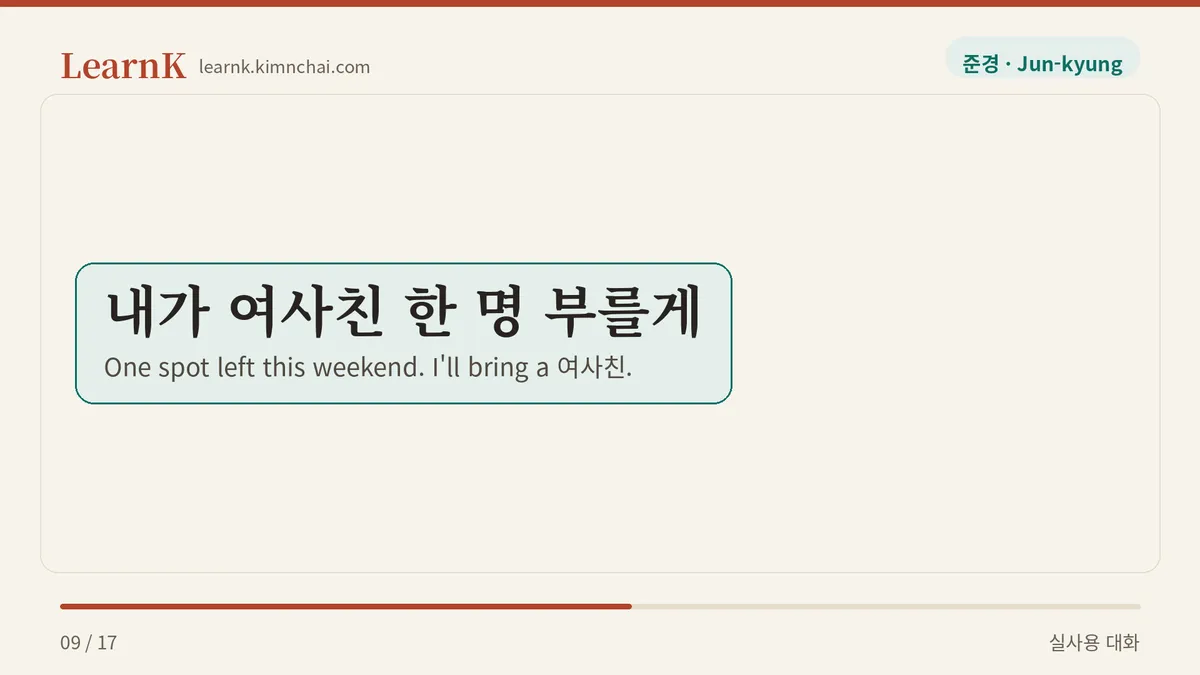
The problem is that these two sound almost identical. So to make the “easily misunderstood” second meaning crystal clear, young people started shortening 여자 사람 친구 to 여사친. In the same way, 남자 사람 친구 (namja saram chingu) gets shortened to 남사친 (namsachin).
Meaning and nuance
여사친 (yeosachin) — a female friend you hang out with as friends, with no romantic feelings involved
남사친 (namsachin) — a male friend you hang out with as friends, with no romantic feelings involved
The key point is the declaration that “there are no romantic feelings.” The moment you use this word, you’re nailing down the claim, “We are absolutely not dating.” And that’s where the fun paradox comes in. The harder someone insists, “She’s just a 여사친,” the more the listener starts to wonder, “Are you sure it’s really nothing?” That’s exactly why this expression shows up so often as a punchline in Korean variety shows and dramas.
Example sentences by situation
Situation 1 — Explaining yourself to your partner
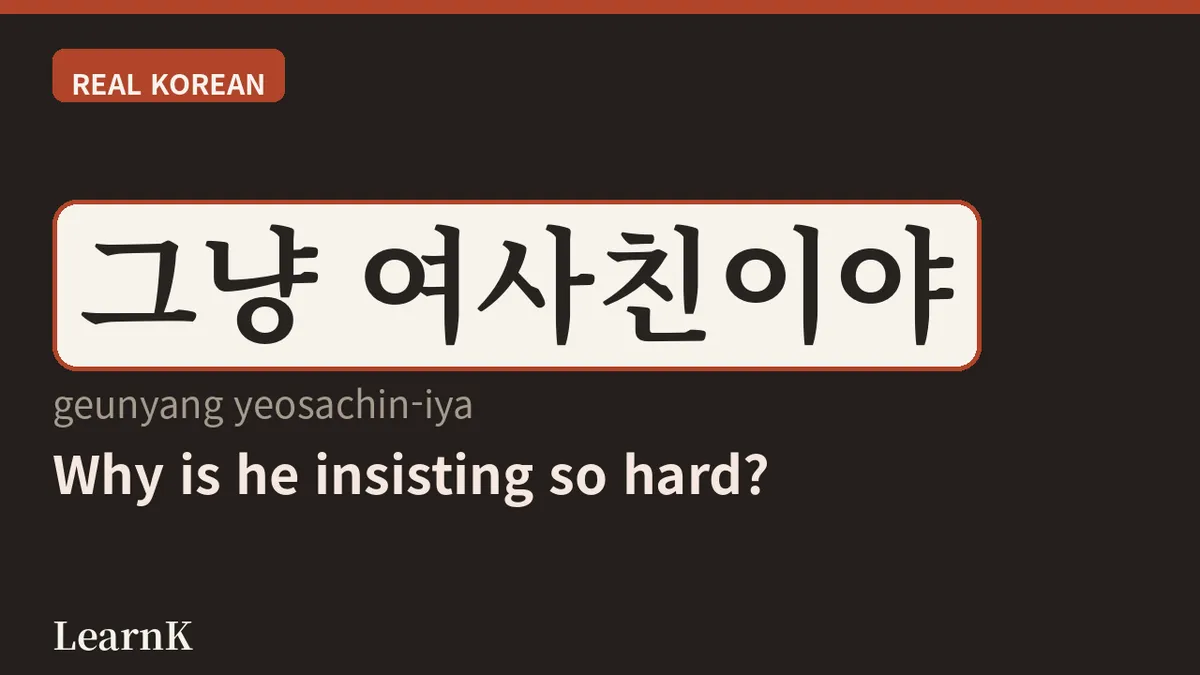
오해하지 마, 걔는 그냥 여사친이야 (yeosachin-iya). 초등학교 때부터 알던 사이라고. (Don’t get the wrong idea — she’s just a 여사친. We’ve known each other since elementary school.)
This is the most classic use: reassuring a jealous partner that “we’re purely friends.”
Situation 2 — Introducing a friend
이쪽은 내 남사친 (namsachin) 민준이야. 편하게 인사해. (This is my 남사친, Minjun. Feel free to say hi.)
Here you’re introducing a friend of the opposite sex to someone new, making it clear up front that “this person is a friend, not my partner.”
Situation 3 — Opening up about your worries
남사친한테 남자 마음을 물어보는 게 제일 정확하더라. (Turns out asking a 남사친 how guys think gives you the most accurate answer.)
When you need a perspective from the opposite sex, an opposite-sex friend can make a great advisor. That’s the real reason this expression is so beloved.
Formal vs. casual speech, and similar expressions
여사친/남사친 are casual words used between friends, so they mostly come up in informal speech and relaxed situations. You don’t really use them in formal settings or in front of elders. In a more official setting, it’s more natural to spell it out like this:
- Casual/informal: “내 여사친이야.” (“She’s my 여사친.”)
- Polite explanation: “제 여자인 친구입니다.” (“She’s a friend of mine who’s a woman.”) or “그냥 친하게 지내는 친구예요.” (“She’s just a friend I’m close with.”)
Let me also sort out some expressions that are similar but not the same.
- 썸 (sseom): that subtle relationship right before you start dating. It’s the exact opposite of 여사친/남사친 — here, the romantic feelings are there.
- 베프 (bepeu): short for “best friend.” It means a close bestie, regardless of gender.
In other words, you’ve got it right if you understand 여사친/남사친 as words that draw a line: “opposite sex, but definitely not 썸.”
Cultural background
In Korea, the idea of an opposite-sex friend has long been a delicate topic. “Can pure friendship exist between a man and a woman?” is a staple question on variety talk shows, and drama love triangles usually kick off from exactly this setup — the 남사친 or 여사친 who, at some point, ends up becoming a romantic partner. The plot twist where a longtime 여사친 turns out to have been the first love all along is practically a 국룰 (gukryul = an unwritten rule) of romance stories.
That’s how much this word goes beyond being a simple abbreviation — it captures the sensibility of young Koreans wrestling with how to define the line between friendship and love. Next time a K-drama gives you the line “She’s just a 여사친,” you’ll be able to read all the complicated feelings hiding behind it.
Today’s quiz
A friend says this to you: “내일 남사친이랑 영화 보러 가.” (“Tomorrow I’m going to see a movie with my 남사친.”) So what’s the relationship between your friend and this ‘남사친’?
- They’re dating — a romantic couple
- They’re in a 썸, right on the verge of dating
- They’re close opposite-sex friends with no romantic feelings
(Answer: #3! ‘남사친’ means a ‘남자 사람 친구’ — a male friend with no romantic feelings involved. If it were a partner, they’d have just said ‘남자친구.’)