When Saying Goodbye, It Matters Who's Leaving — 안녕히 가세요 vs 안녕히 계세요
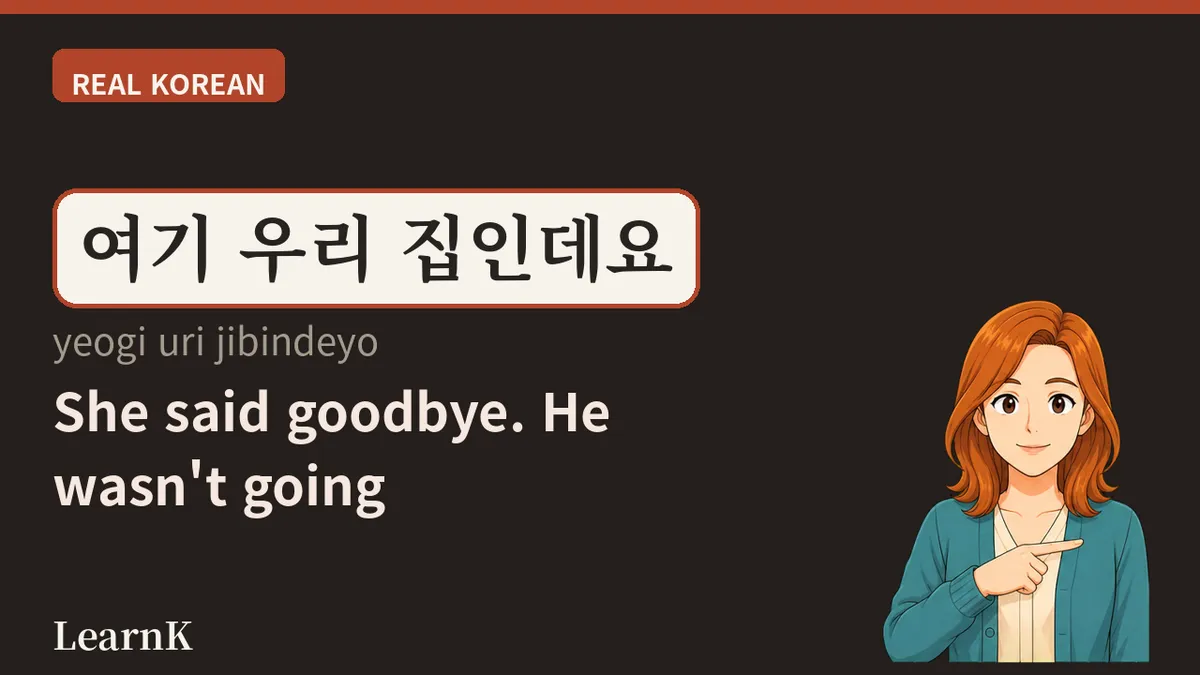
안녕히 가세요 / 안녕히 계세요
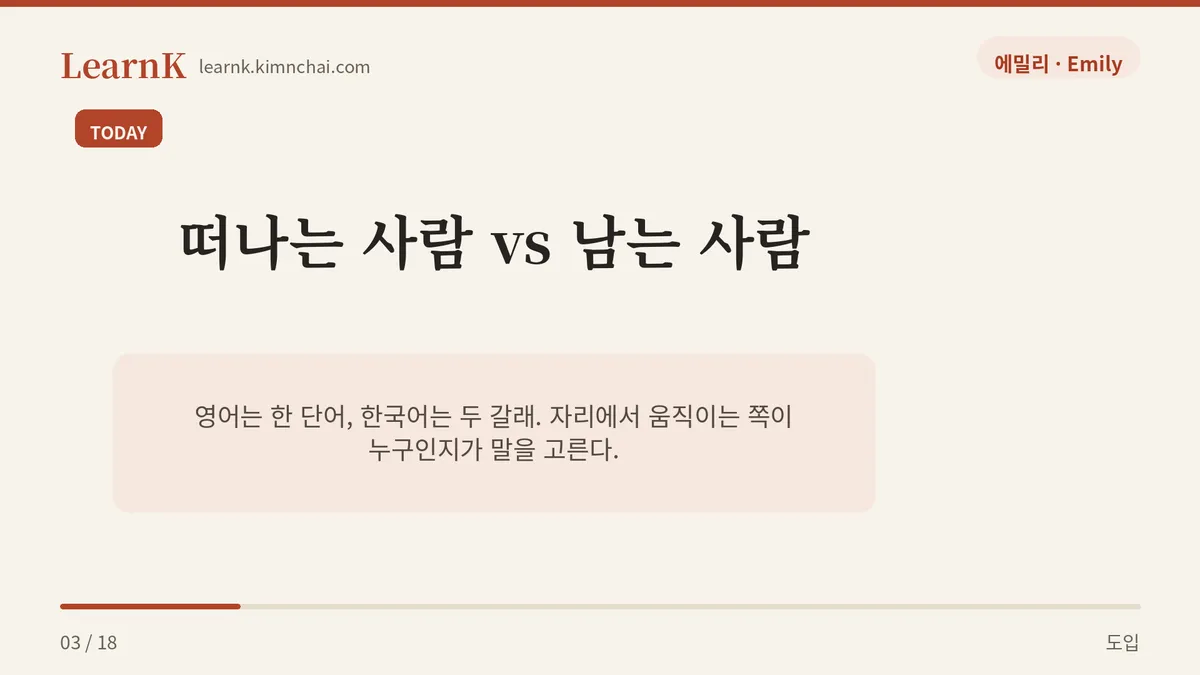
When you watch Korean dramas, have you ever noticed that in a parting scene the two people say goodbye with different words? One person says 안녕히 가세요 (annyeonghi gaseyo), while the other says 안녕히 계세요 (annyeonghi gyeseyo). In English, “Goodbye” is a single word no matter who is leaving, but Korean draws a distinction between the person who is leaving and the person who is staying. Today, let’s clear up these two polite goodbyes once and for all — the pair that trips up Korean learners the most.
Meaning and Nuance
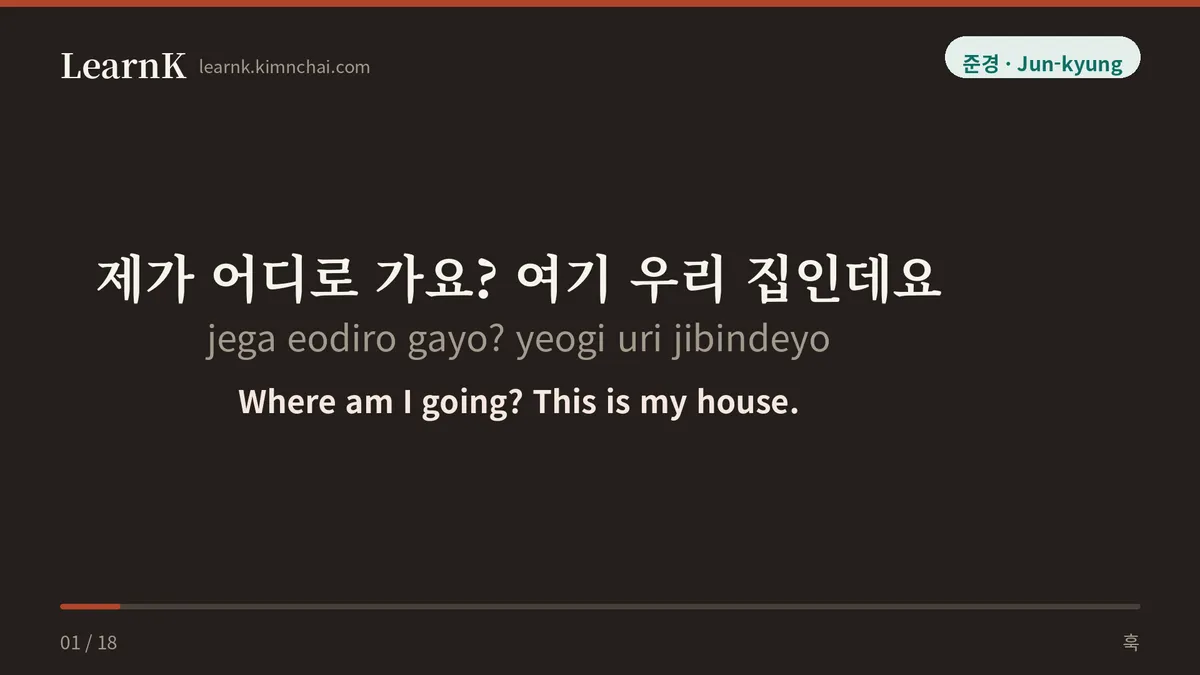
Both expressions are polite (honorific, 존댓말) greetings used when parting. The key lies in the verb.
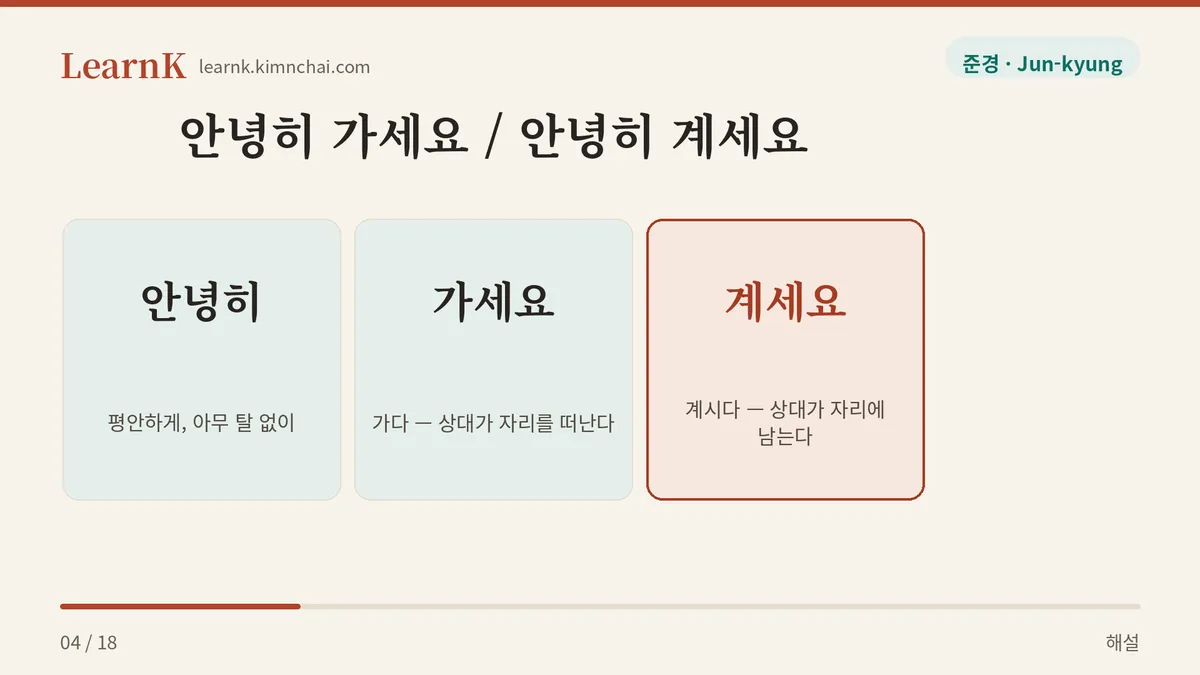
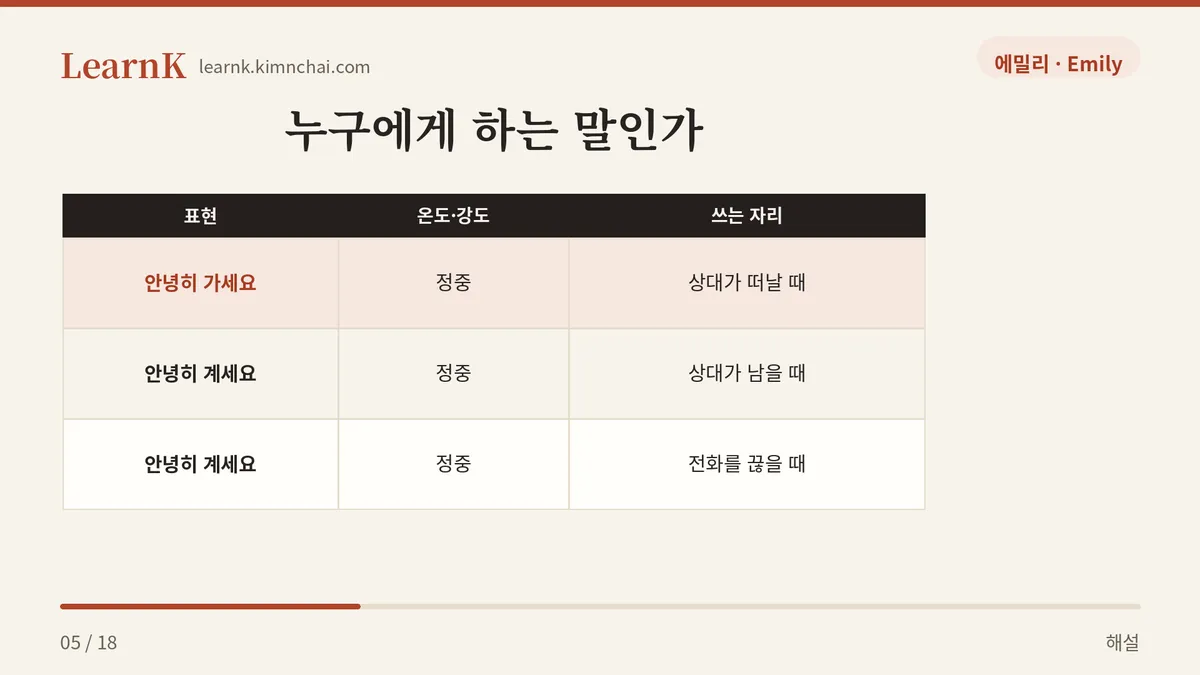
- 안녕히 가세요 (annyeonghi gaseyo) — This comes from “가다 (gada, 가다 = to go).” You say it when the other person is leaving the spot and moving on. Translated literally, it means “go in peace” — in other words, “take care and go safely.”
- 안녕히 계세요 (annyeonghi gyeseyo) — This comes from “계시다 (gyesida).” “계시다” is the honorific form of “있다 (itda = to be/stay).” You say it when the other person is staying where they are, meaning “stay in peace” — in other words, “take care and stay well.”
The word 안녕히 (annyeonghi) in front is an adverb meaning “peacefully, without any trouble.” So both expressions carry a warm wish: “go well / stay well, with nothing going wrong.”
Example Sentences by Situation
Situation 1 — Seeing a friend off first at a café You’re sitting in a café when your friend gets up to leave first. You’re staying and your friend is leaving, so to the departing friend you say:
오늘 즐거웠어요. 안녕히 가세요 (annyeonghi gaseyo)! (I had a great time today. Take care!)
Situation 2 — A customer leaving a shop (from the employee’s side) The shop employee stays at the counter while the customer walks out the door. Since this is the person staying speaking to the person leaving:
감사합니다. 안녕히 가세요 (annyeonghi gaseyo)! (Thank you. Take care!)
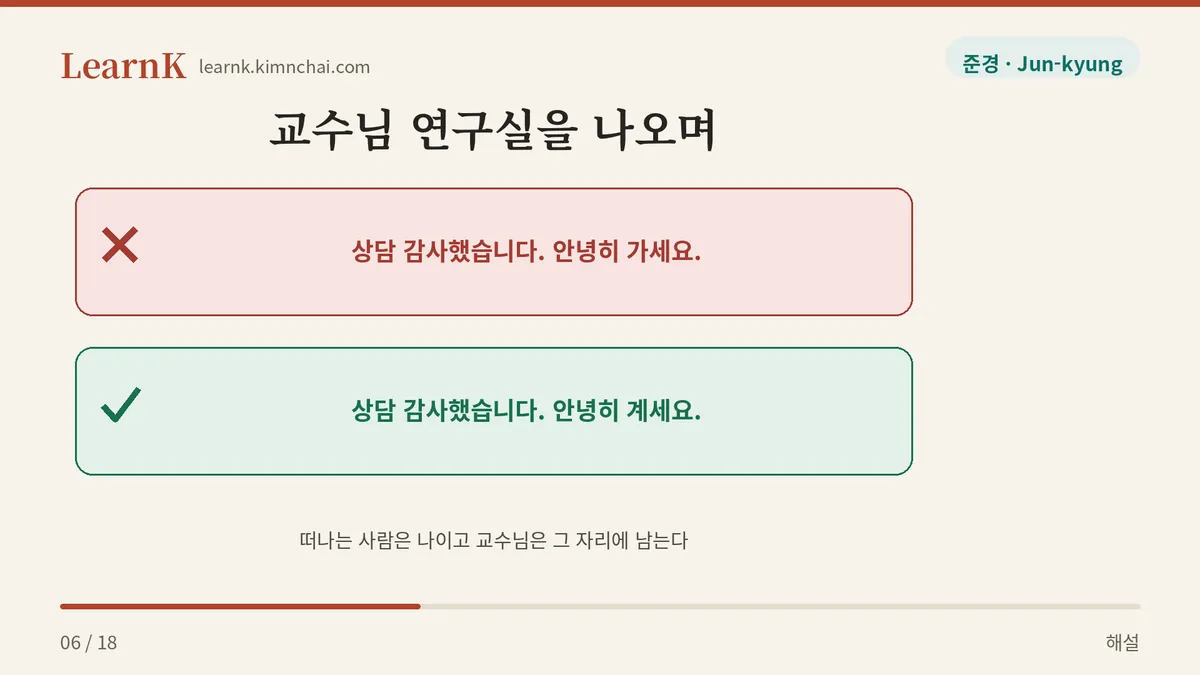
Situation 3 — Leaving your professor’s office (from the student’s side) The professor remains in the office, and you say goodbye and step out. Here you speak to the person who is staying:
상담 감사했습니다, 교수님. 안녕히 계세요 (annyeonghi gyeseyo)! (Thank you for the meeting, Professor. Stay well!)
Situation 4 — Hanging up the phone On the phone, there’s no real sense of either person “leaving the spot,” so by convention people usually say 안녕히 계세요 (annyeonghi gyeseyo). The feeling is that the other person is still there in their own space.
Comparing Honorific, Casual, and Similar Expressions
| Situation | To the person leaving | To the person staying |
|---|---|---|
| Very formal | 안녕히 가십시오 (annyeonghi gasipsio) | 안녕히 계십시오 (annyeonghi gyesipsio) |
| Polite (standard) | 안녕히 가세요 (annyeonghi gaseyo) | 안녕히 계세요 (annyeonghi gyeseyo) |
| Casual, between friends | 잘 가 (jal ga) | 잘 있어 (jal isseo) |
Even in casual speech, the “가다/있다” distinction stays alive. When a friend leaves, you say 잘 가 (jal ga); when you’re the one leaving and heading off while your friend stays, you say 잘 있어 (jal isseo). As a side note, the greeting 안녕하세요 (annyeonghaseyo) used when meeting shares the same root — “안녕 (安寧)” — as these two parting expressions, but it’s worth remembering that the greeting for meeting stays as one single form.
Cultural Background
This distinction isn’t just grammar — it grows out of a Korean sense of consideration that looks first at the other person’s situation. In an instant, you judge “Am I the one going, or is the other person going?” and choose your words accordingly. That’s why, in a drama’s parting scene, when the character left behind quietly murmurs “안녕히 가세요” toward the receding back of the one who is leaving, it feels all the more tender. Even if you mix up the two by mistake, Koreans will usually just smile and understand — but if you use them correctly, you’ll earn the compliment, “Your Korean is really good!”
Closing Quiz
You’re a convenience store clerk. A customer who has bought something is opening the door and heading outside. Should you greet the customer with 안녕히 가세요 or 안녕히 계세요?
See the answer
안녕히 가세요 (annyeonghi gaseyo) — because the person leaving is the customer, and the person staying is you (the clerk).