'고마워' vs. '고맙습니다': When and How Do They Differ?
When you learn Korean, there’s a word you memorize first — and one you’ll end up using more than any other for the rest of your life. That word is “고마워” and “고맙습니다.” When you receive your coffee at a café, when someone holds a door for you, when a friend does you a difficult favor — today let’s really take apart this expression that pops out several times a day. You probably think you know exactly what it means, but when it comes to “which form to use and when,” this is actually one of the words learners get confused about the most.
고마워 / 고맙습니다
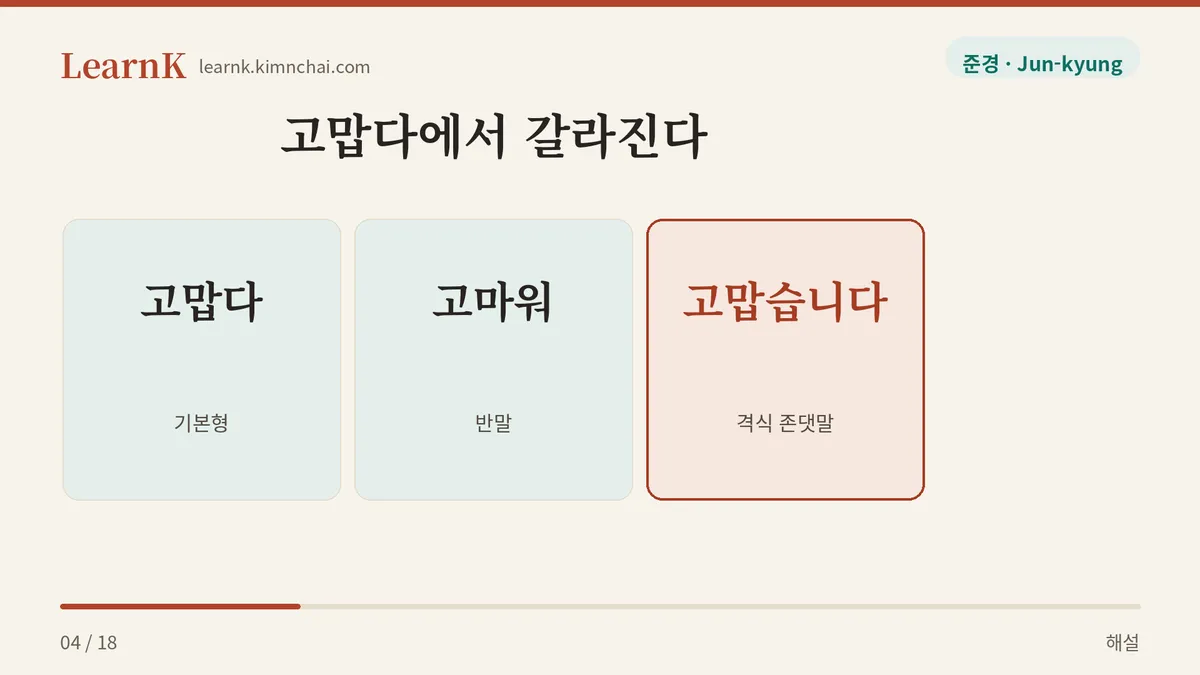
고마워 (gomawo) and 고맙습니다 (gomapseumnida) are both ways of expressing gratitude for someone’s kindness or help. The base form they grow from is 고맙다 (gomapda), and from there it branches into several forms depending on your tone of speech.
The key is the level of politeness. 고마워 is casual speech (banmal) used with friends, younger siblings, and very close relationships. 고맙습니다, on the other hand, is formal, polite speech (jondaenmal) used with someone you’ve just met, with elders, or in official settings. Somewhere in between is 고마워요 (gomawoyo) — not casual speech, but not stiff either; a soft, warm form of polite speech.
Here’s one more nuance. In Korean there are two main words for gratitude: 고맙다 and 감사하다 (gamsahada). The two are nearly interchangeable, but ‘감사’ is a Sino-Korean word, so it feels a bit more official and formal, while ‘고맙다’ is a native Korean word, so it feels warmer and more heartfelt. That’s why, when Koreans want to say thank you with real sincerity, they’ll sometimes actually choose “고맙습니다.”
Seeing It in a Real Conversation
Scene: The evening of moving day. After hauling boxes all day, they’ve just carried the last box into the room.
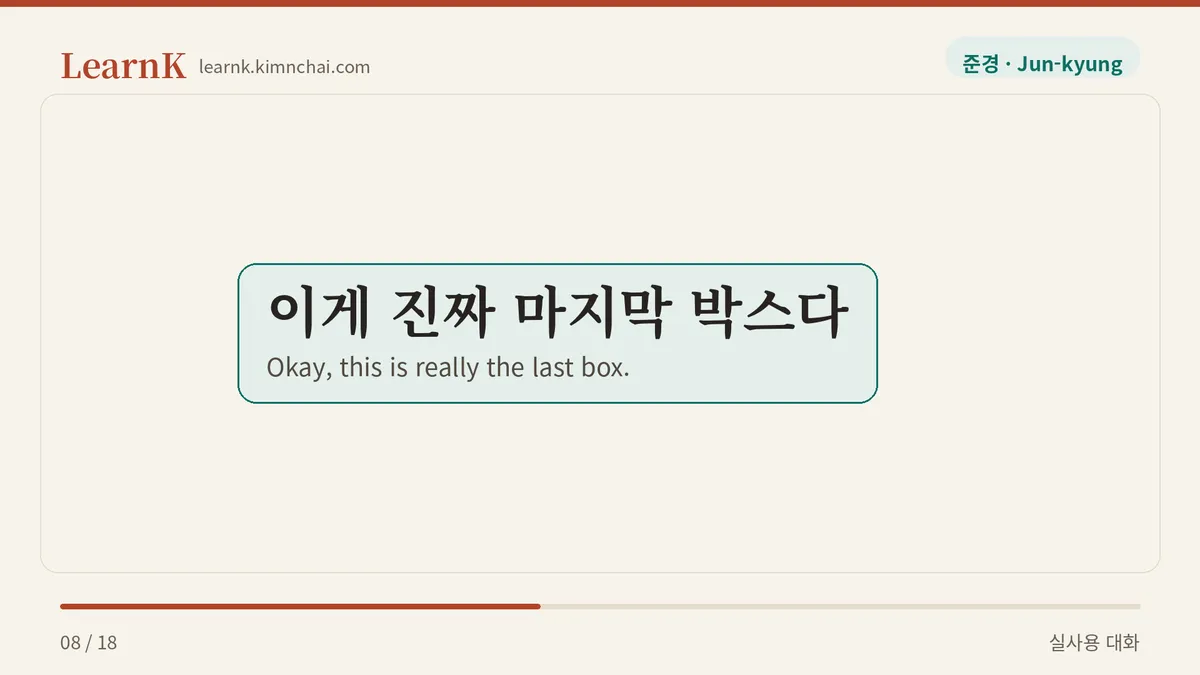
Jun-kyung: 자, 이게 진짜 마지막 박스다. 이건 어디에 둘까? Okay, this is really the last box. Where should I put it?
Emily: 그냥 창가에 놔줘. 아… 진짜 고마워. 너 아니었으면 나 오늘 밤새울 뻔했어. Just leave it by the window. Ah… thank you so much. If it weren’t for you, I’d have been up all night.
Jun-kyung: 뭘 이 정도 가지고. 이따 밥이나 사. It’s nothing. Just buy me dinner later.
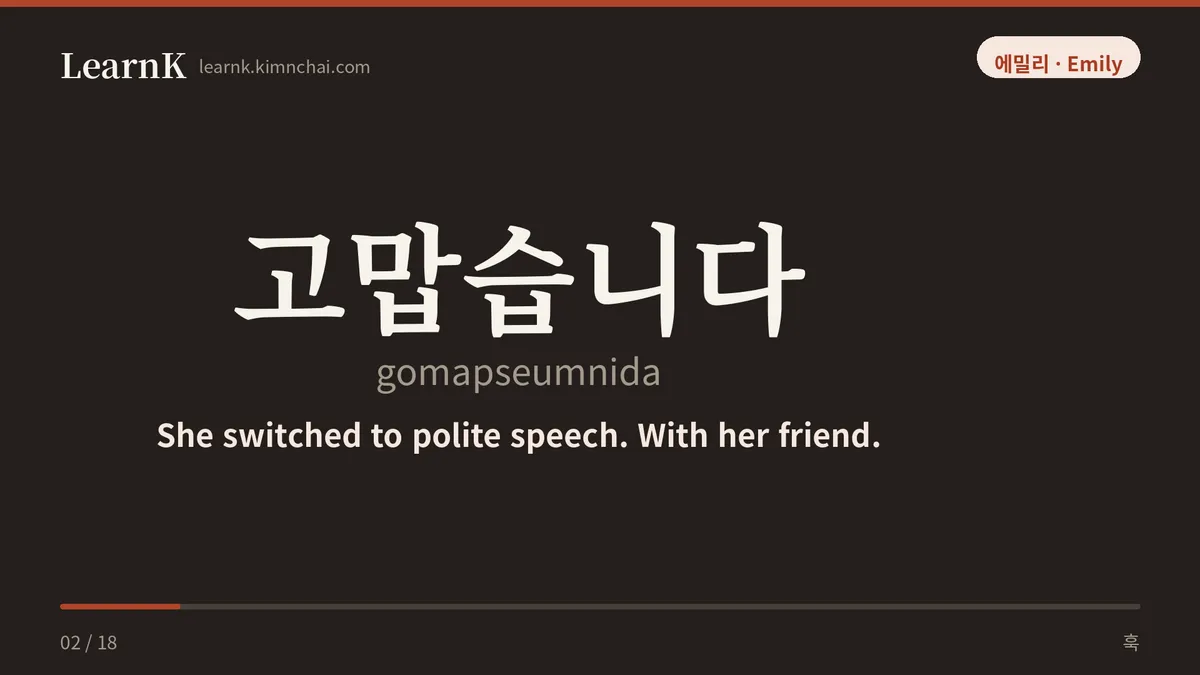
Emily: 당연하지, 치킨 콜. 근데 있잖아, 아침부터 지금까지 정말… 고맙습니다, 준경 씨. Of course, chicken it is. But you know… from this morning until now, truly… thank you, Mr. Junkyung.
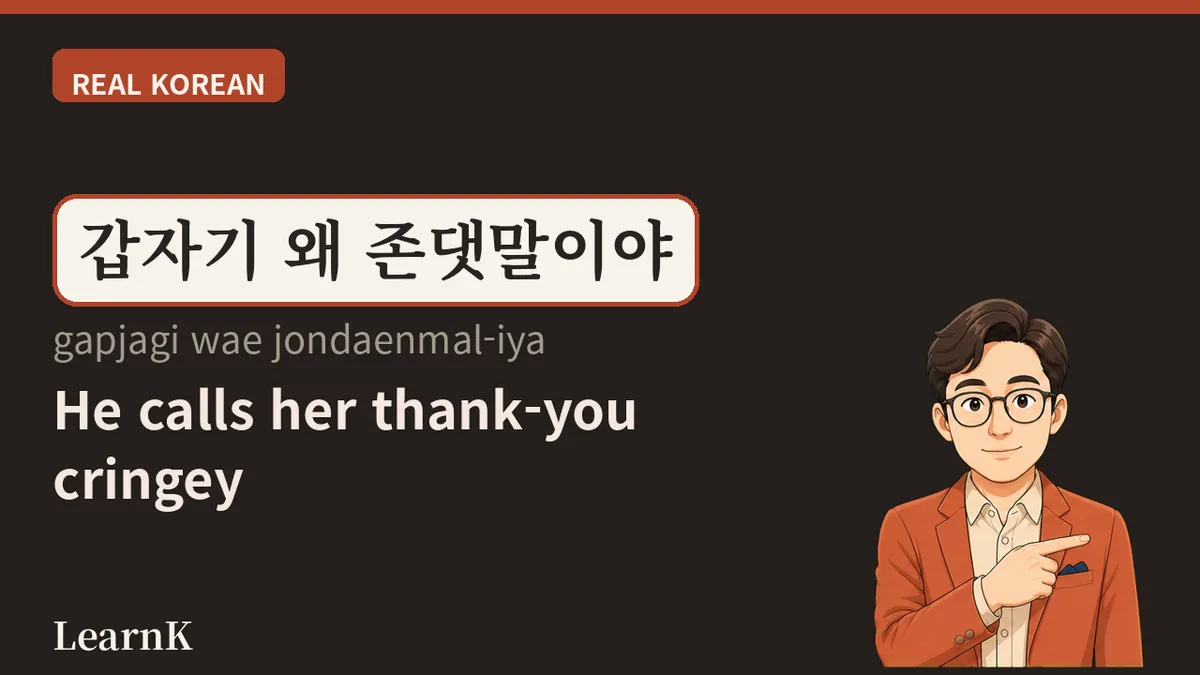
Jun-kyung: 어우, 갑자기 왜 존댓말이야. 오글거리게. Whoa, why so formal all of a sudden. That’s cringey.
Emily: 이건 반말로는 부족해서 그래. 이 정도 도움엔 격식을 좀 갖춰야지. Because “thanks” in casual speech isn’t enough. Help like this deserves a little formality.
Example Sentences by Situation
Let’s get a feel for it with three example sentences I put together myself.
Situation 1 — Being handed the buzzer at a café: A light “고맙습니다 (gomapseumnida)” to the clerk. This is polite thanks between people who don’t really know each other. It’s short, but this one phrase changes the impression you make.
Situation 2 — When a friend lends you an umbrella: “고마워 (gomawo), 이거 내일 꼭 돌려줄게.” Between close friends, you comfortably use casual speech like this.
Situation 3 — To a colleague who helped with materials in a meeting: “자료 정리해 주셔서 정말 고맙습니다. 덕분에 살았어요.” Adding a word about why you’re grateful gets your feelings across much more clearly.
Comparing Polite vs. Casual Speech and Similar Expressions
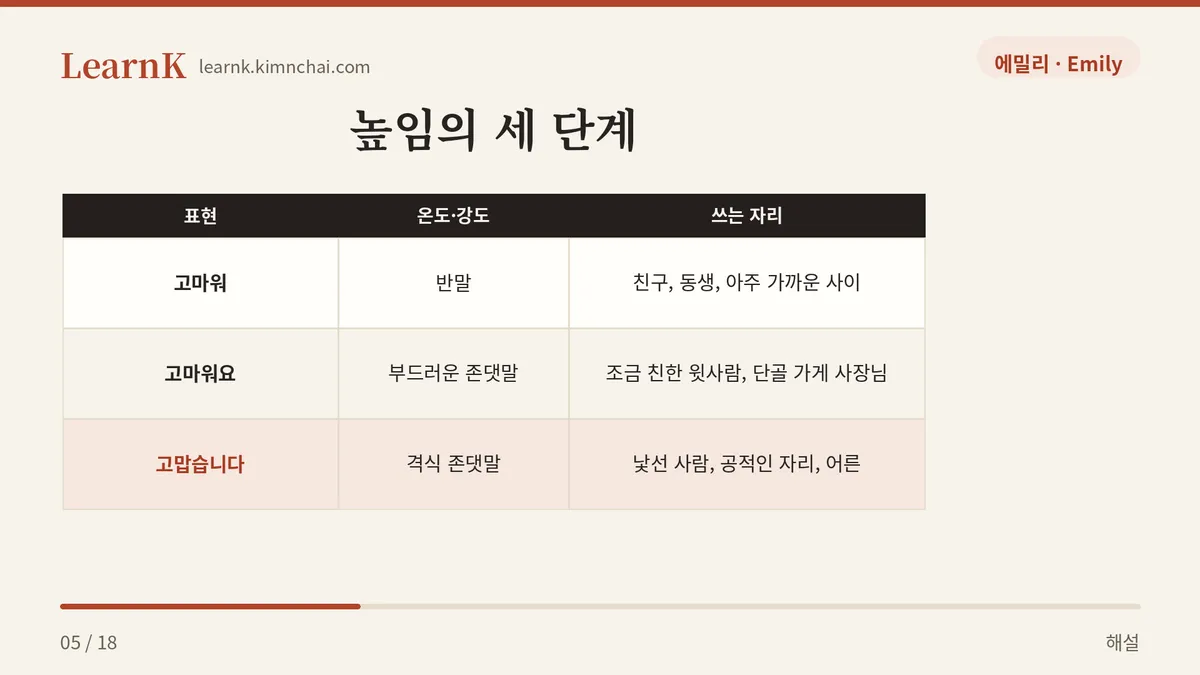
Here’s a quick summary at a glance.
- 고마워 (gomawo) — Casual speech. Very close relationships: friends, younger siblings, partners.
- 고마워요 (gomawoyo) — Soft polite speech. A somewhat familiar senior, the owner of a shop you frequent, etc.
- 고맙습니다 (gomapseumnida) — Formal polite speech. Strangers, official settings, adults.
- 감사합니다 (gamsahamnida) — Formal polite speech. Almost the same as ‘고맙습니다,’ but more official and stiff in feel.
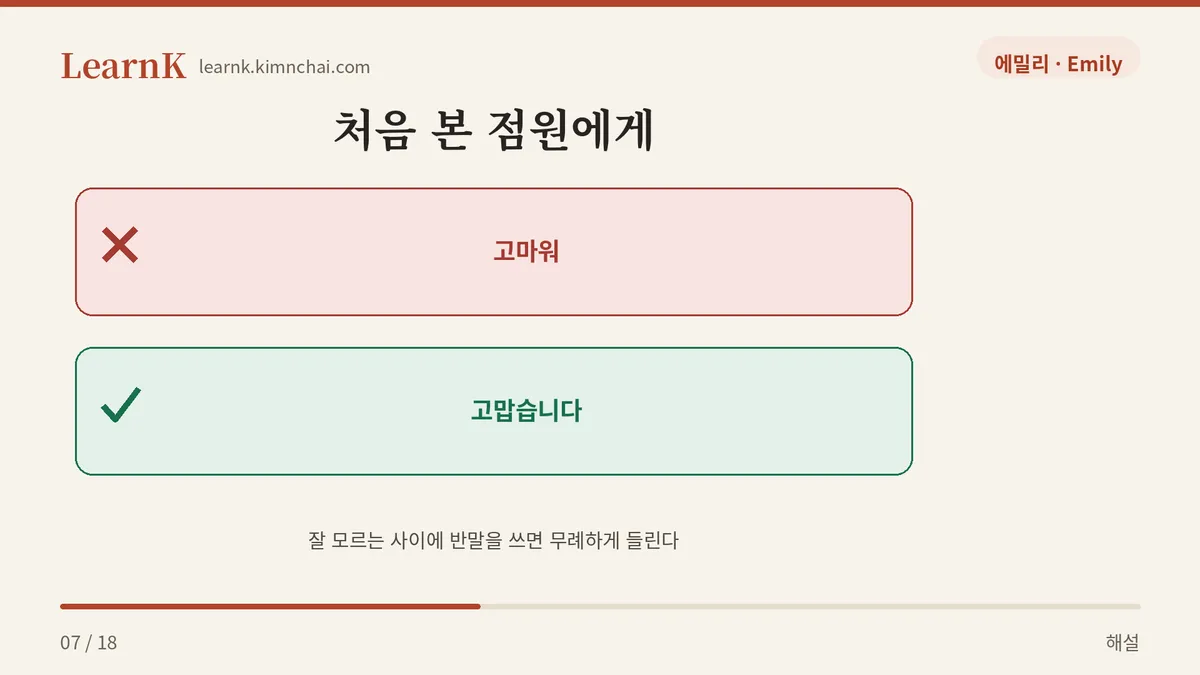
The safest choice for beginners is 고맙습니다. It won’t be rude no matter who you’re talking to. Conversely, be careful: saying “고마워” to someone you’ve just met can come across as rude.
Cultural Background
In Korean dramas, you’ll often see scenes where a character who normally speaks casually suddenly says “고맙습니다” in crisp, formal, polite speech — just like Emily in the conversation above. This isn’t a grammar mistake; it’s a distinctly Korean way of speaking where you deliberately raise your level of politeness to increase the weight of your gratitude. The more casual and comfortable a relationship usually is, the more sincerity comes through when you turn serious and express thanks in polite speech. On the flip side, if you keep using only “고맙습니다” with a close friend, it can actually create a sense of distance. That’s why, with Korean expressions of gratitude, which level of politeness you choose matters just as much as which word you use.
Closing Quiz
A part-time convenience-store worker you’ve never met before picks up a card you dropped and hands it to you. What’s the most natural way to say thank you here?
① 고마워 ② 고맙습니다 ③ 고마웠다
(Answer: ②. With someone you’re meeting for the first time, the right choice is the polite ‘고맙습니다,’ not the casual ‘고마워.’ When you don’t know who the other person is, polite speech is always the safe bet.)