힘내세요 — The One Phrase for Someone Who's Worn Out: Everything About '힘내'
A friend who pulled an all-nighter before an exam. A coworker whose shoulders are slumped after failing an interview. A family member lying in a hospital bed, sick. What do we say to people like this? The words Koreans reach for most often — and most warmly — are exactly today’s expression.
힘내 / 힘내세요
힘내 (himnae) and 힘내세요 (himnaeseyo) are expressions used to cheer on someone who is tired or struggling — meaning “find your strength” or “don’t give up, hang in there.” The closest English equivalents are Cheer up! and Stay strong!
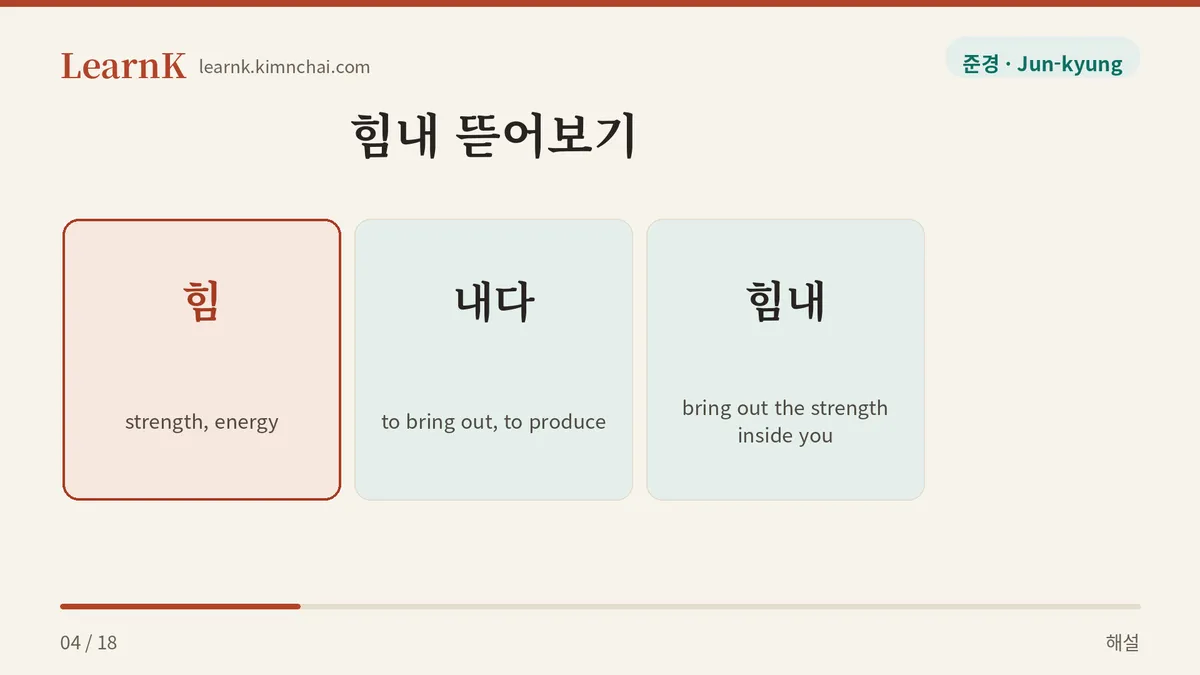
It’s fun to pull the phrase apart literally. 힘 (him) is a noun meaning ‘strength, energy, vigor,’ and 내다 (naeda) is a verb meaning ‘to bring out, to produce.’ So 힘내 (himnae), translated word for word, means “bring out the strength inside you.” It’s a way of saying that even though you look worn out right now, there’s still strength left inside you to use. That’s why this expression carries more than simple comfort — it holds a nuance of trust: “I believe in you.”
Meaning and Nuance
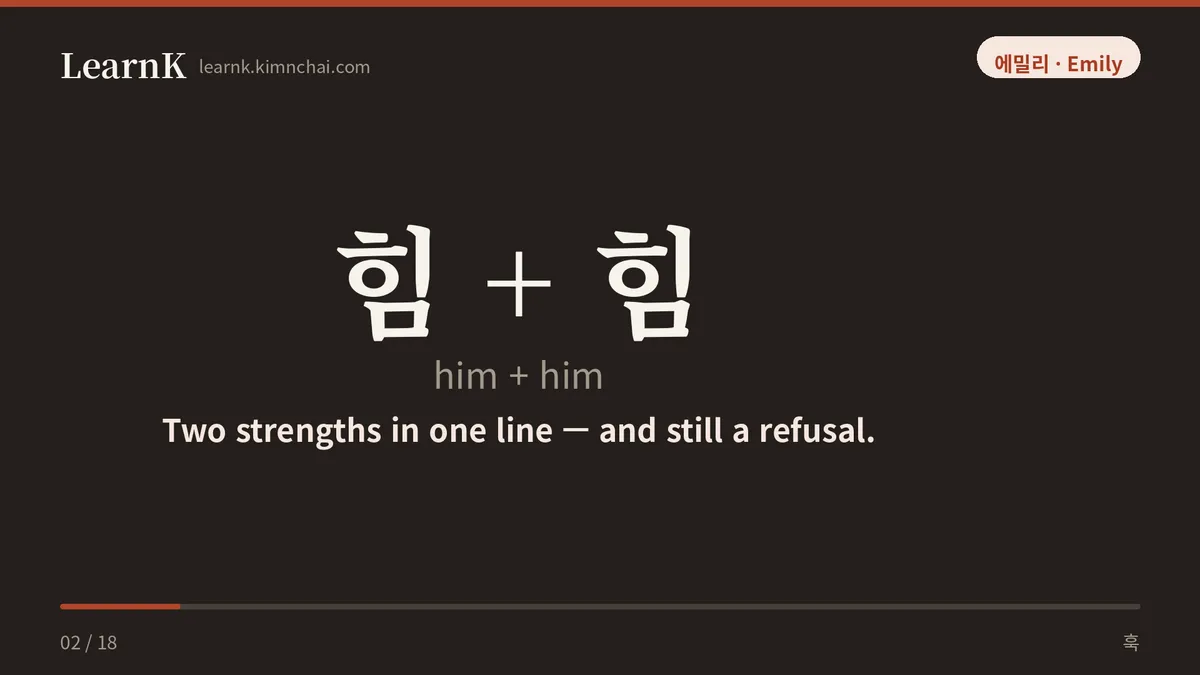
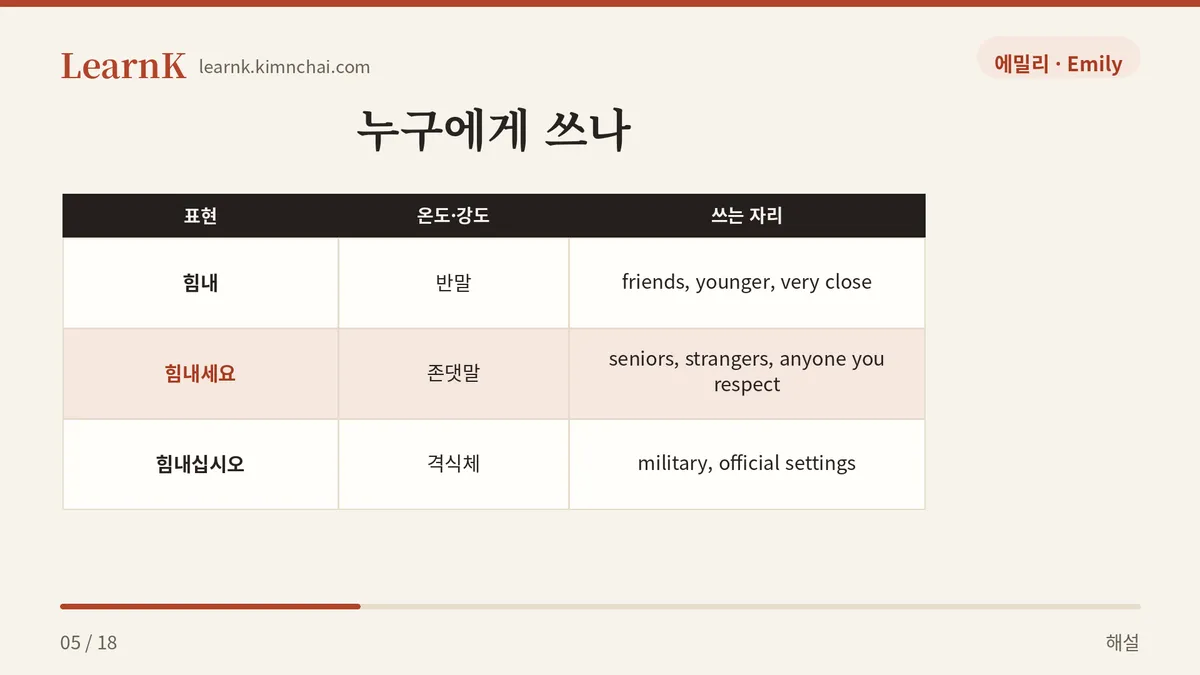
- 힘내 (himnae) — casual (반말). Used with friends, younger people, and very close relationships.
- 힘내세요 (himnaeseyo) — polite (존댓말). Used with people older than you, seniors, people you don’t know well, and anyone you need to be respectful toward.
- 힘내십시오 (himnaesipsio) — very formal polite speech. You might hear it in the military or in official settings.
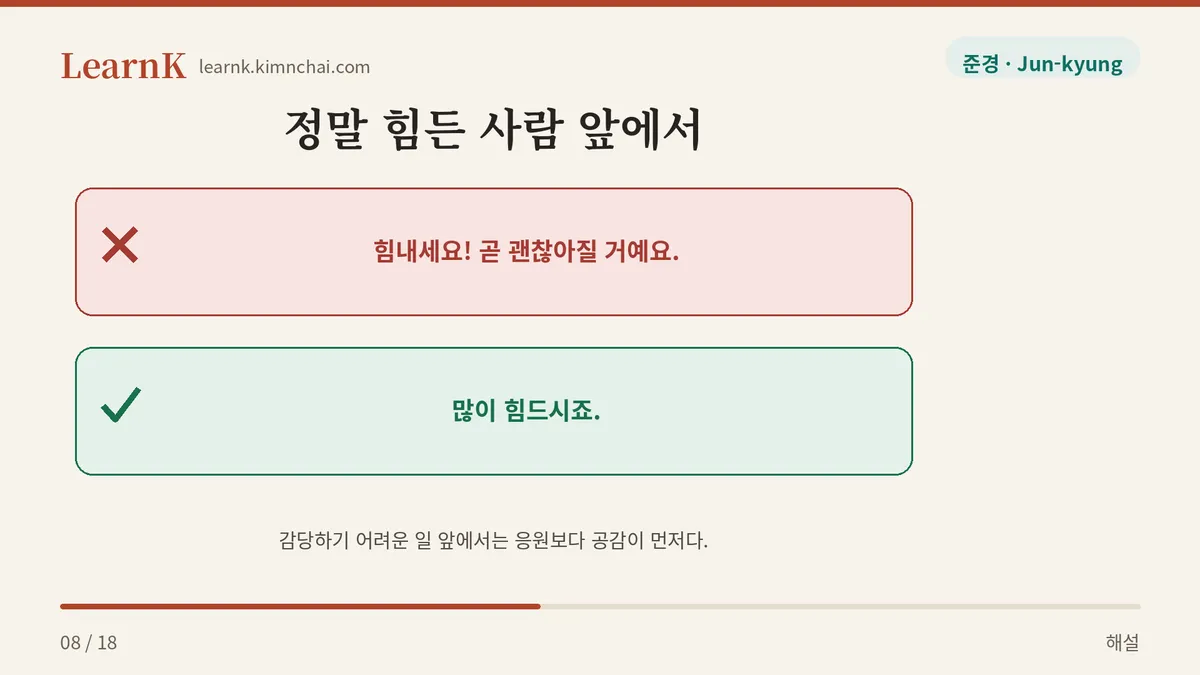
One thing to watch out for: if someone is going through something truly heavy — for example, someone who has lost a family member — casually saying “힘내세요” can actually feel like a burden. In moments like these, it’s more natural to first add an empathetic phrase from the heart, like “많이 힘드시죠… (mani himdeusijyo…)” — “This must be so hard for you…”
Example Sentences by Situation
Situation 1 — To a friend before an exam (casual)
내일 시험이지? 그동안 열심히 했잖아. 힘내 (himnae), 넌 할 수 있어! (Your exam’s tomorrow, right? You’ve worked so hard all this time. Hang in there — you can do it!)
This is a way of trusting and cheering on a friend who has worked hard for a long time. Paired with ‘넌 할 수 있어 (neon hal su isseo)’ — “you can do it” — the encouragement hits twice as hard.
Situation 2 — To a senior colleague working late (polite)
선배님, 오늘도 늦게까지 고생 많으세요. 힘내세요 (himnaeseyo). 커피 한 잔 타 드릴까요? (You’re working so hard again today, staying this late. Hang in there. Should I make you a cup of coffee?)
With someone older than you, always use the polite form 힘내세요 (himnaeseyo). Adding a greeting like ‘고생 많으세요 (gosaeng maneuseyo)’ makes it sound far more courteous.
Situation 3 — Cheering someone on by social media message
요즘 많이 힘들어 보여서 걱정했어. 너무 무리하지 말고 힘내 (himnae). 내가 항상 응원할게. (You’ve looked really worn out lately, so I’ve been worried. Don’t push yourself too hard — hang in there. I’ll always be cheering for you.)
This is an expression people often send by text or messenger when they can’t meet in person. It’s short, but it’s the kind of phrase that can change someone’s whole day.
Comparing Polite, Casual, and Similar Expressions
| Situation | Expression | Romanization |
|---|---|---|
| To a friend | 힘내 | himnae |
| To someone older | 힘내세요 | himnaeseyo |
| Very formal | 힘내십시오 | himnaesipsio |
It’s also worth knowing some similar words of encouragement.
- 화이팅 / 파이팅 (hwaiting / paiting) — from the English word fighting, this is a cheer shouted before a game or a challenge. It’s brighter and more upbeat than ‘힘내.’
- 기운 내 (giun nae) — almost the same meaning as ‘힘내,’ but used more often for someone who is physically sick or feeling down.
- 포기하지 마 (pogihaji ma) — “Don’t give up.” A somewhat stronger encouragement to hold out to the very end.
Cultural Background
In Korean dramas, there’s often a scene where the moment the main character breaks down, someone beside them pats their shoulder and says “힘내 (himnae).” The line is short, but that single phrase is frequently portrayed as the decisive moment that lifts the character’s heart back up. That’s how much this expression symbolizes, in the Korean emotional landscape, ‘the heart that endures alongside you.’
It’s the same in everyday life. Between part-timers at a café, between students at the same academy, and even to someone you’ve just met, people offer a parting “힘내세요 (himnaeseyo).” Even without knowing all the details of the other person’s situation, it’s a phrase shared naturally, carrying the feeling of “I’m rooting for your day.” And it never fails to appear in the messages of support K-pop fans send to their favorite idols.
Closing Quiz
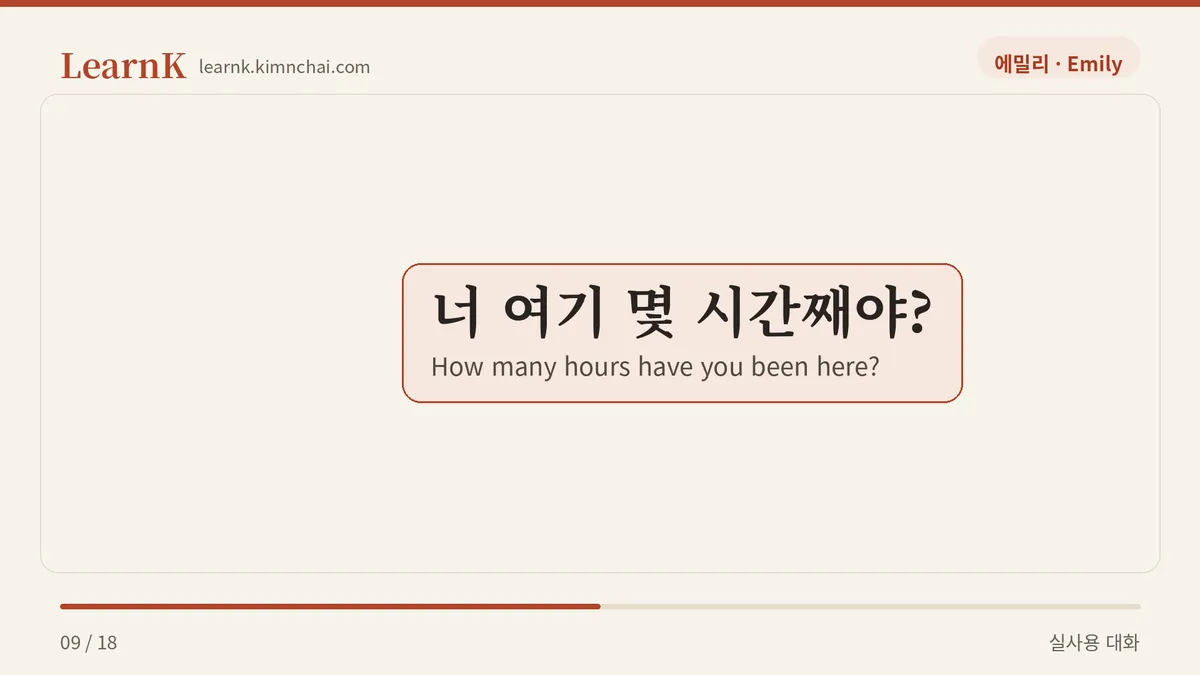
A senior colleague you respect is worn out from a tough project. Which of the following is the most fitting expression?
- 힘내 (himnae)
- 힘내세요 (himnaeseyo)
- 화이팅 (hwaiting)
See the answer
The answer is #2, 힘내세요 (himnaeseyo). Since you must always use polite speech with someone older than you, the casual ‘힘내’ would be impolite, and ‘화이팅’ feels a bit too light — so in a formal situation, ‘힘내세요’ is the most natural choice.
Try offering the 힘내세요 (himnaeseyo) you learned today to someone who’s worn out. Your Korean just might become real strength for someone!