축하해 / 축하합니다 — The One Phrase for Sharing a Happy Moment

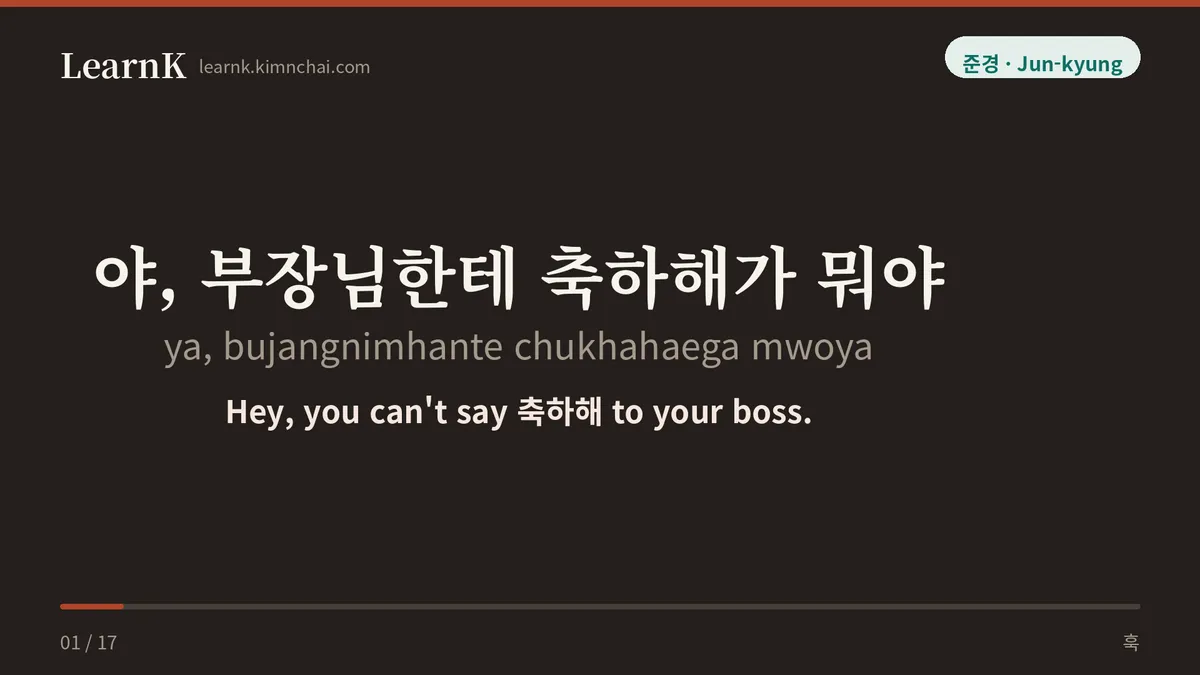
When you watch Korean dramas, there’s a phrase the characters exchange with bright smiles whenever exam results come out or wedding news is shared. It’s 축하해 (chukhahae) and 축하합니다 (chukhahamnida). Birthdays, graduations, landing a job, promotions, opening a business, a first broadcast… when something good happens to someone, a Korean will offer this phrase almost reflexively. Today, let’s take a deep look at this warm little phrase — situation by situation, and even the difference between polite and casual speech.
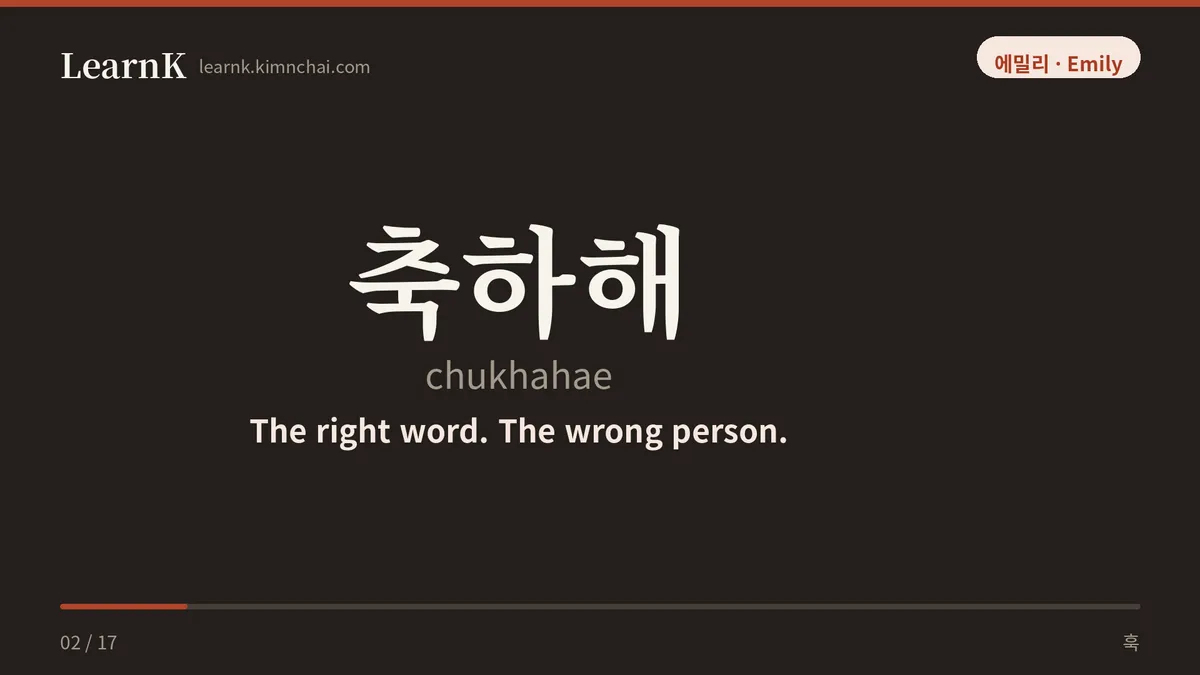
축하해 / 축하합니다
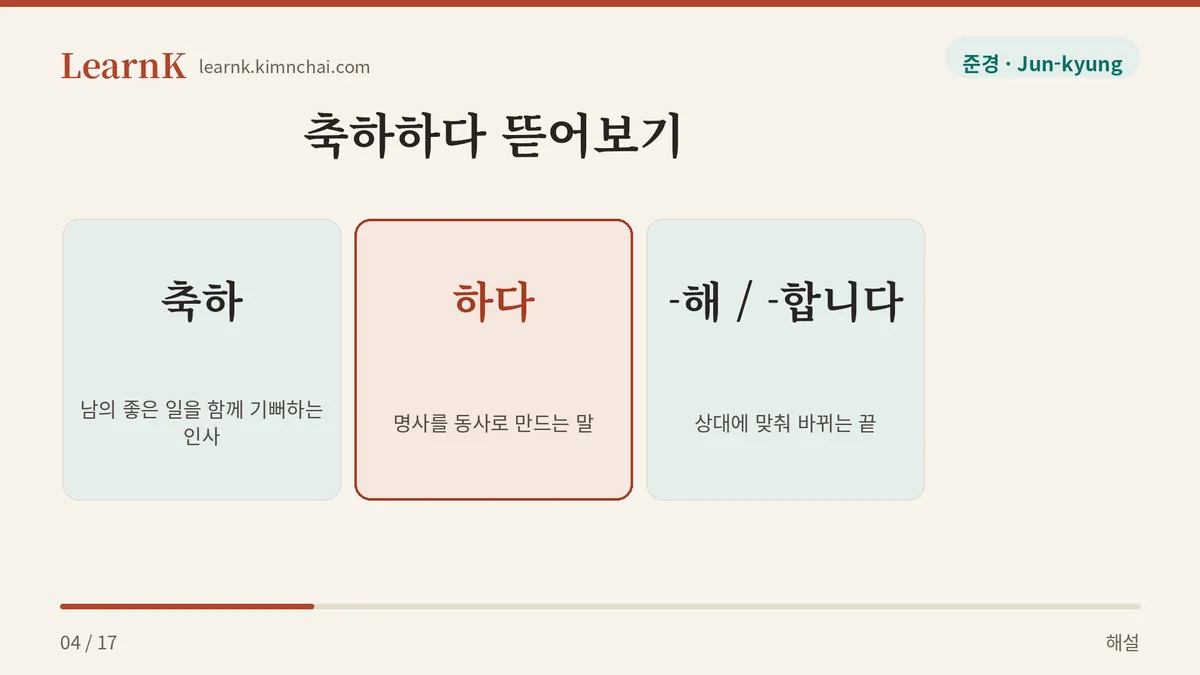
축하 (chukha) is a noun meaning “to rejoice together with and greet someone over a happy, good thing that has happened to them.” Add ‘하다’ and it becomes the verb 축하하다 (chukhahada), and today’s expressions are that verb adjusted to fit your relationship with the other person.
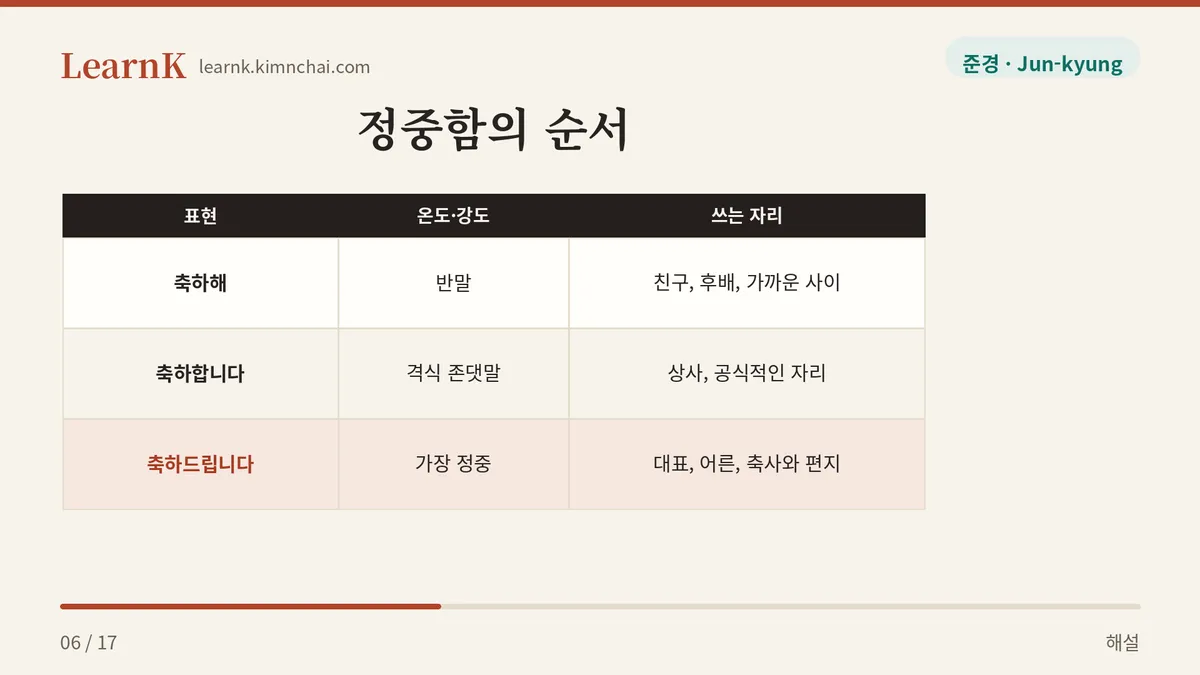
- 축하해 (chukhahae) — casual speech. Used with friends, juniors, and close relationships.
- 축하합니다 (chukhahamnida) — formal polite speech. Used with elders, superiors, people you don’t know well, and in official settings.
- 축하해요 (chukhahaeyo) — somewhere in between. It’s polite, but a little softer and friendlier.
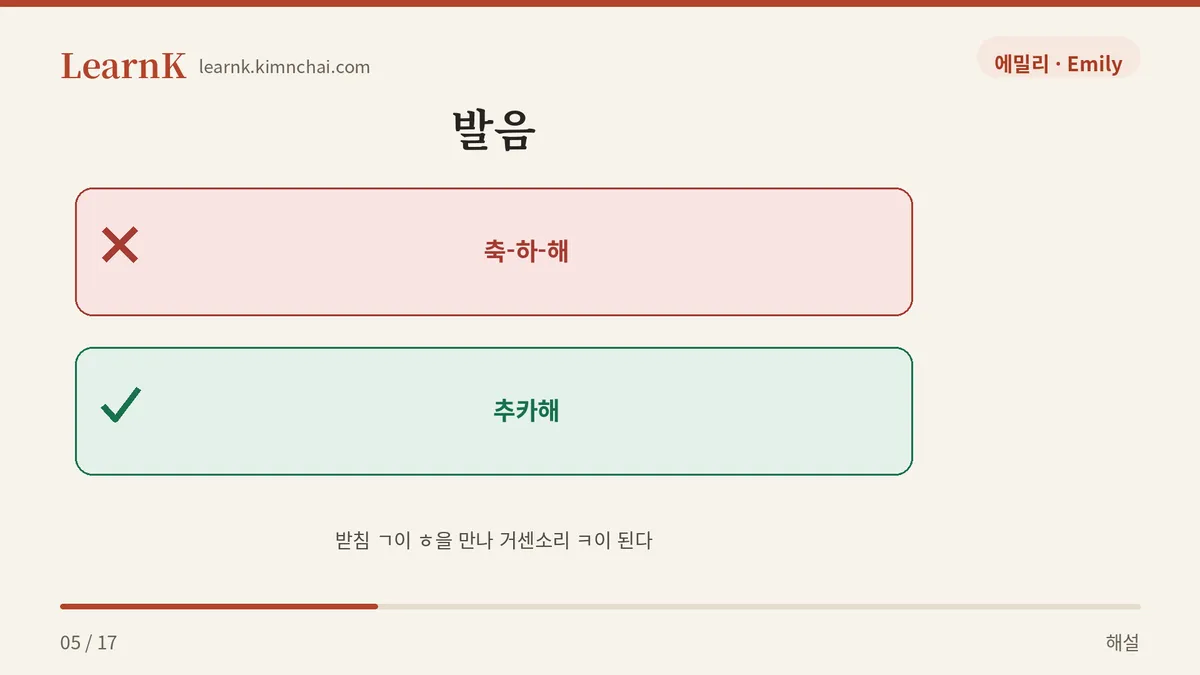
There’s one mistake people often make. When pronounced, ‘축하’ sounds like [추카 (chuka)]. When the ㄱ final consonant meets ㅎ, it changes into the aspirated sound [ㅋ (k)]. So 축하해, unlike how it’s written, is heard as [추카해 (chukahae)].
Meaning and Nuance
The heart of this expression lies in “adding your own heart to someone else’s joy.” More than a simple greeting, it expresses the feeling, “I’m genuinely happy about your good news too.” That’s why intonation and facial expression matter so much. A carelessly tossed-off “축하해” and a “축하해” said while clasping both hands and meeting someone’s eyes come across at completely different temperatures.
Example Sentences by Situation
1) When you hear a friend passed an exam (casual speech)
야, 합격이라고? 진짜 축하해! (ya, hapgyeogirago? jinjja chukhahae!)
This is the most natural everyday conversation. Adding ‘진짜 (jinjja, really)’ up front emphasizes the joy much more.
2) When congratulating your boss on a promotion (formal polite speech)
부장님, 승진 진심으로 축하합니다. (bujangnim, seungjin jinsimeuro chukhahamnida.)
Adding ‘진심으로 (jinsimeuro, wholeheartedly)’ brings out even more courtesy and politeness. In an official setting, this form is the safest.
3) When congratulating a neighbor or acquaintance on their wedding (soft polite speech)
결혼 축하해요! 두 분 정말 잘 어울려요. (gyeolhon chukhahaeyo! du bun jeongmal jal eoullyeoyo.)
When you want to stay polite without being too stiff, the ‘-해요’ form is just right.
Comparing Polite, Casual, and Similar Expressions
Even for the same congratulations, the range of expressions is wide.
- 생일 축하해 (saengil chukhahae) — “생일 축하해” is a nationally beloved sentence that even appears in the birthday song.
- 축하드립니다 (chukhadeurimnida) — ‘드리다’ is the honorific form of ‘주다 (to give).’ It’s more polite than 축하합니다, so it’s often used in formal letters and official congratulatory speeches.
- The noun ‘축하’ combines well with other words too, as in 축하 파티 (chukha pati, celebration party) and 축하 선물 (chukha seonmul, congratulatory gift).
To sum up, the rough order of politeness is like this: 축하해 < 축하해요 < 축하합니다 < 축하드립니다. The higher the other person’s status compared to yours, the safer it is to move toward the right.
Cultural Background
In Korean dramas and variety shows, scenes where the people around someone say “축하한다 (congratulations)” with tears welling up — after that person achieves a dream through long effort — are a regular occurrence. Here, ‘축하’ is at once an acknowledgment of the result and a comfort that recognizes all the hardship along the way. That’s why, in Korea, when you receive congratulations you answer with “고마워 (thanks)” or “감사합니다 (thank you),” and often a humble reply follows, like “다 덕분이야 (it’s all thanks to you),” giving the credit to those around you. This short exchange of congratulations holds the uniquely Korean sense of 정 (情, warm affection).
Closing Quiz
Your company’s CEO has reached the founding anniversary. If you want to congratulate them as formally and politely as possible, which expression would be most appropriate?
- 축하해
- 축하해요
- 축하드립니다
Leave the answer and your reasoning in the comments. And it’d be great if you also told us how people celebrate good news in your country!