Ipdeok-bujeonggi: That Phase Where You Insist "I'm Not a Fan"
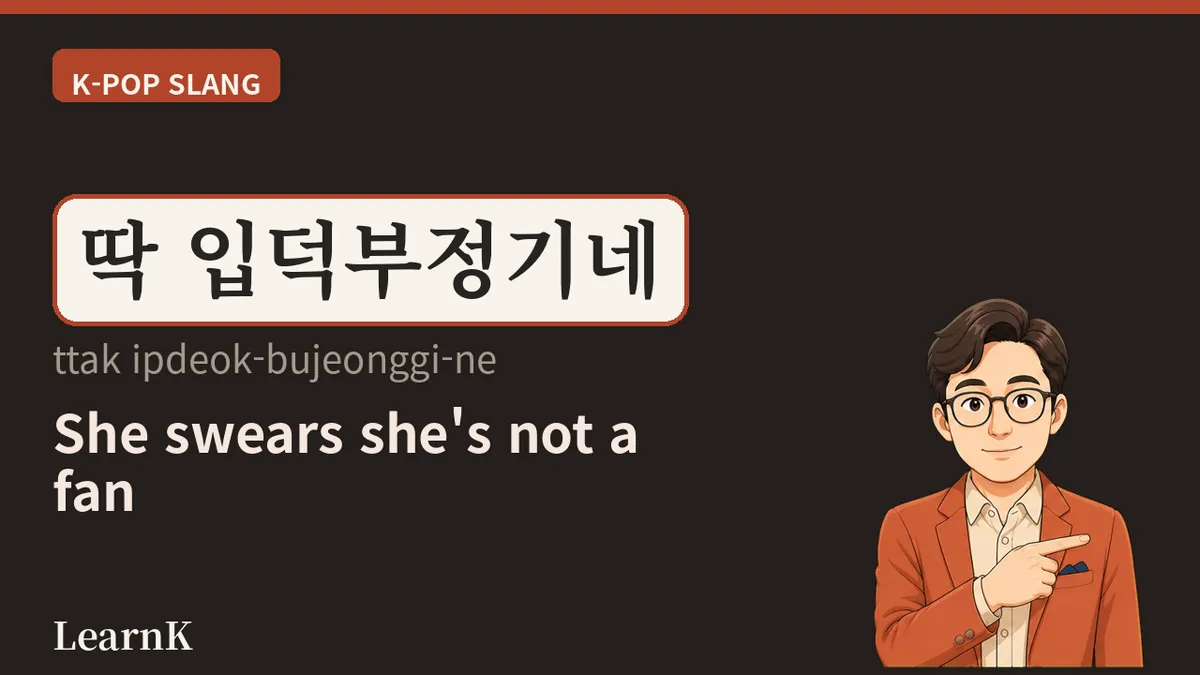
입덕부정기 (ipdeok-bujeonggi)
You’ve been re-watching concert clips all night, you somehow know every member’s name by heart, and your phone’s playlist is now plastered with one group’s songs. And yet, the moment someone asks, “You’re a fan of that group, right?”, you throw up your hands in a panic. “No way, I just like the music, that’s all.” This peculiar stage — clearly head over heels, but the only person insisting otherwise is you — has a single word K-pop fans use to pin it down exactly: 입덕부정기 (ipdeok-bujeonggi). Spend even a little time in K-pop communities or YouTube comments and you’ll see it pop up several times a day. It’s an essential word in the fandom world.
Meaning and Nuance

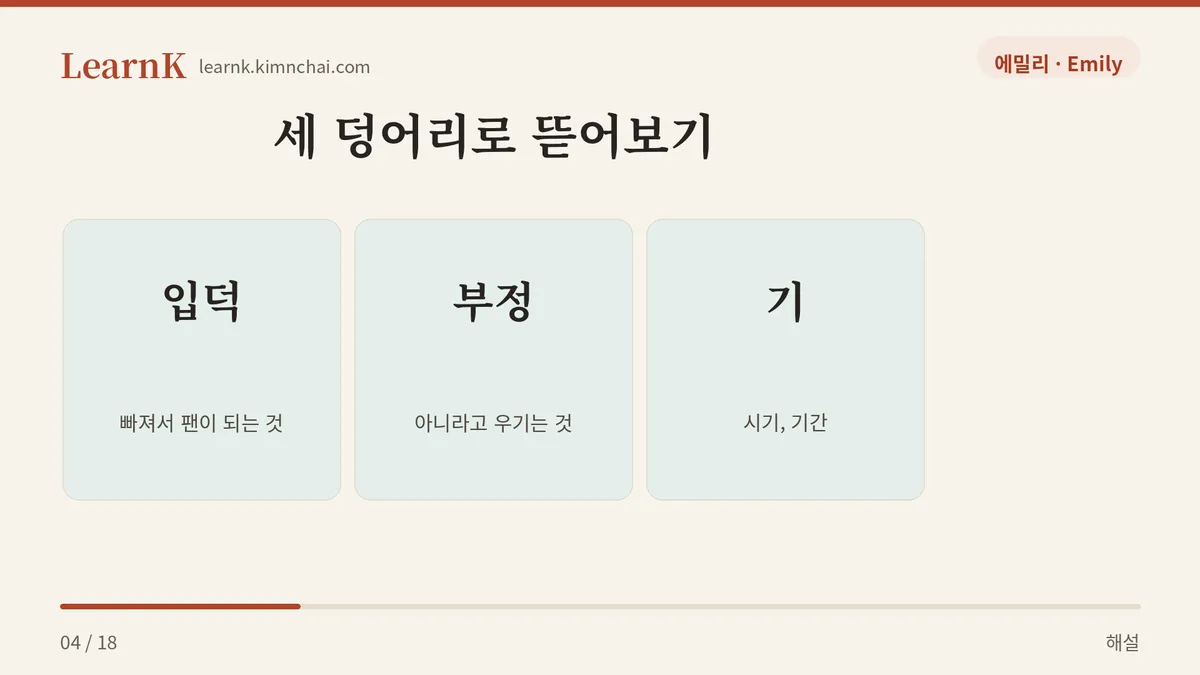
입덕부정기 (ipdeok-bujeonggi) is easy once you break it into three chunks. 입덕 (ipdeok) joins the character ‘들 입 (入)’, meaning “to enter,” with 덕후 (deokhu) — derived from the Japanese word otaku — and refers to falling hard for something and becoming a fan. 부정 (bujeong) means denying and refusing to admit something, and 기 (gi) means a phase or period. Put them together and you get “the phase where you’re already hooked but still deny that you’re hooked.”
The key nuance is that this is the stage where you’re fooling not just others but yourself. It’s obvious to everyone watching, and deep down you kind of know it too, but it’s too embarrassing to admit, so you keep backing away. “I just know a couple of songs,” “The algorithm keeps pushing them on me” — lines like these are the classic scripts of this phase. That’s why the word is usually used in a teasing tone. It’s not serious criticism; it’s closer to an affectionate joke that means “we all know you’ll fully come around soon.”
Seeing It in a Real Conversation
Situation: A weekend afternoon, at a meetup spot for a secondhand sale. Emily has come out to buy a photocard of a certain idol group, and Jun-kyung got dragged along without quite meaning to.
준경: 야, 주말에 사람을 이 먼 데까지 불러내더니. 그 포토카드가 그렇게 좋아? Hey, you dragged me all the way out here on a weekend. Is that photocard really that great?
에밀리: 좋긴 뭘 좋아. 그냥 디자인이 예뻐서 그래. 나 팬 아니야. It’s not like I love it. The design’s just pretty, that’s all. I’m not a fan.
준경: 나온다 나와. 딱 입덕부정기네. 앨범까지 사면서 팬 아니래. There it is. Classic “denying you’ve become a fan” phase. Buying whole albums and still says she’s not a fan.
에밀리: 아니라니까? 노래 몇 개 아는 거랑 팬인 거랑은 다르지. I said I’m not! Knowing a few songs and being a fan are totally different things.
준경: 그 ‘몇 개’가 지금 네 플레이리스트 top10을 다 차지했잖아. Those “few songs” are taking up your entire top 10 right now.
에밀리: …그건 알고리즘이 자꾸 띄워서 그런 거고. …That’s just because the algorithm keeps pushing them on me.
준경: 응, 그것도 입덕부정기 단골 멘트야. 한 달 뒤엔 콘서트 예매하고 있을걸? Yep, that’s a stock line of the denial phase too. Bet you’ll be booking concert tickets a month from now.
Example Sentences by Situation
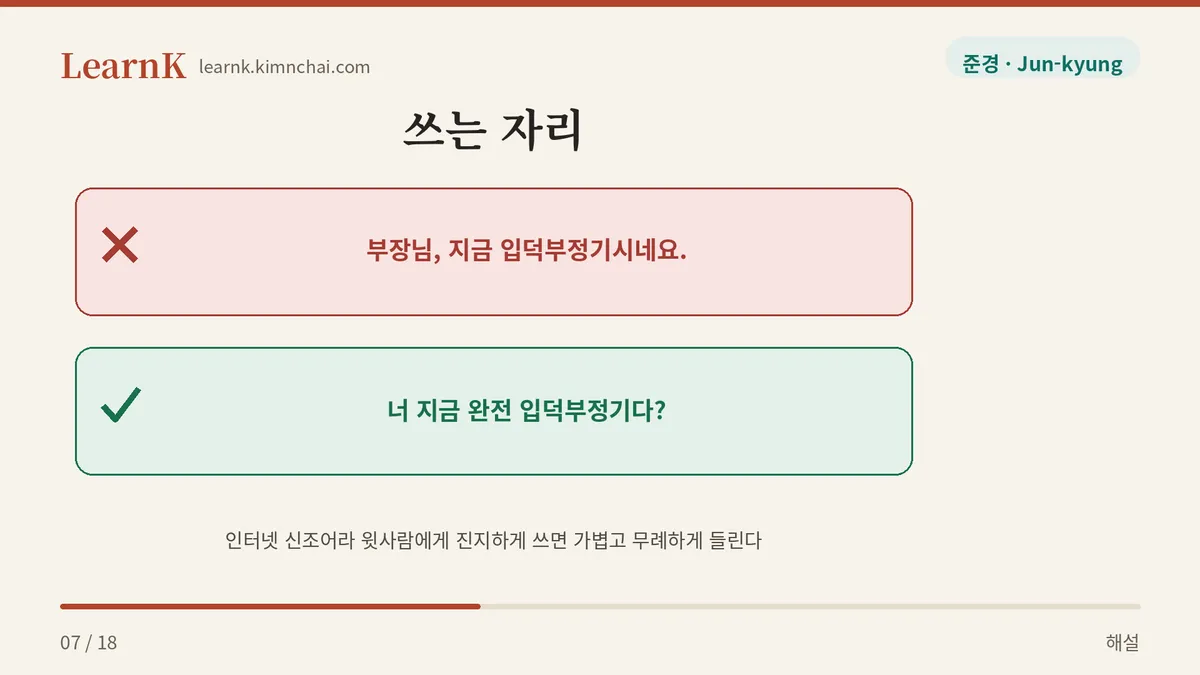
1) Teasing a friend — To a friend who says they put on a drama “just to pass the time” but binge-watches it every single night: 너 지금 완전 입덕부정기다? (neo jigeum wanjeon ipdeok-bujeonggi-da?) — “You’re totally in denial right now, and it shows.”
2) Admitting it and surrendering — After insisting for ages, finally throwing your hands up: 입덕부정기 끝, 나 이제 그냥 팬 할래. (ipdeok-bujeonggi kkeut, na ije geunyang paen hallae.) — “I’m done denying it — I’ve decided to just be a fan now.”
3) The moment you’re about to fall — To describe that precarious state where you’ve only dipped a toe in: 나 요즘 입덕부정기라 좀 위험해. (na yojeum ipdeok-bujeonggi-ra jom wiheomhae.) — “I’m right on the edge of falling for them these days, so I have to be careful.”
Casual vs. Polite Speech, and Related Words
Because 입덕부정기 (ipdeok-bujeonggi) is a noun, you just change the sentence ending to make it polite. Among friends you’d say 입덕부정기야 (ipdeok-bujeonggi-ya), and when you need to be respectful, 입덕부정기예요 (ipdeok-bujeonggi-yeyo). That said, the word itself is a newly coined term that’s basically an internet meme, so rather than using it seriously with your boss or with elders, it feels far more natural among peers or in online spaces.
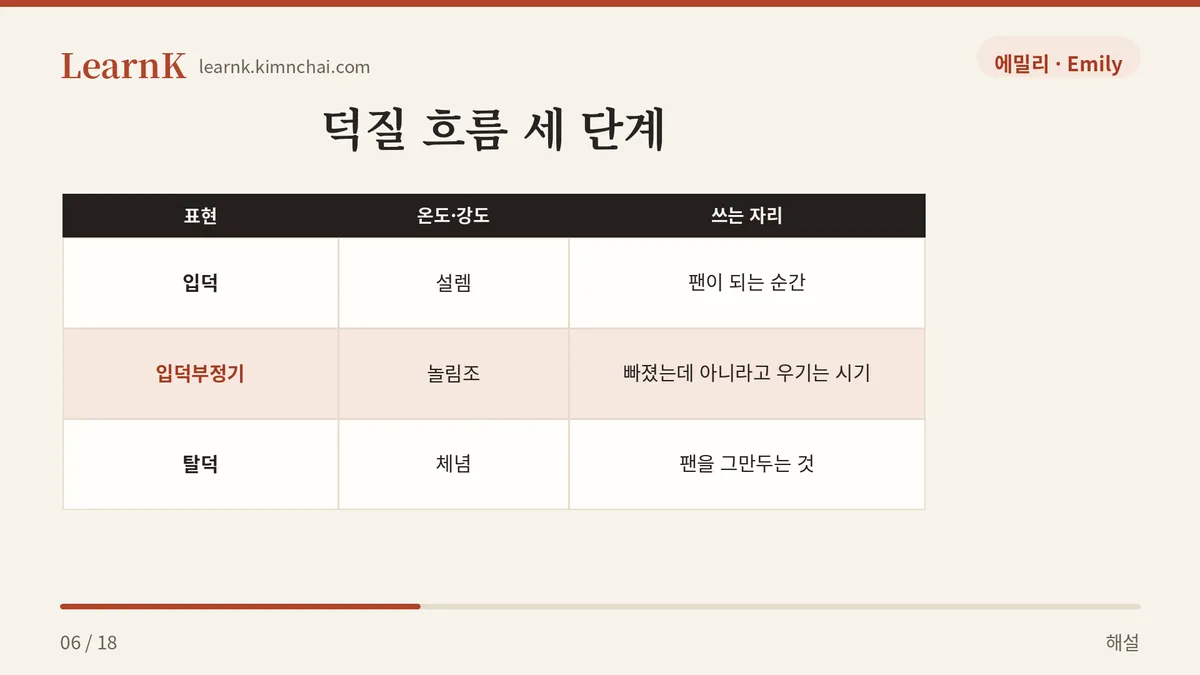
It helps to learn the related expressions as a set. The moment you become a fan is 입덕 (ipdeok), quitting being a fan is 탈덕 (taldeok), and your favorite member among many is your 최애 (choeae). 입덕부정기 (ipdeok-bujeonggi) sits at the very front of this flow — a gray zone caught between “the me who isn’t a fan yet” and “the me who’s already fallen.”
Cultural Background
Why would the “phase of denial,” of all things, get its own name? Korea’s fandom culture has long carried a subtle attitude that “showing too much makes you look desperate” or “getting overly into something is a little embarrassing.” So in the early days, when a fan’s affection is just starting to grow, people end up hitting the brakes on themselves. The word 입덕부정기 (ipdeok-bujeonggi) pinpoints that awkward defense mechanism exactly and turns it into a laugh — a piece of self-parody the fandom made about itself. That’s why, inside the teasing, the word also carries the empathy of “I’ve been through it all too.”
This psychology, in fact, isn’t unique to K-pop. In Korean romance dramas, there’s a stock scene where the lead insists to the very end, “I absolutely don’t like that person,” only to have their true feelings exposed in the end. That curve — denying an emotion and then finally admitting it — looks strikingly like the process of becoming a fan.
Closing Quiz
A friend flatly denies it — “I’m not a fan of that group” — yet has bought three whole albums and even set an alert for when concert ticket sales open. What phase is this friend going through right now?
Answer: 입덕부정기 (ipdeok-bujeonggi) — the very phase where your heart has already fallen completely, but your mouth still won’t admit it!