'탈덕 (taldeok)' — Quitting the Fandom, K-Pop Fandom's Final Goodbye
There’s a certain kind of person: someone who once plastered an entire wall of their room with photocards, streamed new albums all night the moment they dropped, and put their life on the line during concert ticketing. And then one day, that person quietly starts packing those albums into a box. They turn off their fan-account notifications and tuck their lightstick deep into a drawer. Korean K-pop fans have exactly two syllables for this quiet moment of parting — 탈덕 (taldeok). Today, we’ll learn the language of the opposite of that flashy ‘입덕 (ipdeok)’ — the moment of leaving a fandom.
탈덕
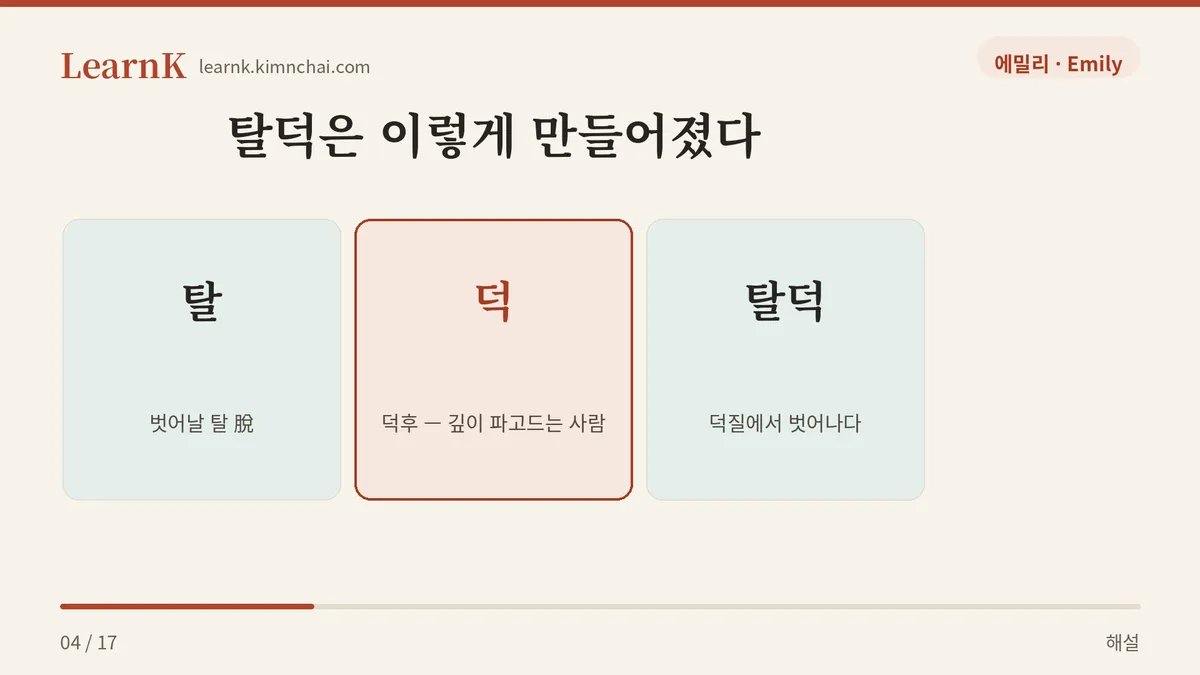
탈덕 (taldeok) means to stop being a devoted fan of something. It’s made by attaching ‘덕’ — from ‘덕후 (deokhu)’ — to ‘탈 (脫),’ meaning “to break away from.” ‘덕후 (deokhu)’ comes from the Japanese word ‘otaku (オタク)’ and refers to someone who dives deep into something they love. So if you unpack 탈덕 literally, it means “to break away from 덕질 (deokjil, fan activities),” or more simply, “to quit being a fan.”
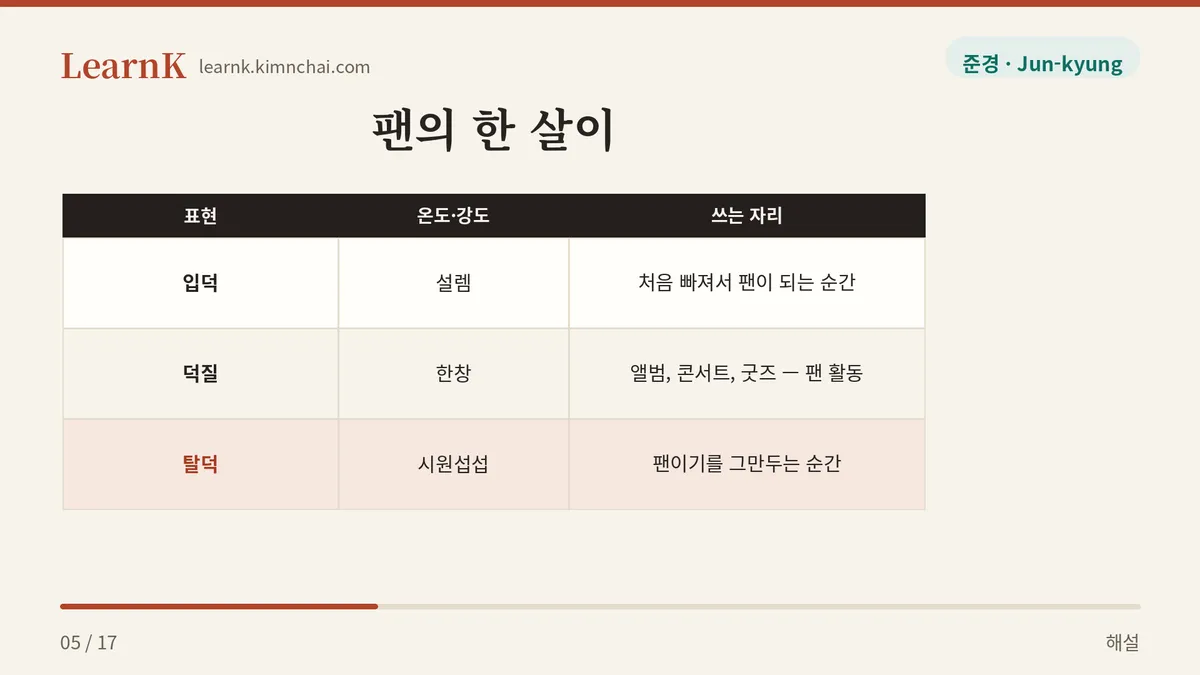
The opposite is 입덕 (ipdeok) — the moment you first fall hard for something and become a fan. A fan’s life usually starts with 입덕, continues through a good stretch of 덕질, and then, for some reason, arrives at 탈덕. That’s why this word carries a curious warmth to it. Unlike the dry statement “I don’t like them anymore,” 탈덕 is soaked with a sense of wistfulness for a time when you truly, sincerely loved something. Koreans often describe this feeling as ‘시원섭섭하다 (siwonseopseophada)’ — bittersweet, relieved and sad at once.
It’s also used quite broadly. It shows up most often in idol and actor fandoms, but it attaches to almost anything you can be a fan of — sports like baseball and soccer, games, anime, and more. As in “야구 탈덕했어 (I quit being a baseball fan)” or “그 게임 탈덕한 지 오래야 (I stopped being into that game a long time ago).”
Seeing It in a Real Conversation
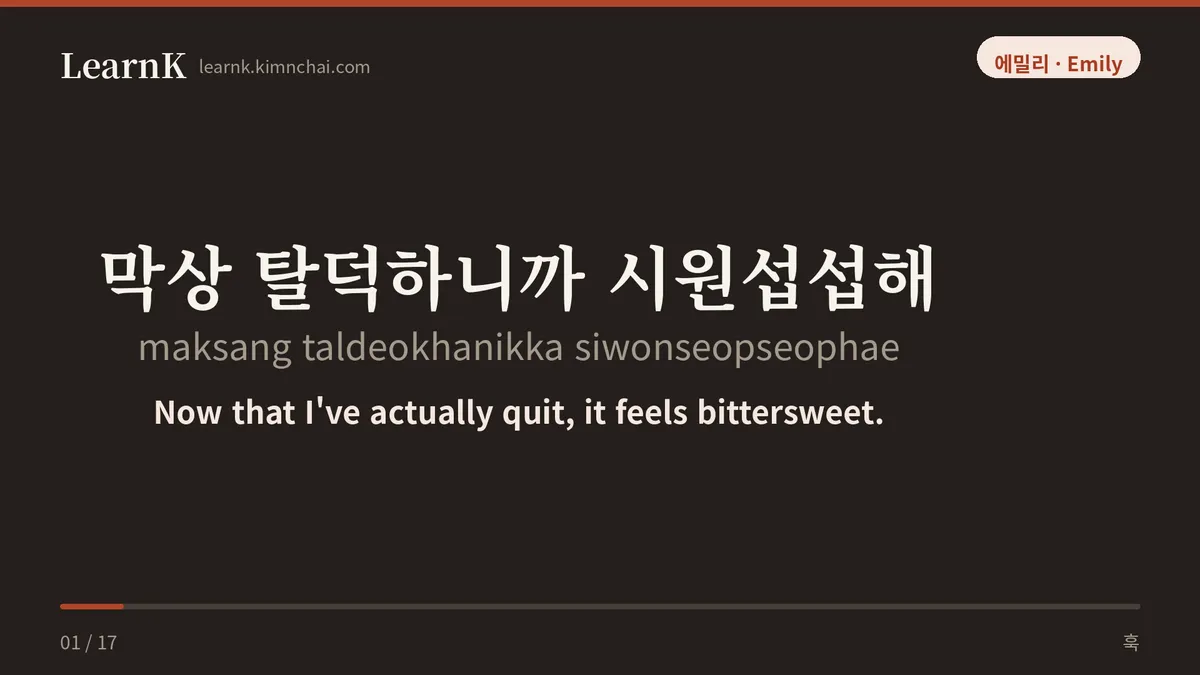
Scene: In front of Exit 3 of a subway station. Emily has come out carrying a paper bag stuffed with albums and merch. Jun-kyung has come to buy it from her secondhand.
준경: 어? 이거 다 파는 거야? 너 이 그룹 완전 좋아했잖아. Huh? You’re selling all of this? You totally loved this group.
에밀리: 응… 나 얼마 전에 탈덕했어. 이제 방에 둘 데도 없더라고. Yeah… I left the fandom a while ago. And I don’t even have room for it anymore.
준경: 진짜? 갑자기 왜? 콘서트도 그렇게 다니더니. Really? Why all of a sudden? You used to go to every concert.
에밀리: 그냥 마음이 좀 식더라고. 근데 막상 탈덕하니까 시원섭섭해. I just kind of lost interest. But now that I’ve actually quit, it feels bittersweet.
준경: 그 마음 알지. 나도 예전에 야구 탈덕할 때 딱 그랬어. I know that feeling. I felt exactly the same when I quit being a baseball fan.
에밀리: 어머, 오빠도 덕후였어? 완전 몰랐네. Oh, you were a fan too? I had no idea.
Example Sentences by Situation
1. When fans leave in droves after a controversy
소속사 대응이 실망스러워서 팬들이 대거 탈덕했다 (taldeokhaetda).
This is when a lot of fans leave all at once after some incident or controversy breaks out. Here, it pairs well with words like ‘우르르 (ureureu, in a rush)’ and ‘대거 (daegeo, in large numbers).’
2. When you quietly wrap it up after a long time of support
십 년을 응원했는데, 결국 올해 탈덕 선언했어요 (taldeok seoneonhaesseoyo).
‘탈덕 선언 (taldeok seoneon)’ means officially announcing “I’m quitting as a fan now” on social media or the like. The longer you loved them, the more weight this declaration carries.
3. When you leave and come back
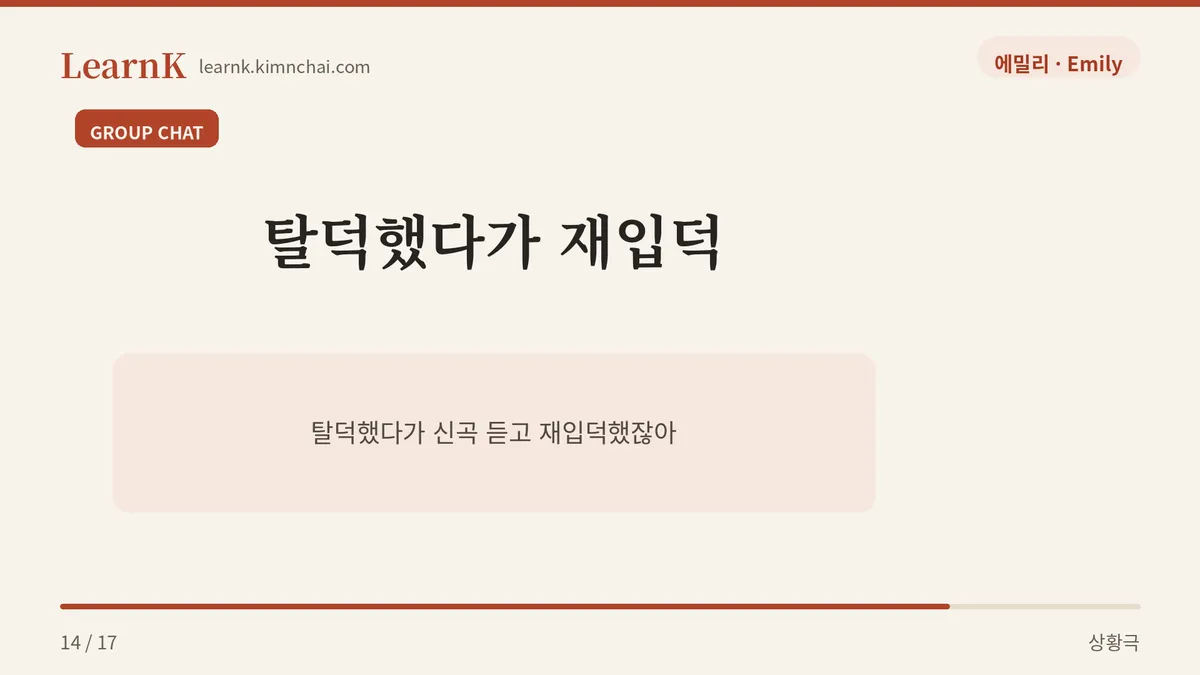
탈덕했다가 (taldeokhaetdaga) 신곡 듣고 재입덕했잖아.
탈덕 isn’t a forever goodbye. It’s common to have your heart won back by a single comeback stage or new song and become a fan all over again — that’s ‘재입덕 (jaeipdeok).’
Comparing Polite/Casual Forms and Similar Expressions
When used as a verb, you attach ‘-하다 (-hada).’ The casual form is 탈덕했어 (taldeokhaesseo), and the polite forms are 탈덕했어요 (taldeokhaesseoyo) or 탈덕했습니다 (taldeokhaetseumnida). It’s also often used as a noun in coined-slang expressions, like “탈덕 각이다 (taldeok gagida, looks like I’m about to quit).”
It’s quicker to understand if you organize the 덕질-related expressions into one set.
- 입덕 (ipdeok): becoming a fan (the beginning)
- 덕질 (deokjil): doing fan activities (the process)
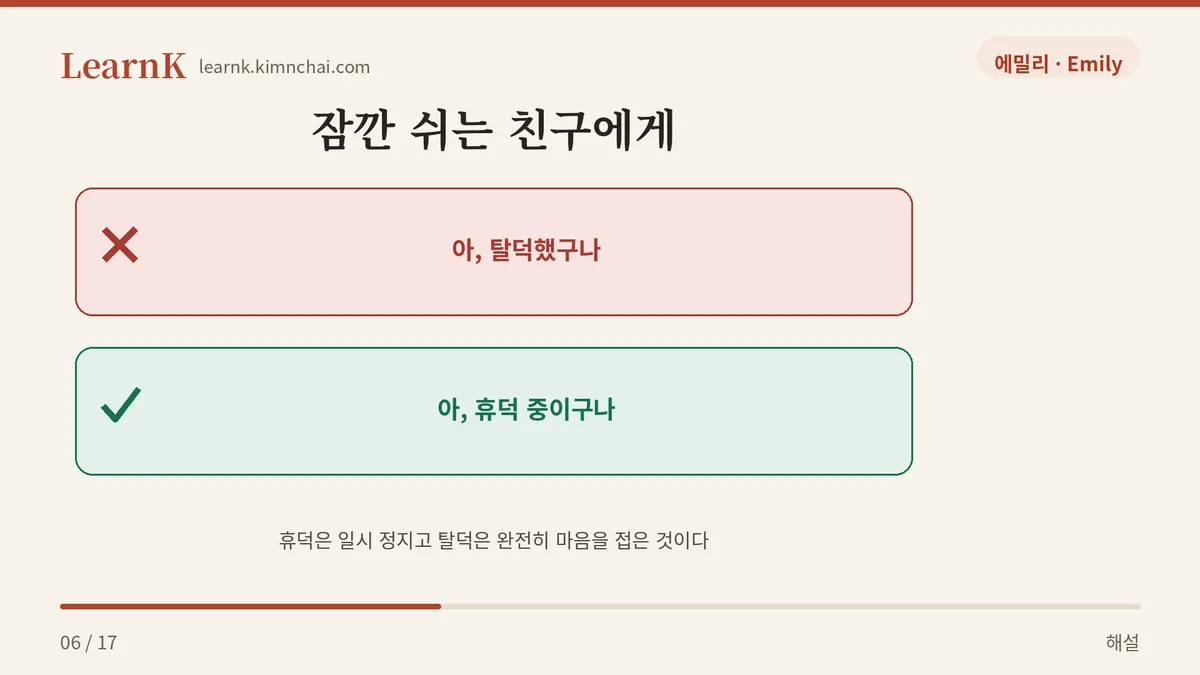
- 휴덕 (hyudeok): taking a break from 덕질 for a while (a pause) — unlike 탈덕, you haven’t left completely
- 탈덕 (taldeok): quitting being a fan (the end)
- 재입덕 (jaeipdeok): leaving and becoming a fan again (a return)
It’s especially easy to mix up 휴덕 (hyudeok) and 탈덕 (taldeok). 휴덕 is more like “I’m a bit worn out these days, so I’m resting for a moment,” while 탈덕 is closer to “I’ve truly closed the book on it now.”
Cultural Background
Korea’s ‘덕질 culture’ is close to being a whole way of life. Fans rent out cafés to throw fan events for their 최애 (choeae, their most-loved member)‘s birthday, they collect and trade photocards, and they buy multiple copies of albums to show their support. That’s exactly why 탈덕 feels like more than just interest fading — it feels like tidying up a part of your life.
That’s how terms like ‘탈덕 마켓 (taldeok market)’ and ‘탈덕 정리 (taldeok jeongni)’ — selling off your merch secondhand after 탈덕 — even came to be. Just like Emily in the conversation above. This cycle, where a departing fan’s merch flows to a newly-in-the-fandom fan, shows just how big and alive a world K-pop fandom really is.
Closing Quiz
A friend says this to you: “I liked that idol, but I got worn out and gave it up entirely. I even sold all my albums.” Which single word best captures this friend’s situation?
① 입덕 ② 휴덕 ③ 탈덕 ④ 재입덕
The answer is ③ 탈덕 (taldeok). They’ve completely closed the book on it and even cleared out their merch, so it’s not a temporary-rest ‘휴덕 (hyudeok)’ — it’s ‘탈덕 (taldeok)’!