The King of Rice-Thieves: Ganjang-gejang — That Bite of Rice Mixed Right in the Crab Shell

When you order a crab set meal at a Korean restaurant, the server sometimes gives a little smile and adds, “Would you like more rice?” Why? Because hardly anyone stops at just one bowl when there’s ganjang-gejang in front of them. Today we’re going to learn about a side dish Koreans absolutely adore — 간장게장 (ganjang-gejang).
간장게장
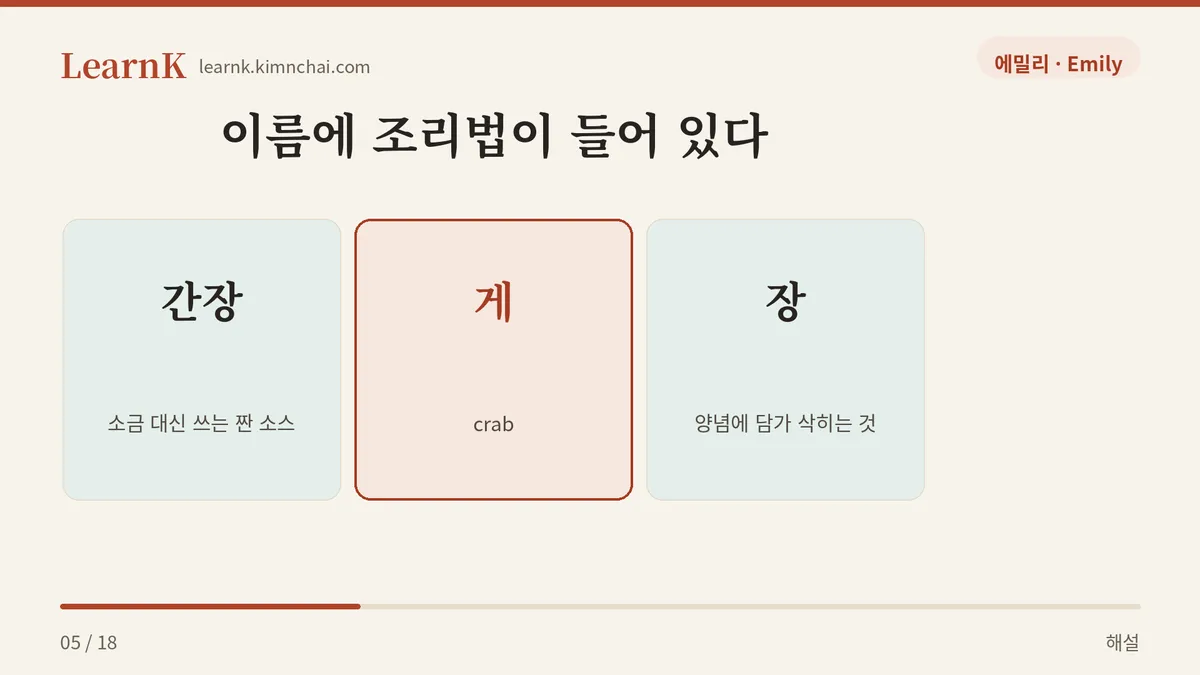
간장게장 (ganjang-gejang) is a traditional Korean dish made by soaking fresh crab (usually blue crab) in a salty soy-sauce marinade for a few days until it cures. Instead of being cooked over heat, the crab is left to steep in the soy-sauce brine, so the meat turns tender and a deep savory flavor seeps all the way through. Break the name down and the meaning is right there — 간장 (ganjang, a salty sauce used in place of salt) + 게 (ge, crab) + 장 (jang, something soaked and cured in seasoning). So it’s “crab soaked and cured in soy sauce” — a dish whose recipe is baked right into its name.
Koreans often call ganjang-gejang 밥도둑 (bapdoduk). Literally it means “a thief that steals your rice,” and it’s an affectionate nickname for a side dish so delicious that you keep scooping up rice without even realizing it. That single bite — warm rice packed into the crab shell (the back shell) and mixed with the leftover roe and brine — is what many Koreans call “the taste of a lifetime.”
Seeing It in a Real Conversation

The scene: It’s Emily’s housewarming day. Jun-kyung has just arrived carrying a container of ganjang-gejang.
Jun-kyung: 집들이 선물로 뭐 사 올까 고민하다가, 그냥 간장게장 사 왔어. I couldn’t decide what to bring for the housewarming, so I just got some ganjang-gejang.
Emily: 헐 대박, 이거 완전 밥도둑인데! 나 이것 때문에 밥 두 공기는 각오해야 돼. Whoa, no way, this is the ultimate rice-stealer! I’ve gotta brace for two bowls of rice because of this.
Jun-kyung: ㅋㅋ 게딱지 들고 손으로 쪽쪽 빨아 먹어야 제맛이야. 앞치마 있어? Haha, you’ve gotta pick up the shell and suck it clean by hand — that’s the real way. Got an apron?
Emily: 있지. 근데 나 예전엔 간장게장 못 먹었잖아, 안 익힌 게라고. 지금은 없어서 못 먹어. I do. But you know I couldn’t eat ganjang-gejang before — raw crab and all. Now I can’t get enough of it.
Jun-kyung: 거봐, 한국 산 지 15년이면 입맛도 토박이 다 됐지. See? Fifteen years in Korea and your taste buds have gone full local.
Emily: 인정. 밥부터 안칠게, 잠깐만! Fair. Let me get the rice going first, hang on!
Example Sentences by Situation
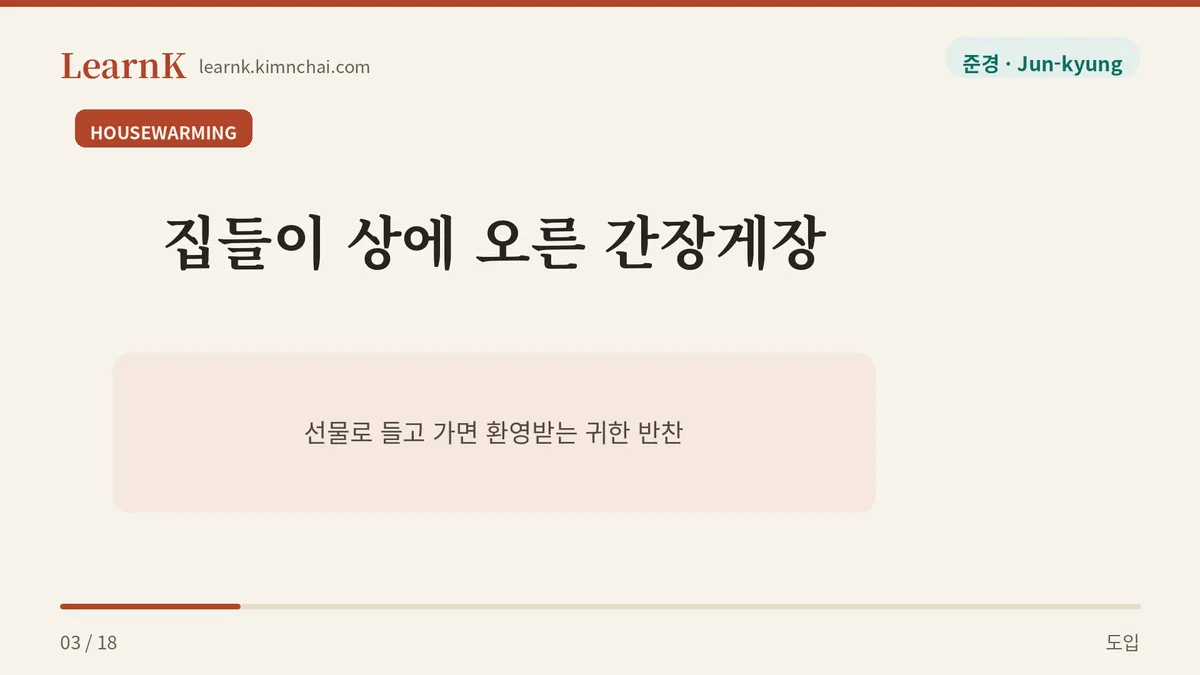
Let’s look at how to actually use these expressions, along with the situations they fit.
- 여기 간장게장 정식 하나 주세요. (yeogi ganjang-gejang jeongsik hana juseyo.) — For ordering at a restaurant. ‘정식 (jeongsik)’ refers to a full set meal where the gejang comes with several side dishes and a soup.
- 간장게장은 짭짤하면서 감칠맛이 끝내줘요. (ganjang-gejangeun jjapjjalhamyeonseo gamchilmasi kkeutnaejwoyo.) — For describing the flavor to someone trying it for the first time. ‘짭짤하다 (jjapjjalhada)’ means pleasantly salty, and ‘감칠맛 (gamchilmat)’ is that deep, mouth-clinging savoriness.
- 이거 밥에 비벼 먹어 봐, 진짜 밥도둑이야. (igeo babe bibyeo meogeo bwa, jinjja bapdodugiya.) — A casual (반말) situation where you’re urging a friend to mix the gejang brine into their rice.
Polite vs. Casual Speech, and Some Related Words
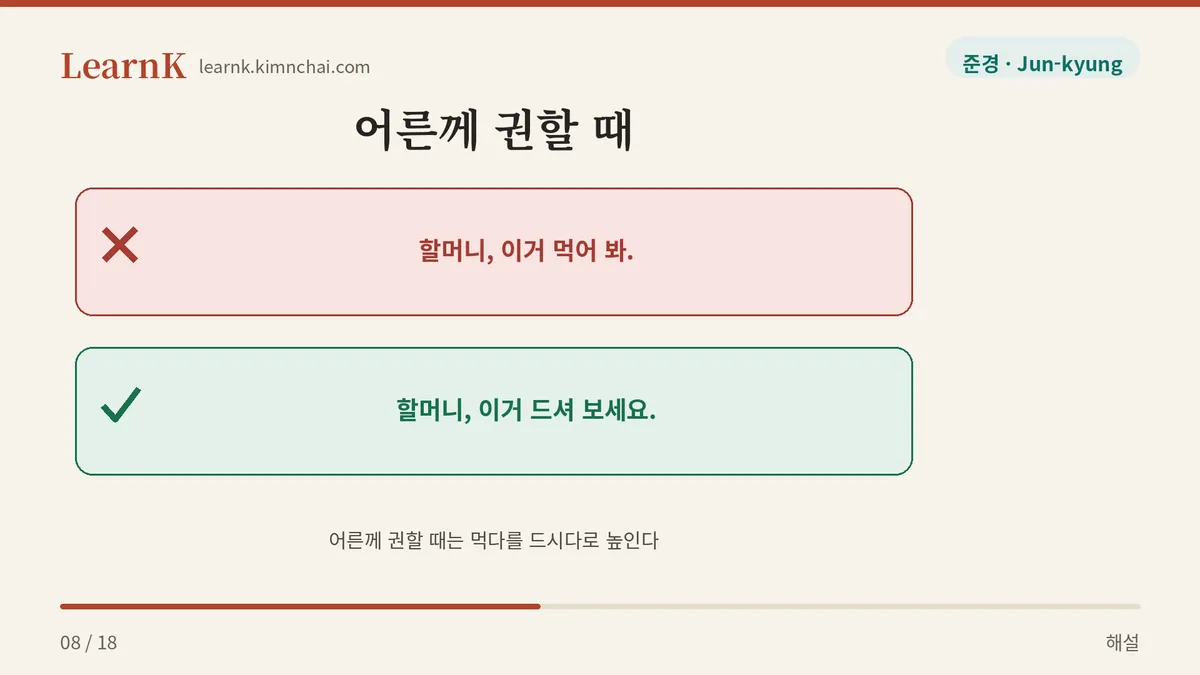
When offering the dish, you’d say 먹어 봐 (meogeo bwa) to a friend, but raise it to 드셔 보세요 (deusyeo boseyo) for someone older.
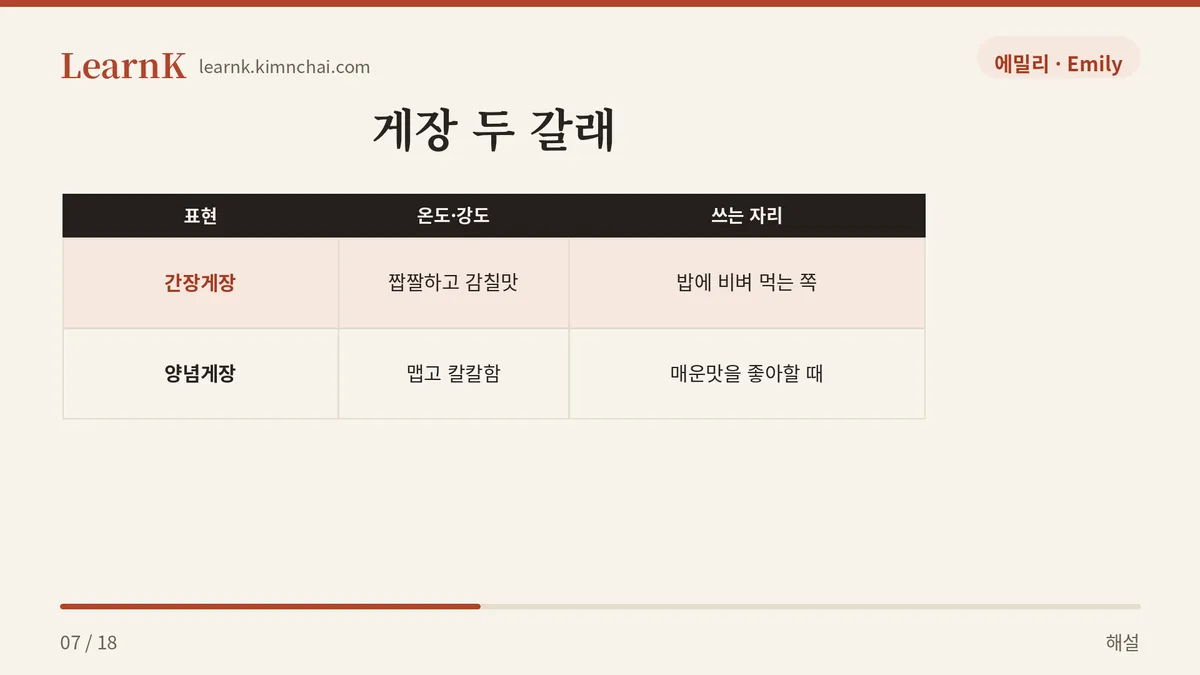
A similar dish is 양념게장 (yangnyeom-gejang), made by tossing the crab in a spicy red-pepper-flake seasoning. If ganjang-gejang is on the “salty and savory” side, yangnyeom-gejang is on the “spicy and fiery” side, so it comes down to personal taste. And the nickname ‘밥도둑 (bapdoduk)’ isn’t unique to ganjang-gejang — it’s used broadly for any side dish that makes the rice slide right down, like 젓갈 (jeotgal, salted seafood) or 장조림 (jangjorim, soy-braised meat).
Cultural Background
Ganjang-gejang is a “prized side dish” that shows up at feasts, holidays, and gatherings where guests are invited. It takes a lot of effort and the ingredients are pricey, so serving it carries a feeling of heartfelt hospitality. These days, famous gejang alleys like the one in Sinsa-dong, Seoul have become full-on tourist stops, and it’s a signature dish that has foreigners visiting Korea tilting their heads — “Why would you eat raw crab?” — only to change their minds the moment they take a bite. When a drama shows a mealtime scene and the lead mixes rice in a crab shell and takes a big spoonful, it makes even the viewers’ mouths water — a regular star of Korean 먹방 (meokbang, eating shows).
Wrap-Up Quiz
What do Koreans affectionately call a side dish that’s so delicious it keeps making you eat more rice, just like ganjang-gejang? (Hint: it secretly steals your rice away!) The answer is ‘밥도둑 (bapdoduk)’.