음치 (eumchi): The Most Beloved Person at the Noraebang? — Today's Korean Expression
음치
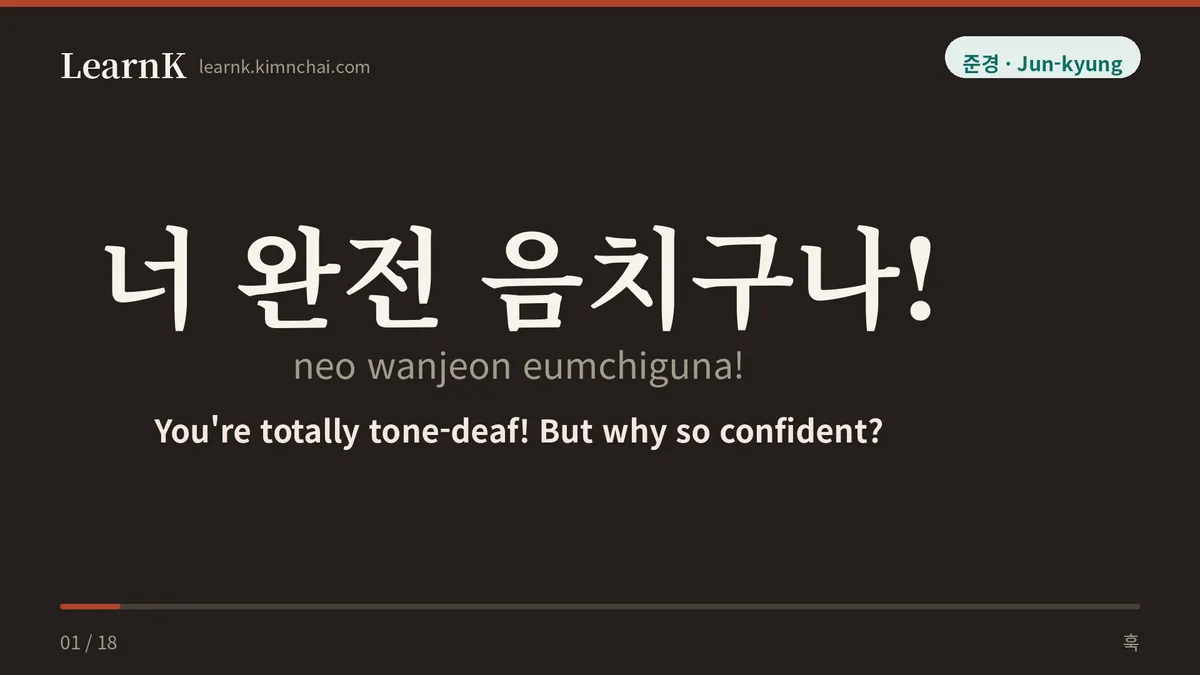
Have you ever gone to a 노래방 (noraebang) — a Korean karaoke room — with your Korean friends? Scores flash on the screen, tambourines rattle, and everyone excitedly passes the mic around. But there’s always that one person: someone whose pitch and rhythm are all over the place, yet who sings more confidently than anyone else. That’s when friends laugh and say, “You’re a total 음치 (eumchi)!” Today, let’s take a deep dive into this word that Korean people really do use all the time in everyday life.
Meaning and Nuance
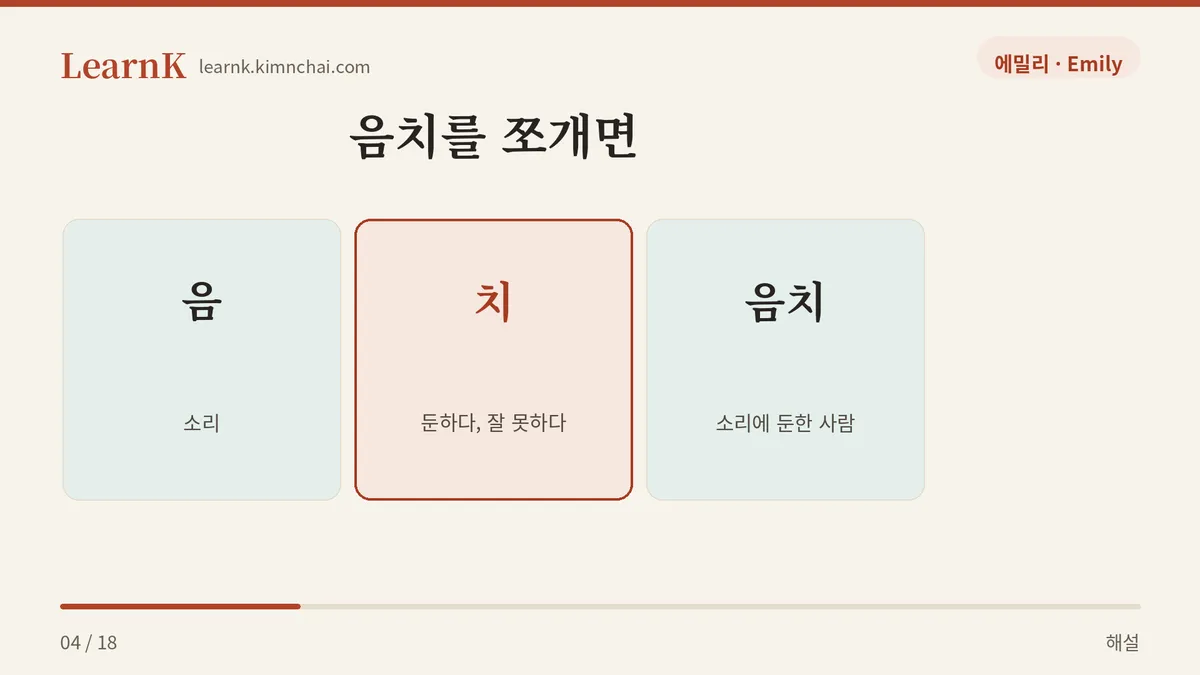
음치 (eumchi) combines 음 (音, sound) and 치 (癡, meaning “foolish” or “dull”). Taken literally, it means “a person who is dull to sound.” It refers to someone who can’t properly distinguish notes or produce sounds at the correct pitch. It’s almost exactly the same as the English word tone-deaf.
The important thing here is the nuance. In Korea, “음치” isn’t a harsh insult or a put-down — it’s much closer to affectionate teasing. Plenty of people cheerfully admit it about themselves: “나 음치야 (na eumchiya)” (“I’m tone-deaf”). Being a bad singer isn’t seen as something shameful; instead, it’s embraced as a kind of cute personality trait.
Confirming It in the National Institute of Korean Language Dictionary
Let’s check the definition straight from the National Institute of Korean Language, a government body.
음치 (noun): A person whose sense of music is dull, so they cannot properly distinguish notes or produce sounds correctly. [en] tone-deaf person; bad singer [zh] 五音不全 — National Institute of Korean Language, Basic Korean Dictionary (krdict.korean.go.kr)
Shall we also look at the real usage examples the dictionary provides?
솔직히 말해서 음치인 승규는 가수로서는 낙제생이지. — National Institute of Korean Language, Basic Korean Dictionary (krdict.korean.go.kr)
This is a scene where someone named 승규 (Seunggyu) is such a bad singer that they joke he’s a “낙제생 (nakjesaeng)” — a failing student — “as a singer.” Rather than serious criticism, it has the teasing tone of close friends.
저 사람은 음치인가 봐. — National Institute of Korean Language, Basic Korean Dictionary (krdict.korean.go.kr)
This is an expression where someone hears another person sing and cautiously guesses, “음치인가 봐 (eumchiinga bwa),” meaning “I think they might be tone-deaf.” The ending -인가 봐 expresses a guess rather than certainty.
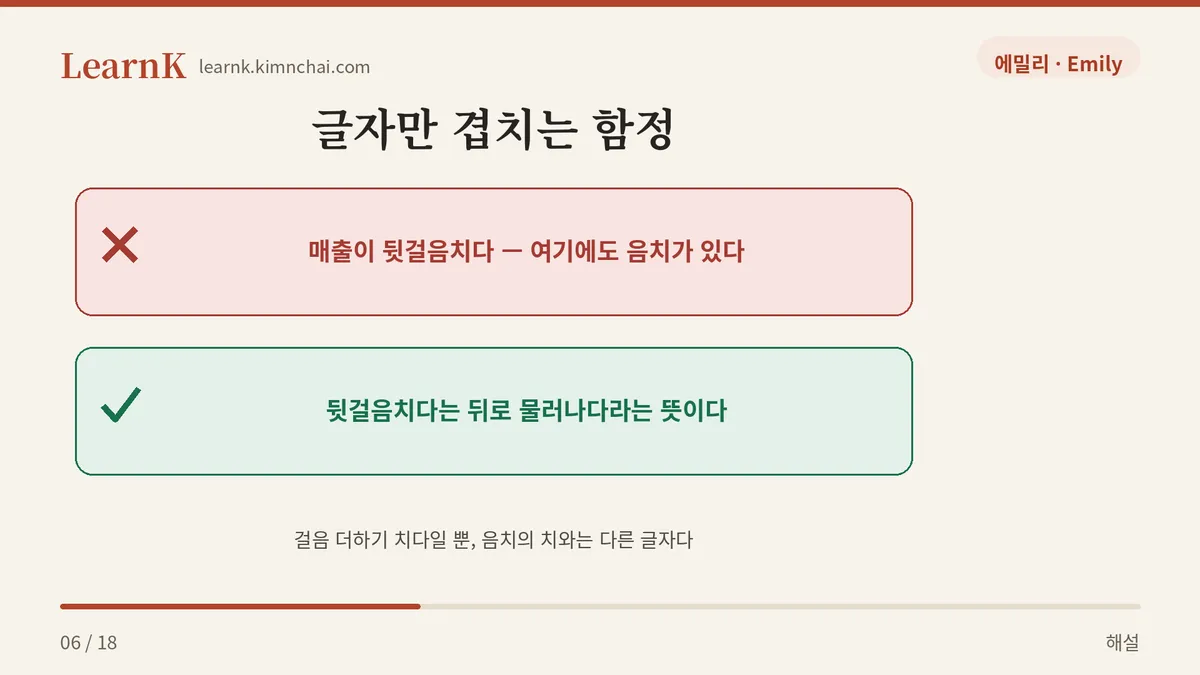
Here’s one interesting point. If you search for “음치” in the dictionary, you’ll also get example sentences with words like 뒷걸음치다 (dwitgeoreumchida).
매출이 갈수록 뒷걸음치고 있으니 큰일입니다. — National Institute of Korean Language, Basic Korean Dictionary (krdict.korean.go.kr)
But this is a completely different word! Here, “치다” is a verb meaning “to step back” (as in sales declining), and it has nothing to do with the “음치” we’re learning. The letters just happen to overlap by coincidence, so don’t get confused.
Example Sentences by Situation (Our Own Sentences)
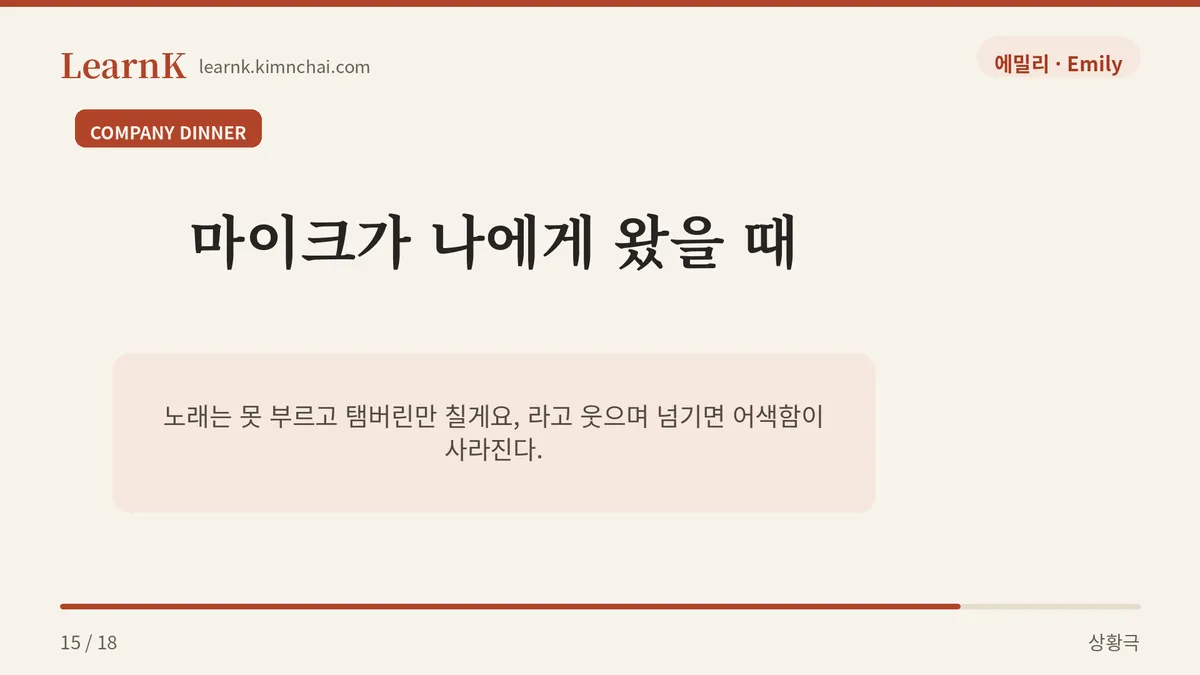
- At a company dinner: “저는 완전 음치라서 노래는 못 부르고 탬버린만 칠게요! (jeoneun wanjeon eumchiraseo noraeneun mot bureugo taembeorinman chilgeyo!)” → A modest and cheerful way of saying you’ll liven up the mood instead of singing.
- Watching an audition show: “저 참가자, 외모는 아이돌인데 알고 보니 음치더라. (jeo chamgaja, oemoneun aidorindae algo boni eumchideora.)” → A situation of talking about expectations and a surprising twist.
- Comforting a friend: “음치면 어때? 즐기면서 부르는 게 최고지! (eumchimyeon eottae? jeulgimyeonseo bureuneun ge choegoji!)” → A warm bit of encouragement, saying that enjoying yourself matters more than singing skill.
Polite/Casual Speech and Similar Expressions
Because “음치” is a noun, whether the speech is polite or casual is decided by the predicate that follows it. Casually, you’d say “너 음치야? (neo eumchiya?)”, and politely, “혹시 음치세요? (hoksi eumchiseyo?)” (“Are you perhaps tone-deaf?”).
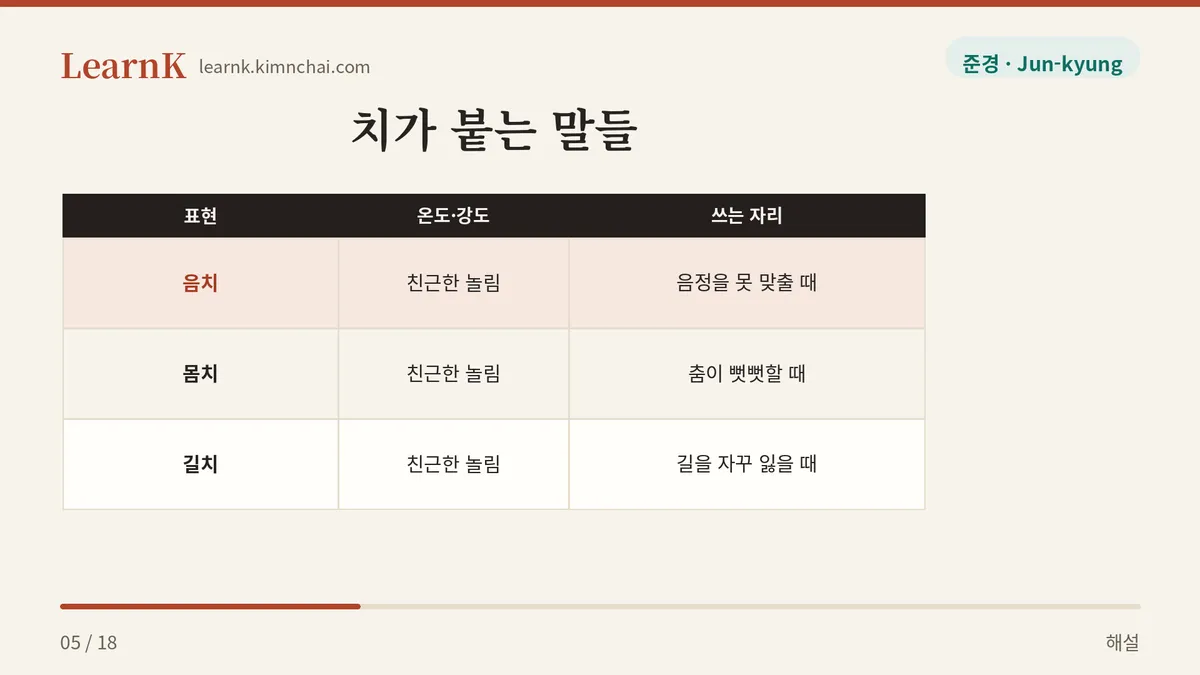
Korean has a whole “~치 (癡)” family. If your body is stiff and you can’t dance, you’re a 몸치 (momchi); if you have a poor sense of direction, a 길치 (gilchi); if you can’t handle machines, a 기계치 (gigyechi); and if you can’t keep a beat, a 박치 (bakchi). If you say “저는 음치에 몸치예요” (“I’m a 음치 and a 몸치”), it becomes a cute self-introduction meaning “I’m hopeless at both singing and dancing.”
Cultural Background
The 음치 character is a regular fixture in Korean dramas and variety shows. Think of a scene at a company dinner or an MT (엠티, a college group trip) where someone is forced to grab the mic and ends up triggering explosive laughter, or a scene on an idol variety show where the group’s visual member turns out to be tone-deaf and reveals an unexpected charm. The heart of Korean noraebang culture is that a bad singer isn’t humiliated — rather, someone who honestly enjoys themselves is the one who’s loved. That’s why the word “음치” carries more warmth than mockery.
(Note: Since the National Institute of Korean Language dictionary doesn’t include a Portuguese translation, we’re adding our own — [pt] pessoa desafinada, pessoa sem ouvido musical.)
Today’s Quiz
Your friend sang their heart out at the noraebang, but not a single note was in tune. And yet they look absolutely delighted. What would be the most natural thing to say to them, with a smile, in this moment?
(Example answer: “야, 너 완전 음치인데 진짜 행복해 보인다! (ya, neo wanjeon eumchiinde jinjja haengbokae boinda!)” — “Hey, you’re totally tone-deaf, but you look genuinely happy!”)
Definitions and example sentences are from the National Institute of Korean Language’s Basic Korean Dictionary (krdict.korean.go.kr); that portion of this post, including our translations, is licensed under CC BY-SA 2.0 KR.