관종 (gwanjong): A Person Starved for Attention? Mastering Korean Slang from the SNS Era
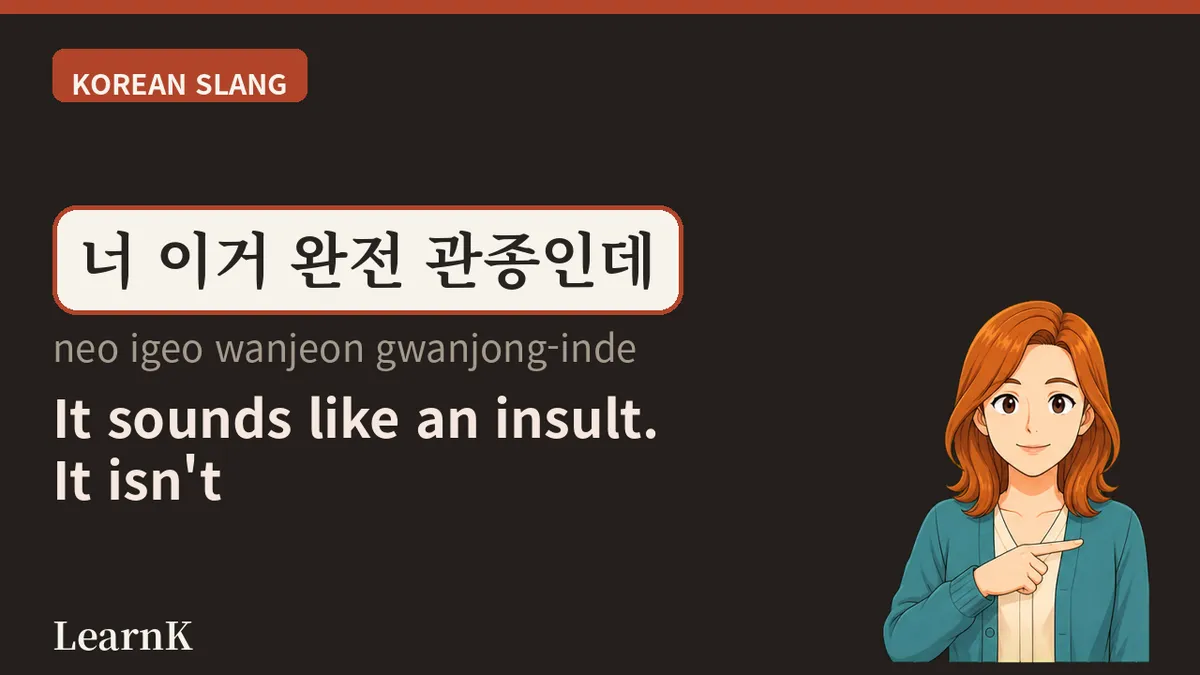
Today we’re learning a piece of slang that pops up dozens of times a day across the Korean internet and social media. Have you ever heard someone say “쟤 완전 관종이야 (jyae wanjeon gwanjong-iya)” — “That person is such an attention hog” — in a YouTube comment section, on Instagram, or in a group chat with friends? It hasn’t officially made it into the dictionary yet, but these days it has become an indispensable expression in Korean conversation.
관종
관종 (gwanjong) is a shortened form of 관심종자 (gwansimjongja). 관심 (gwansim) means ‘attention’ in English — that is, ‘others paying attention to you’ — and 종자 (jongja) originally means ‘seed,’ or a derogatory way of referring to ‘a certain type of person.’ Put the two together and you get “a person who wants an excessive amount of attention,” or in plainer terms, ‘someone starved for attention.’ The closest English equivalent is ‘attention seeker.‘
Meaning and Nuance
The heart of 관종 lies in the idea that it’s ‘excessive.’ Everyone wants to be loved and noticed by others, but a 관종 is someone whose desire is so strong that they deliberately act out, exaggerate, or even make up stories just to draw attention.
Originally it was a negative, sarcastic word. Saying “저 사람 관종이야 (jeo saram gwanjong-iya)” carries the criticism that “they’re overdoing it to get attention.” But these days, younger people use it lightly and playfully — even about themselves. It often shows up as a cheerful way to put yourself down, as in “나 사실 관종이야, 하하 (na sasil gwanjong-iya, haha)” — “Honestly, I’m kind of an attention hog, haha.” That’s what makes it such a fun word: depending on the context and tone, it can be a sharp jab or a friendly joke.
Example Sentences by Situation
Situation 1 — When a friend posts photos on social media way too often
얘는 하루에 셀카를 열 장씩 올려. 완전 관종 (gwanjong) 이라니까. (This friend posts ten selfies a day. She’s a total attention hog, I’m telling you.)
This is a scene where you tease a friend for their excessive social media activity. The nuance isn’t real dislike — it’s light-hearted teasing.
Situation 2 — Joking while introducing yourself
제가 좀 관종 (gwanjong) 기질이 있어서, 무대에 서면 오히려 신나요. (I’ve got a bit of an attention-seeker streak, so being on stage actually gets me excited.)
Here, the speaker uses it about themselves, cheerfully admitting “I’m someone who enjoys the spotlight.” You can also attach ‘기질 (gijil, temperament/streak),’ as in 관종기 (gwanjonggi) or 관종 기질 (gwanjong gijil).
Situation 3 — Criticizing someone who deliberately causes a scene
저 사람 또 없는 얘기 지어내서 싸움 붙이네. 관심받고 싶은 관종 (gwanjong) 짓 좀 그만했으면. (There they go again, making up stuff to start fights. I wish they’d quit the attention-seeking behavior.)
This time it’s genuine criticism. 관종짓 (gwanjongjit) is a derived word meaning ‘annoying behavior done to grab attention.‘
Formal vs. Casual Speech, and Similar Expressions
Because 관종 was born as internet slang, you don’t use it in formal settings or toward people senior to you. Saying “관종” in a company report or in front of an elder you’ve just met would sound very rude. It’s only safe among friends (casual speech) or when joking around with people you’re close to. If you really need to say it politely, it’s better to rephrase it descriptively, like “관심을 많이 받고 싶어 하시는 분 (gwansim-eul mani batgo sipeo hasineun bun)” — “a person who wants to receive a lot of attention.”
Let’s also get to know some similar expressions. 인싸 (inssa) comes from ‘insider’ and refers to a popular person who blends in well with a group — but unlike 관종, it isn’t negative. 오버하다 (obeohada) means ‘to overdo it,’ and it often appears alongside descriptions of 관종 behavior. On the flip side, a person who avoids attention and enjoys being alone is called an 아싸 (assa, outsider).
Cultural Background
Behind the widespread use of the word 관종 is the era of social media and one-person media. As anyone became able to show themselves off through videos and photos, ‘attention’ became view counts and likes — in other words, a resource. That’s why, in Korean variety shows and dramas, it’s common to see other characters laugh and say “쟤 관종이네 (jyae gwanjong-ine)” — “What an attention hog” — about someone acting out.
What’s interesting is that in the age of the attention economy, a new perception has emerged that being a 관종 isn’t necessarily a bad thing. For a YouTuber or influencer, a ‘healthy attention-seeking streak’ can even be regarded as a talent. So these days, half-complimentary expressions like “좋은 관종 (joeun gwanjong)” (“a good attention hog”) and “프로 관종 (peuro gwanjong)” (“a pro attention hog”) have appeared. Watching how the temperature of a single word can shift with the times really makes you feel that language is alive and breathing.
Closing Quiz
A friend is at a party deliberately singing and dancing loudly, drawing everyone’s eyes. If you wanted to say this jokingly to a Korean friend, which of the following sentences would sound the most natural?
- “쟤 진짜 아싸다.” (“They’re such an outsider.”)
- “쟤 완전 관종이네.” (“They’re such an attention hog.”)
- “쟤 정말 정중한 분이시네요.” (“They are such a polite person.”)
I hope the answer already popped into your head. (Hint: they’re enjoying the spotlight and deliberately acting out!) With 관종 (gwanjong) — this one phrase that captures the sensibility of young Koreans living in the social media era — I hope your Korean becomes a little more vivid, too.