The Must-Know Word for Riding Subways and Buses in Korea: '교통카드'
교통카드
When you arrive in Korea and step out of the airport, the very first gateway you’ll face is public transportation. And the one word every traveler and international student absolutely needs to know is 교통카드 (gyotongkadeu·transit card). The moment you walk into a convenience store and say “교통카드 하나 주세요 (gyotongkadeu hana juseyo·One transit card, please),” your life in Korea truly begins.
Meaning and Nuance
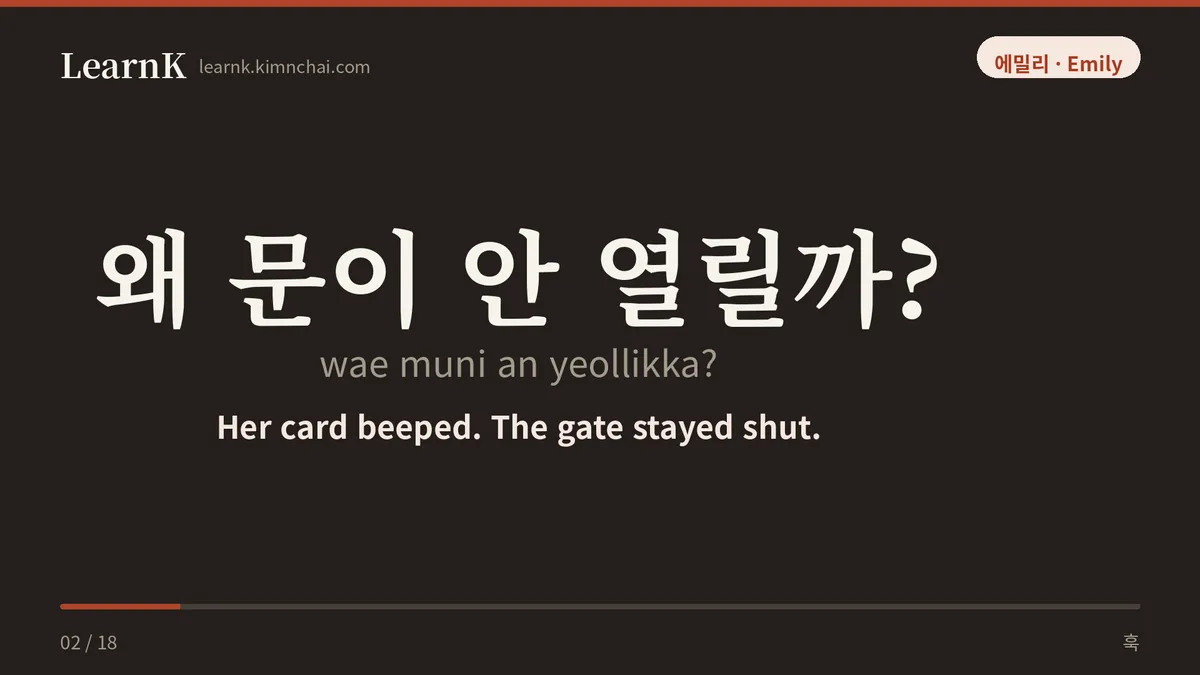
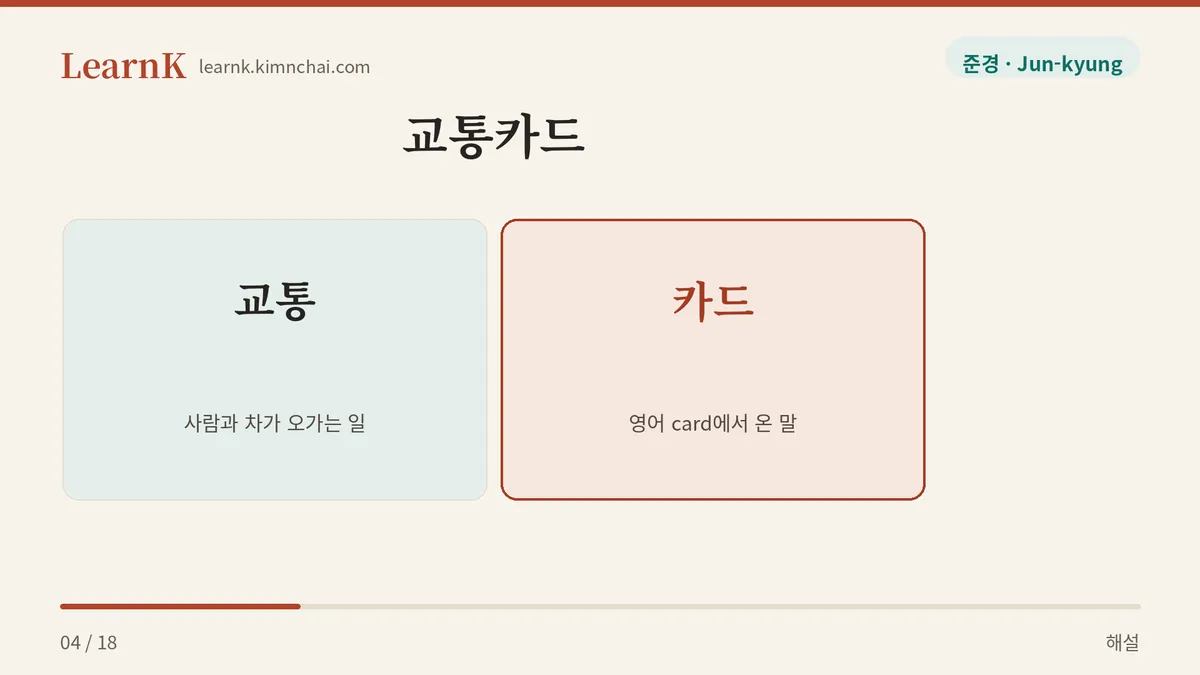
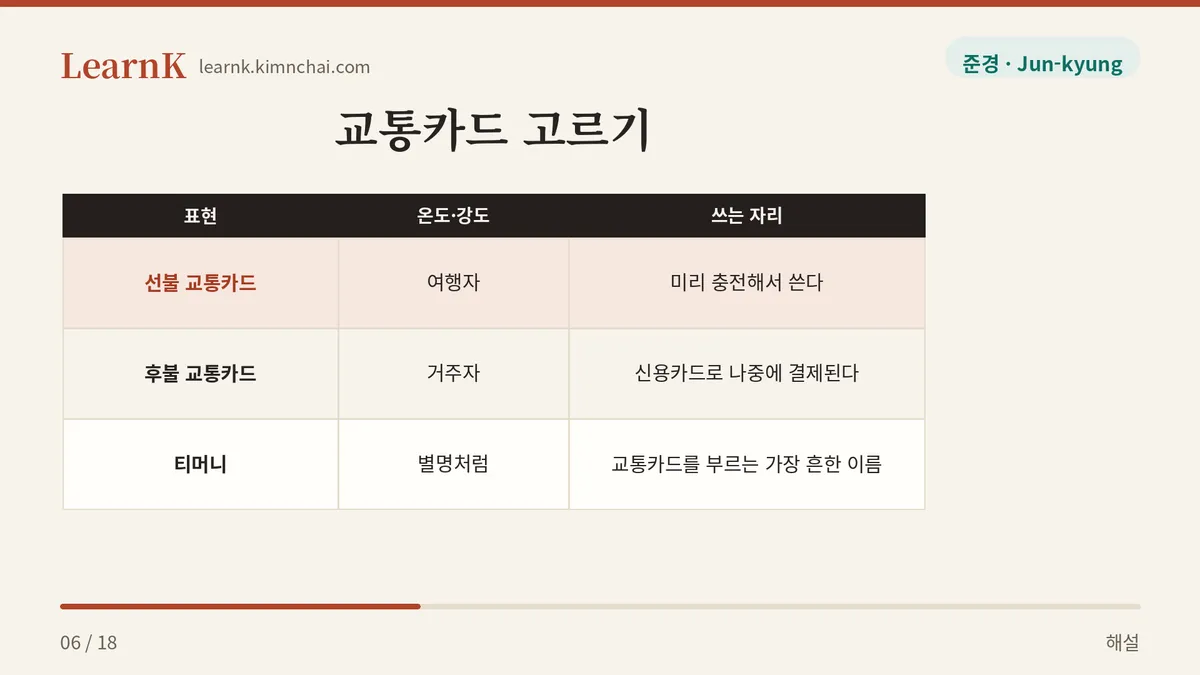
교통카드 (gyotongkadeu) combines ‘교통 (gyotong·traffic, transportation)’ with ‘카드 (kadeu·card),’ which comes from English. It refers to a rechargeable (or postpaid) card used to pay subway, bus, and taxi fares without cash. The most iconic one is the 티머니 (timeoni·T-money) card — it’s so widely used that people often just call any transit card “티머니 (timeoni).”
The key nuance is the convenience of “buy it once and it works anywhere in the country.” You also need this card to get the 환승 (hwanseung·transfer) discount that lowers your fare when you switch from the subway to a bus, so for locals it’s an essential item in the wallet.
Example Sentences by Situation
Situation 1 — Buying a card at a convenience store
저기요, 교통카드 하나랑 만 원 충전해 주세요. (jeogiyo, gyotongkadeu hanarang man won chungjeonhae juseyo.) Excuse me, one transit card and please load ten thousand won on it.
‘충전 (chungjeon·recharge)’ is the act of putting money onto the card. Think of it this way: you pay for the card itself separately (usually 2,500–4,000 won), and then add the amount you’ll actually spend on top of that.
Situation 2 — When your card balance is low
카드에 잔액이 부족한 것 같아요. 어디서 충전할 수 있어요? (kadeue janaegi bujokan geot gatayo. eodiseo chungjeonhal su isseoyo?) I think my card is low on balance. Where can I recharge it?
If your ‘잔액 (janaek·balance)’ runs short, the ticket gate makes a beeping sound and the door won’t open. When that happens, you can use the sentence above with a station attendant or a convenience store clerk.
Situation 3 — When getting off the bus
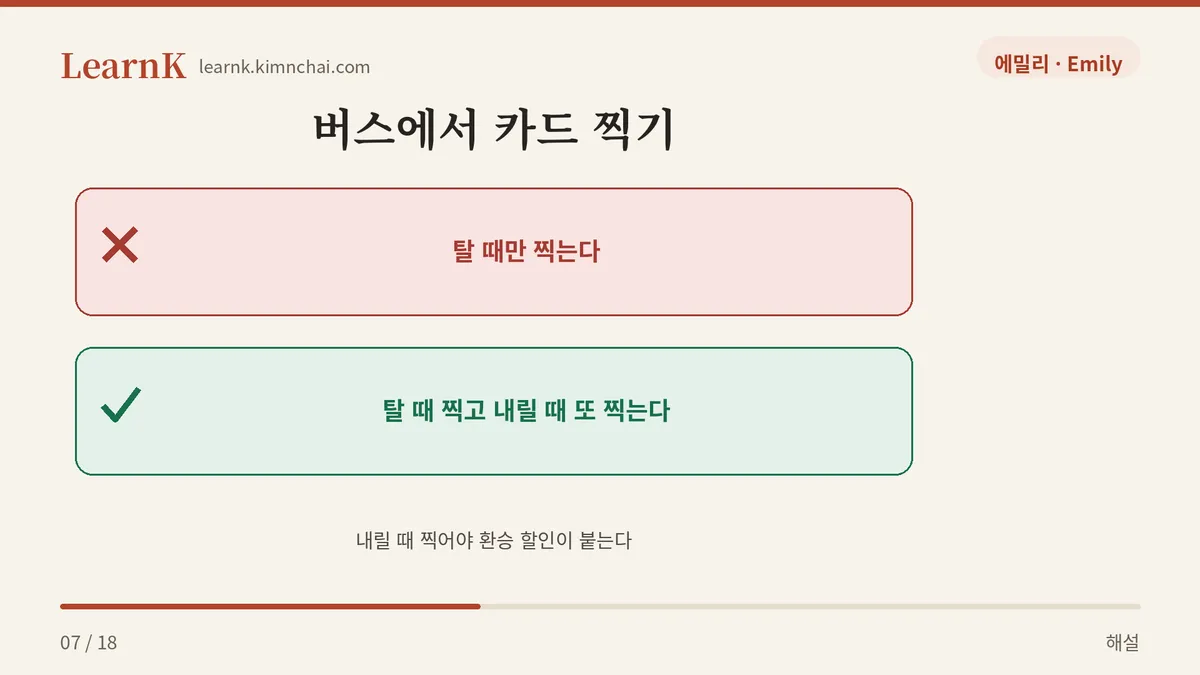
내릴 때 카드 꼭 다시 찍으세요. 안 그러면 환승 할인이 안 돼요. (naeril ttae kadeu kkok dasi jjigeuseyo. an geureomyeon hwanseung harini an dwaeyo.) Make sure to tap your card again when you get off. Otherwise you won’t get the transfer discount.
In Korea, the rule for buses is to 두 번 찍는 (du beon jjingneun·tap twice) — once when you board and once when you get off. ‘찍다 (jjikda)’ originally means the motion of pressing something down, like stamping a seal (도장을 찍다), and the same verb is used for holding your card up to the card reader.
Comparing Polite and Casual Speech, Plus Similar Expressions
With a friend, you’d say it casually like this:
야, 교통카드 있어? 나 잔액 없어. (ya, gyotongkadeu isseo? na janaek eopseo.) Hey, do you have a transit card? I’m out of balance.
Politely, it changes to this:
혹시 교통카드 가지고 계세요? (hoksi gyotongkadeu gajigo gyeseyo?) Do you happen to have a transit card?
It’s helpful to sort out some similar expressions too. 선불카드 (seonbulkadeu·prepaid card) is the type you charge up in advance, while 후불교통카드 (hubul-gyotongkadeu·postpaid card) is a card where transit functionality is attached to a credit card and the fare is billed later. Travelers usually buy the prepaid transit cards sold at convenience stores.
Cultural Background — Korea’s ‘삑’ Sound
You’ve probably seen the scene in a Korean drama where the main character rushes through a subway ticket gate, tapping their card. On Seoul’s subways during the morning commute, this ‘삑 (ppik·beep)’ sound continues like a rhythm. Lately, more people tag their phones instead of using a physical card, but for a traveler, one small transit card bought at a convenience store is still the most reassuring thing to have. Many fans even buy pretty cards printed with characters as souvenirs.
Today’s Quiz
If you don’t tap your transit card again when you get off the bus, what disadvantage do you face?
(Hint: it has to do with a fare discount the next time you switch to a different mode of transportation.)
Find out the answer for yourself on your next trip to Korea! If you only tap when boarding and don’t tap when getting off, you won’t receive the 환승 할인 (hwanseung harin·transfer discount) — and in bad cases, you might even be charged an extra base fare on your next ride!