A Whole Korean Meal in One Word — '반찬 (banchan)'
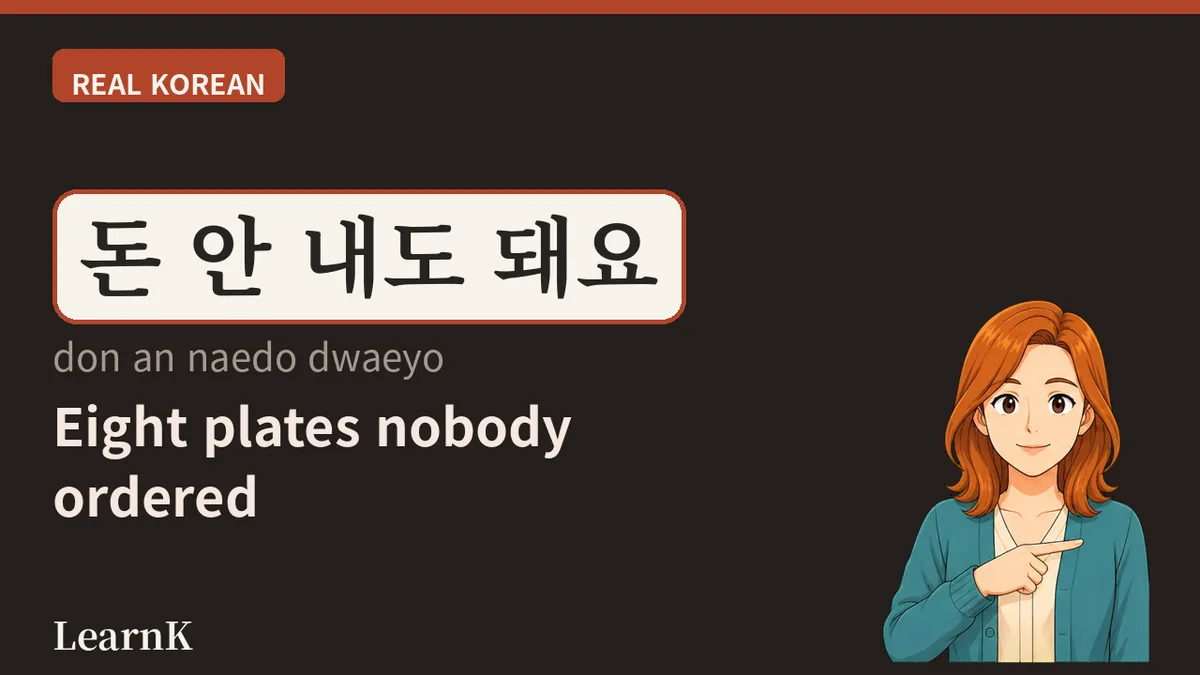
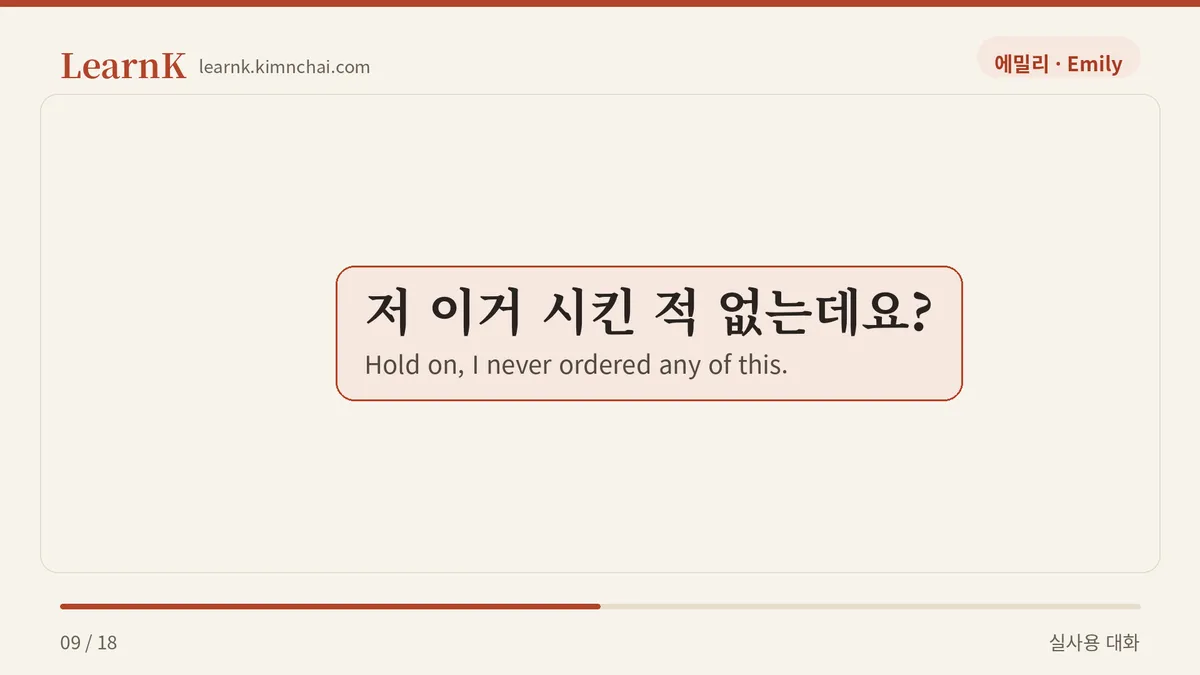
There’s a moment that surprises almost every foreigner visiting a Korean restaurant for the first time. Before the main dish they ordered has even arrived, little plates start appearing on the table one by one. Kimchi, seasoned soybean sprouts, spinach, stir-fried anchovies… If you ask, “Wait, I didn’t order all this,” the owner just smiles and says, “Oh, these are just 반찬 (banchan) — they’re on the house.” Today, let’s take a deep dive into the true star of the Korean table: 반찬 (banchan).
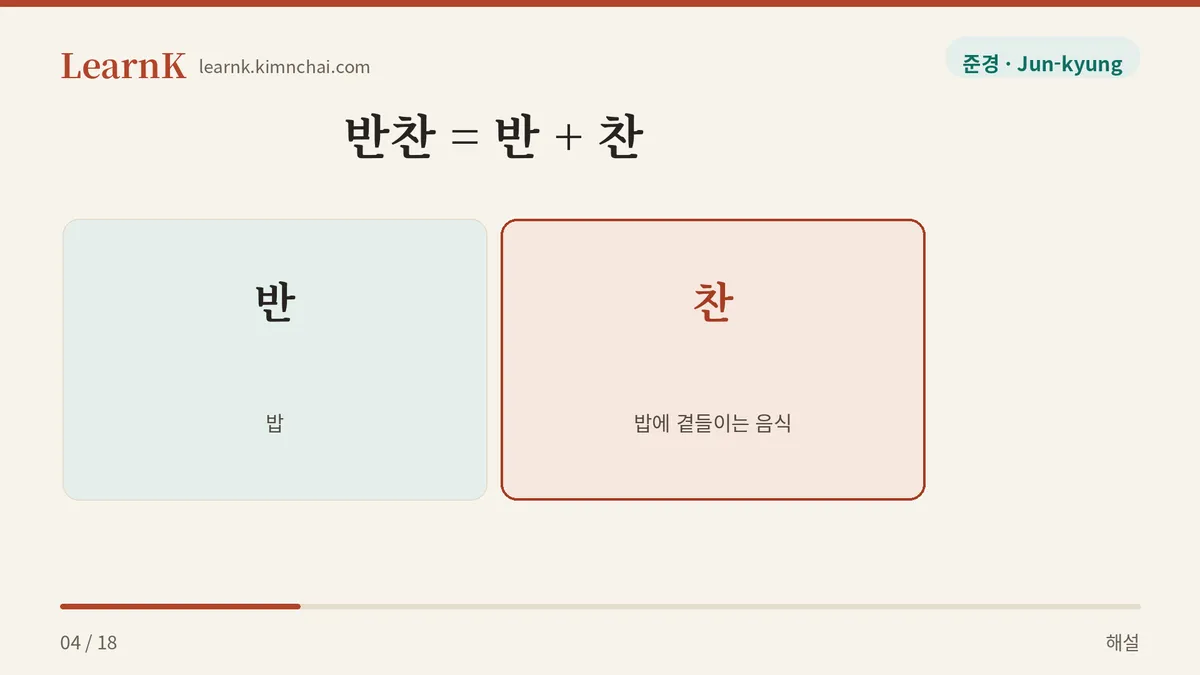
반찬
반찬 (banchan) refers to all the dishes you eat together with rice. A Korean meal is usually built around a single bowl of rice, with an assortment of banchan laid out beside it. If the rice is the star of the stage, the banchan are the supporting cast that fill it out — but honestly, it’s these supporting players that decide how good the rice tastes.
It’s similar to the English “side dish,” but the nuance is a little different. A Western side dish is an accompaniment that comes attached to the main course, whereas Korean banchan play a far more central role: there are many of them, and they all come together with the rice as one meal. Three or four kinds of banchan per meal is the norm, and on a feast day you might see more than ten.
Checking the National Institute of Korean Language dictionary
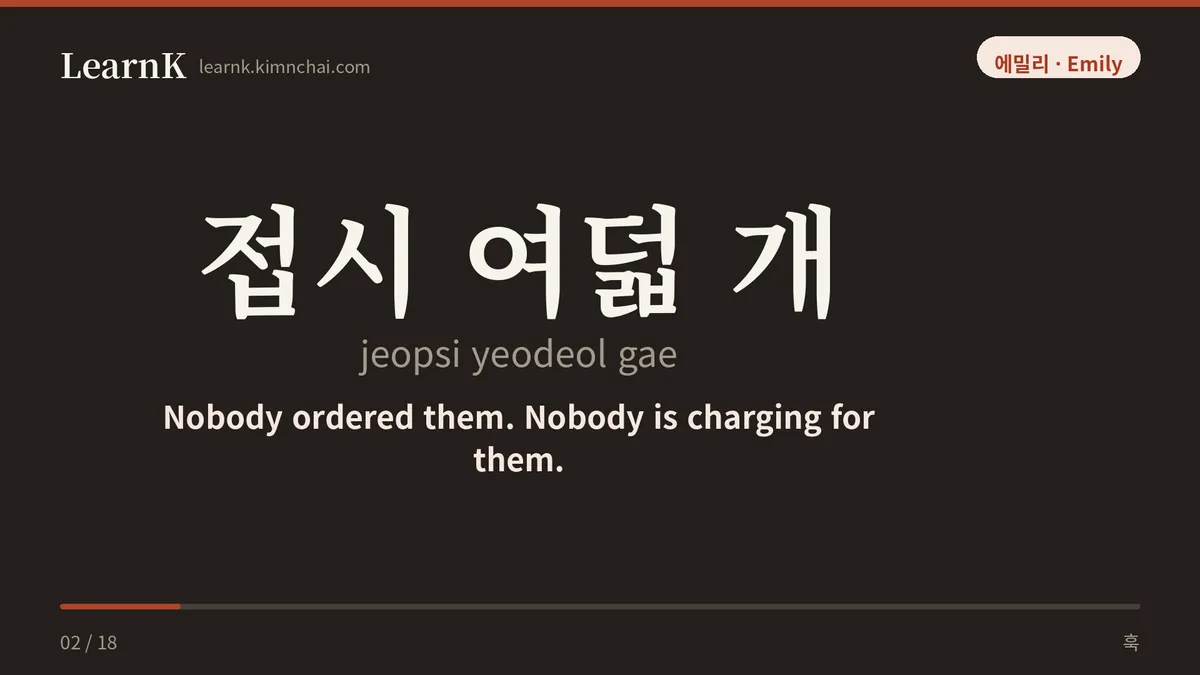
The National Institute of Korean Language’s Basic Korean Dictionary defines banchan like this:
반찬 (noun): Food to eat with rice when having a meal. [en] side dish — Food to eat with rice when having a meal. [ja] おかず【御数・御菜】 — 食事のとき、ご飯に添えて食べる副菜。 [es] guarnición, acompañamiento — Plato que se sirve junto con el arroz a la hora de la comida. — National Institute of Korean Language, Basic Korean Dictionary (krdict.korean.go.kr)
Let’s look at a few of the real usage examples the dictionary provides.
그래요. 가는 길에 반찬 가게에서 저녁 반찬 좀 사 가요. — National Institute of Korean Language, Basic Korean Dictionary (krdict.korean.go.kr)
(“Sure. On the way, let’s stop by the banchan shop and pick up some banchan for dinner.”) When making banchan every single day at home gets to be too much, Korea has 반찬 가게 (banchan shops) that sell nothing but banchan. Stopping by on the way home from work to grab some banchan for dinner is a very everyday sight.
저녁 식사 때 이모가 해 오신 반찬이 맛있어서 자꾸 그쪽으로만 손이 갔다. — National Institute of Korean Language, Basic Korean Dictionary (krdict.korean.go.kr)
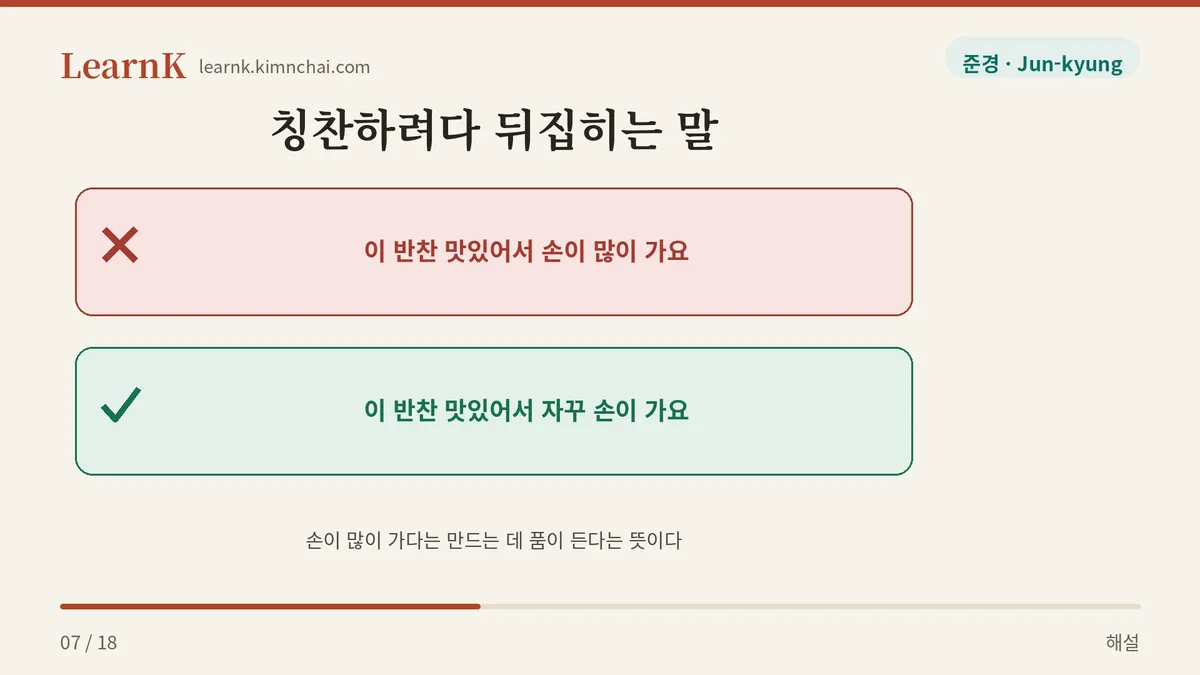
(“At dinner, the banchan my aunt made was so good that my hand kept reaching for it.”) The expression 손이 가다 (“one’s hand goes to”) means your chopsticks keep heading toward a certain food. When there’s one delicious banchan on the table, you end up ignoring everything else and going for just that one — we’ve all been there, right?
나물 반찬은 은근히 손이 많이 가는 음식인 것 같아요. — National Institute of Korean Language, Basic Korean Dictionary (krdict.korean.go.kr)
(“Seasoned-vegetable banchan seems to be surprisingly labor-intensive food.”) Here, 손이 많이 가다 means the opposite of the previous example — it means “it takes a lot of effort to make.” 나물 (seasoned vegetables) involve a lot of washing, blanching, and seasoning, so they’re a banchan that requires real care.
저녁 반찬으로 불고기를 만들었단다. — National Institute of Korean Language, Basic Korean Dictionary (krdict.korean.go.kr)
(“I made bulgogi as banchan for dinner.”) Even a hearty meat dish like bulgogi becomes a wonderful banchan when eaten together with rice.
(The dictionary doesn’t include a Portuguese translation, so we’ve added our own for reference: [pt] acompanhamento — comida servida junto com o arroz durante a refeição.)
Example sentences by situation
Let’s use some original example sentences to get a feel for how the word is used in real conversation.
Situation 1 — Asking for more banchan at a restaurant
저기요, 김치 반찬 좀 더 주세요. (jeogiyo, gimchi banchan jom deo juseyo.) “Excuse me, could I have some more kimchi banchan?” 저기요 (jeogiyo) is how you call a server, and in Korean restaurants, banchan is refilled for free most of the time.
Situation 2 — To a guest you’ve invited over
반찬이 별로 없는데 많이 드세요. (banchani byeollo eomneunde mani deuseyo.) “There isn’t much banchan, but please help yourself.” Saying this even when the table is groaning under the weight of food is Korean-style modesty.
Situation 3 — A solo dweller’s lament
오늘은 반찬이 김치밖에 없어요. (oneureun banchani gimchibakke eopseoyo.) “Today the only banchan I’ve got is kimchi.” This is something people living alone often say when they make do with a meal of nothing but kimchi and no other banchan.
Comparing polite/casual speech and related expressions
Banchan itself is a noun, so it doesn’t change between polite and casual speech, but the sentences you use it in do. To a friend you’d say 반찬 뭐 있어? (banchan mwo isseo?), and to an elder 반찬 뭐 있어요? (banchan mwo isseoyo?) — both meaning “What banchan is there?”
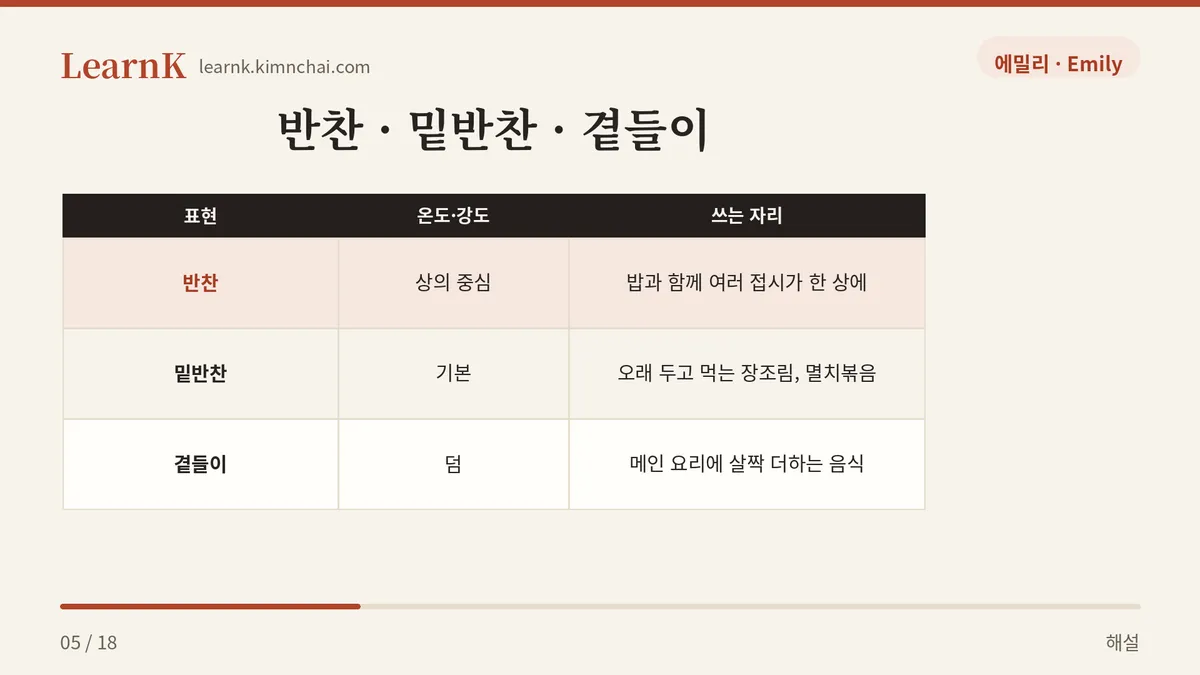
Let’s also learn some related words. 밑반찬 (mitbanchan) are the basic banchan you keep and eat over a long time (like 장조림 soy-braised meat or stir-fried anchovies), 곁들이 (gyeodeuri) is food added lightly alongside a main dish, and 찬 (chan) is a shortened form of banchan. By the way, the word “banchan” that has become known in the West is simply the romanized spelling of this very 반찬.
Cultural background
Banchan is closely tied to Korea’s culture of 나눔 (sharing). Neighbors making kimchi and sharing it with one another, and parents packing bundles of banchan for a child living away from home — these are staple scenes in Korean dramas. The scene of opening a box of banchan shipped up from the countryside tugs at the heartstrings of any Korean.
잘 챙겨 먹고 다녀. 반찬 떨어지면 또 보낼게. — Drama Reply 1988 (tvN, 2015)
(“Make sure you eat well. When you run out of banchan, I’ll send more.”) A single word about banchan like this carries a Korean kind of love that says, “Even from far away, I’ll keep you fed.”
Closing quiz
You’ve finished all the soybean-sprout banchan at a restaurant and want more. Which word fits in the blank below?
“저기요, 콩나물 ______ 좀 더 주세요.” (“Excuse me, could I have some more soybean-sprout ______?”)
① 반찬 (banchan) ② 후식 (dessert) ③ 음료 (drink)
The answer is ①, 반찬 (banchan). Starting today, when you go to a Korean restaurant, call it out with confidence: “반찬 좀 더 주세요!” (“More banchan, please!”)
Definitions and example sentences are from the National Institute of Korean Language’s Basic Korean Dictionary (krdict.korean.go.kr); that portion of this post, including our translations, is licensed under CC BY-SA 2.0 KR.