Mastering "사바사" — "It Depends on the Person" in Just Three Syllables!
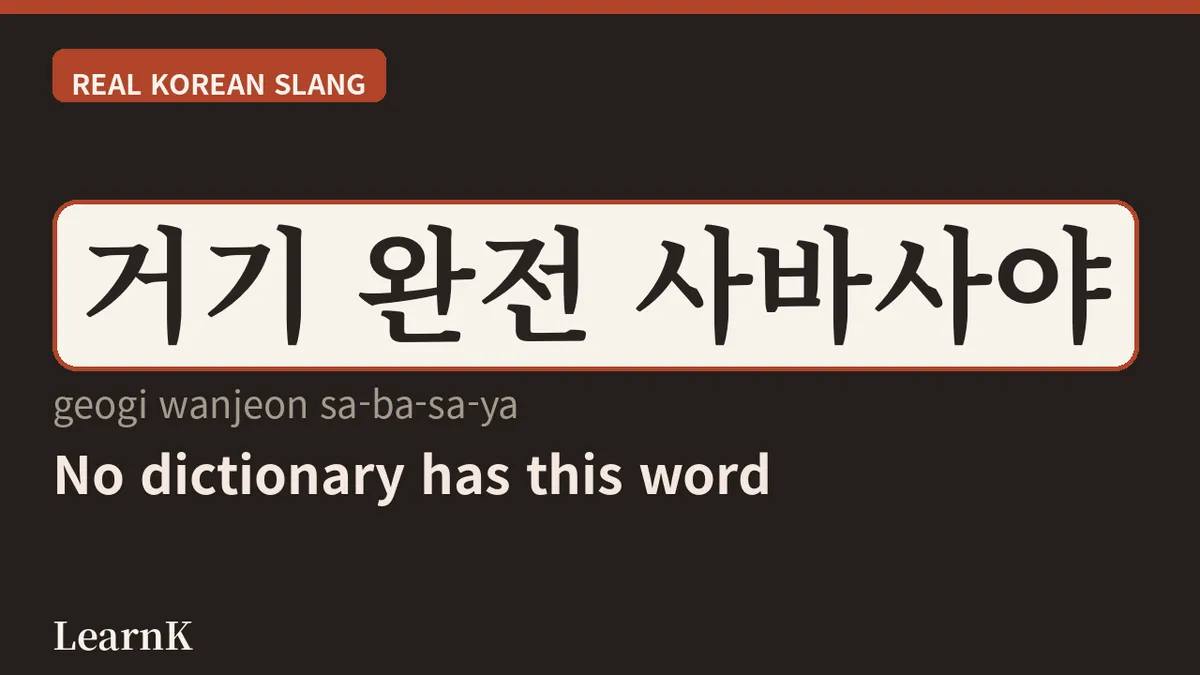
Imagine you ask a friend, “How’s this café? Is the coffee good?” — and the answer comes back: “Hmm… that’s kind of 사바사 (sa-ba-sa).” If you’re a Korean learner hearing this for the first time, you probably panicked because no matter how hard you searched the dictionary, this word just wasn’t there. And that’s completely understandable. 사바사 isn’t official standard Korean — it’s a shortened slang expression that Koreans toss around in everyday conversation these days. Today, let’s dig into this short but super handy expression right down to its roots.
사바사
사바사 (sa-ba-sa) is an abbreviation made from the first syllables of “사람 바이(by) 사람” (saram by saram). It means the English “person by person” — in other words, “it varies from person to person.” You use it when the way people rate or react to something is so different from one person to the next that you just can’t give one clear-cut answer.
This expression actually comes from 케바케 (ke-ba-ke), which is a shortened form of the English “case by case.” Once 케바케, meaning “it depends on the case,” caught on, 사바사 was created to use when that “case” happens to be a person. So the two are like siblings.
The heart of the nuance is “avoiding a firm verdict.” Instead of declaring something good or bad, it packs an open-minded attitude — “I’m not a fan, but you might love it” — into just a few syllables. That’s why it’s so useful for smoothing over disagreements or acknowledging differences in taste.
Example Sentences by Situation
① When someone asks about a preference
가: 민트초코 아이스크림 맛있지 않아? (mintcho’ko aiseukeurim masitji ana?) — Isn’t mint-chocolate ice cream delicious? 나: 그건 완전 사바사 (sa-ba-sa) 지. 난 좋은데 우리 언니는 치약 맛이래. (geugeon wanjeon sa-ba-sa ji. nan joeunde uri eonnineun chiyak masirae.) — That’s totally 사바사 (sa-ba-sa). I love it, but my older sister says it tastes like toothpaste.
A classic case of a food that people either love or hate. A perfect, one-shot way to sum up “it depends on the person.”
② When reviews or ratings are split
가: 이 식당 리뷰가 별점 5개랑 1개로 반반이야. (i sikdang ribyuga byeoljeom 5gaerang 1gaero banbaniya.) — This restaurant’s reviews are split half-and-half between five stars and one star. 나: 아, 이런 데가 진짜 사바사 (sa-ba-sa) 야. 직접 가 봐야 알아. (a, ireon dega jinjja sa-ba-sa ya. jikjeop ga bwaya ara.) — Ah, places like this are really 사바사 (sa-ba-sa). You’ve got to go yourself to know.
This is a situation that points out how an objective rating is impossible and individual differences are huge.
③ When sharing experiences
가: 그 회사 야근 많아? (geu hoesa yageun mana?) — Does that company have a lot of overtime? 나: 팀 바이 팀, 아니 완전 사바사 (sa-ba-sa) 던데. 사수가 누구냐에 따라 하늘과 땅 차이야. (tim bai tim, ani wanjeon sa-ba-sa deonde. sasuga nugunyae ttara haneulgwa ttang chaiya.) — Team by team — no, totally 사바사 (sa-ba-sa), from what I saw. Depending on who your mentor is, it’s a difference between heaven and earth.
This emphasizes the nuance that even under the same conditions, the outcome changes depending on the person.
Comparing Polite/Casual Forms and Similar Expressions
Since 사바사 is slang, you basically use it in casual speech, among close friends. In formal settings or with someone senior to you, it’s safer to spell it out.
- Casual (with friends): 그건 사바사야 (geugeon sa-ba-sa-ya). — “That’s 사바사.”
- Polite (formal): 그건 사람마다 다른 것 같아요 (geugeon saram-mada dareun geot gata-yo). — “I think that varies from person to person.”
It’s good to learn some similar expressions, too.
- 케바케 (ke-ba-ke): It depends on the case or situation (here the “variable” is the situation).
- 사람마다 달라요 (saram-mada dallayo): The polite, full-length equivalent of 사바사.
- 그때그때 달라요 (geuttae-geuttae dallayo): It depends on the moment/occasion.
Cultural Background — Why Shorten It Like This?
In Korean slang, there’s a trend of playing with words by taking just the first syllables of English words and combining them — like TMI, 인싸 (insider), 아싸 (outsider). 사바사 and 케바케 were born out of that same wave. They’re expressions created where the habit of typing fast on social media and in chats meets today’s conversational culture of “leaving room rather than being blunt.”
Picture a scene in a drama or variety show where the guests are bickering over a matter of taste, and the host wraps it up with a smile. That moment of “Alright, in the end this just comes down to the person” is exactly the feeling of 사바사. This little phrase carries an attitude of not forcing one right answer and respecting everyone’s own taste.
Closing Quiz
A friend asks, “Is this drama fun?” but it’s such a love-it-or-hate-it show that you want to answer “it depends on the person.” What slang goes in the blank below?
“그 드라마? 완전 ______ 야. 나는 밤새워 봤는데 동생은 1화만 보고 껐어.” (geu deurama? wanjeon ______ ya. naneun bamsaewo bwanneunde dongsaengeun 1hwaman bogo kkeosseo.) — “That drama? Totally ______. I stayed up all night watching it, but my younger sibling turned it off after just episode one.”
See the answer
The answer is 사바사 (sa-ba-sa)! It’s “person by person” — meaning it varies from person to person. Now you, too, can use it with confidence whenever the topic of taste comes up. 😊